Posted on the 21st of April 2026
Blue Anemone
Scientific Name: Anemonoides apennina
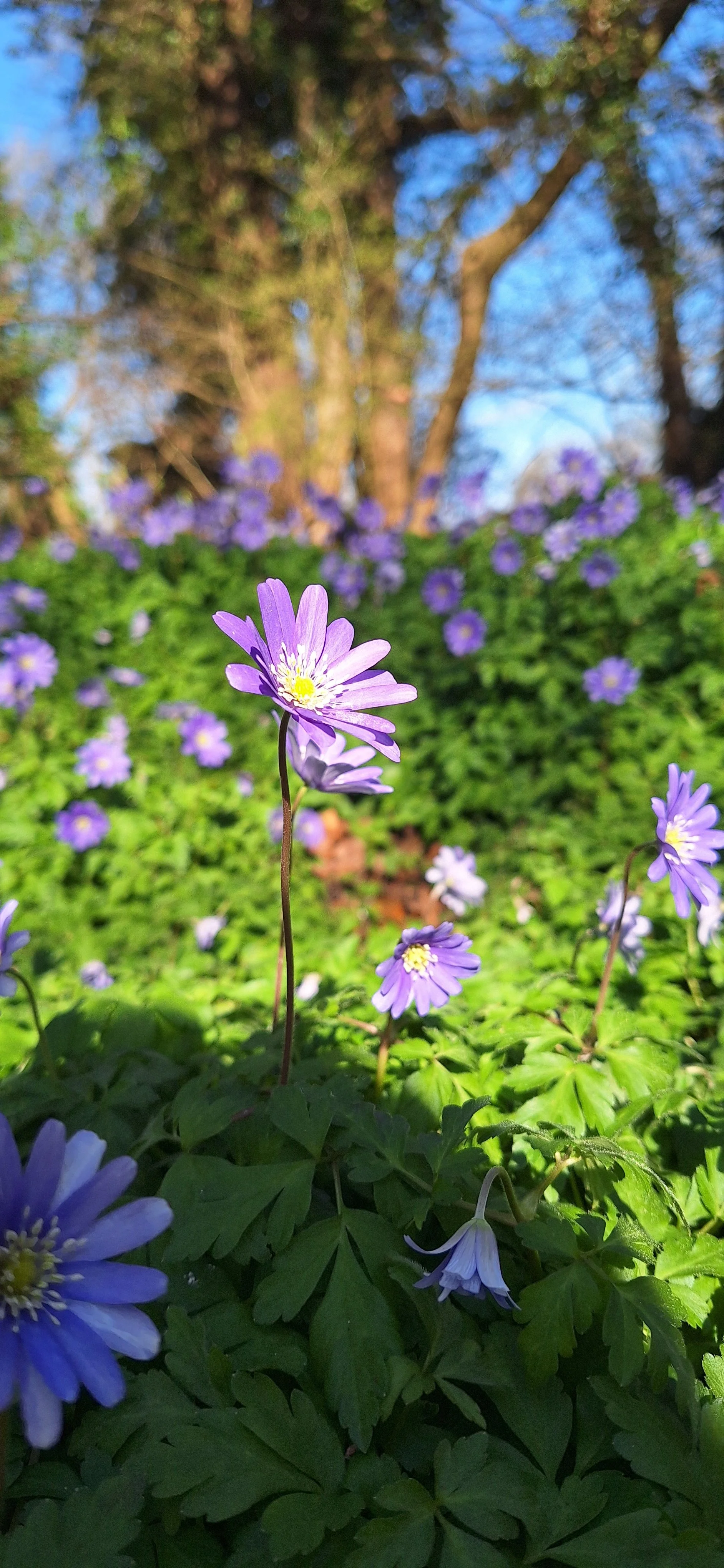
A blue anemone flower
Morphology and Range
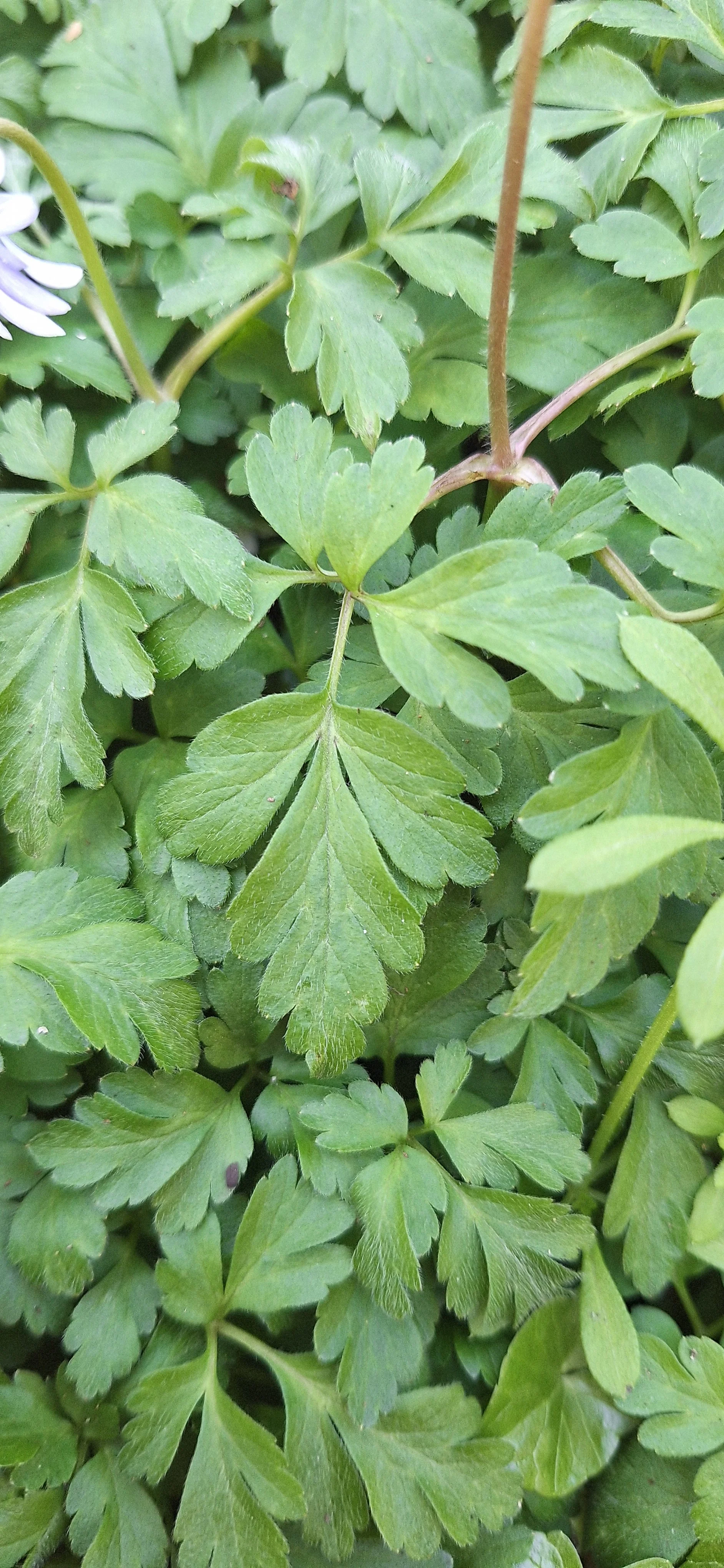
Blue anemones are pubescent plants that have leafy stems with pinnate leaves. Pubescent meaning that the plant is covered in hairs, while pinnate leaves area kind of compound leaf with multiple leaflets. Blue anemones have 2-3 leaflets per leaf (as can be seen in the image on the right). The leaves are lobed and dark green, growing off of reddish-brown stems. The plant can grow up to 20 cm tall and produces light blue flowers that have around 10-15 sepals. The plant is rhizomatous, meaning that it creates rhizomes underground which grow horizontally through the soil. These rhizomes send out roots and shoots, creating genetically identical plants. Rhizomes are also used for storage of starch and other nutrients, which can be helpful during the winter when the parts of the plant that are above ground die off during winter.
Blue anemones are native to the south of central Europe in countries such as Italy, Bulgaria and Albania. However, naturalised populations can be found in the UK, France, Sweden and Belgium. They like to grow in temperate climates and often grow in shaded areas such as under trees.
The leaves of a blue anemone plant
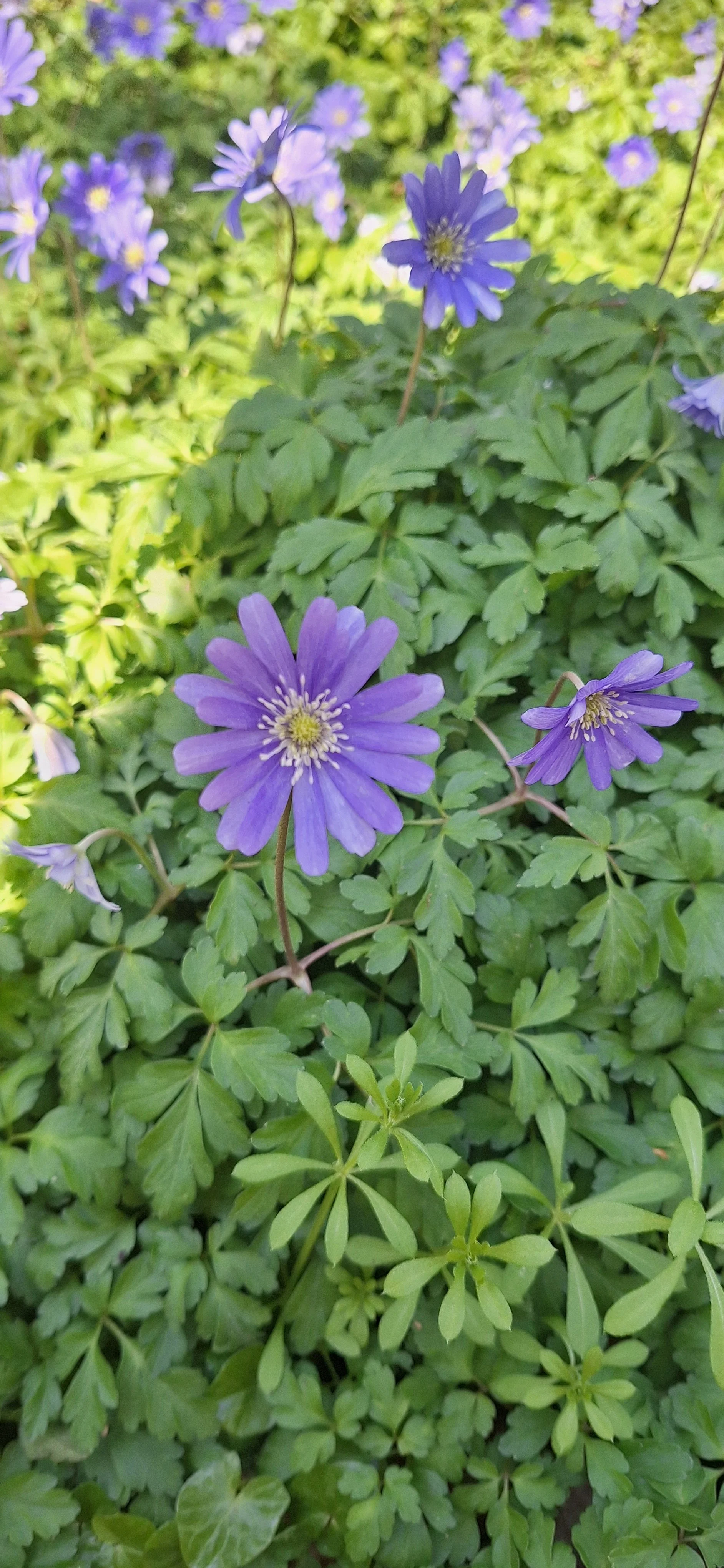
A blue anemone flower
Toxicity and Mythology
A patch of blue anemone plants
Blue anemones are slightly toxic, causing skin irritation if touched and an upset stomach if ingested. This is due to the plant containing something called protoanemonin that is toxic to humans and many other animals.
In Greek mythology, anemones were created by the goddess Aphrodite. Aphrodite had a human lover named Adonis, who was seen as having the perfect male body. Jealous of how much Aphrodite loved Adonis, the war god Aries sent a wild boar after Adonis. Adonis had a love of hunting and, one hunting trip, he encountered this boar which then killed him. When Aphrodite encountered her fallen love, she held him in her arms and cried. Her tears mixed with Adonis’ blood, creating the first ever anemones
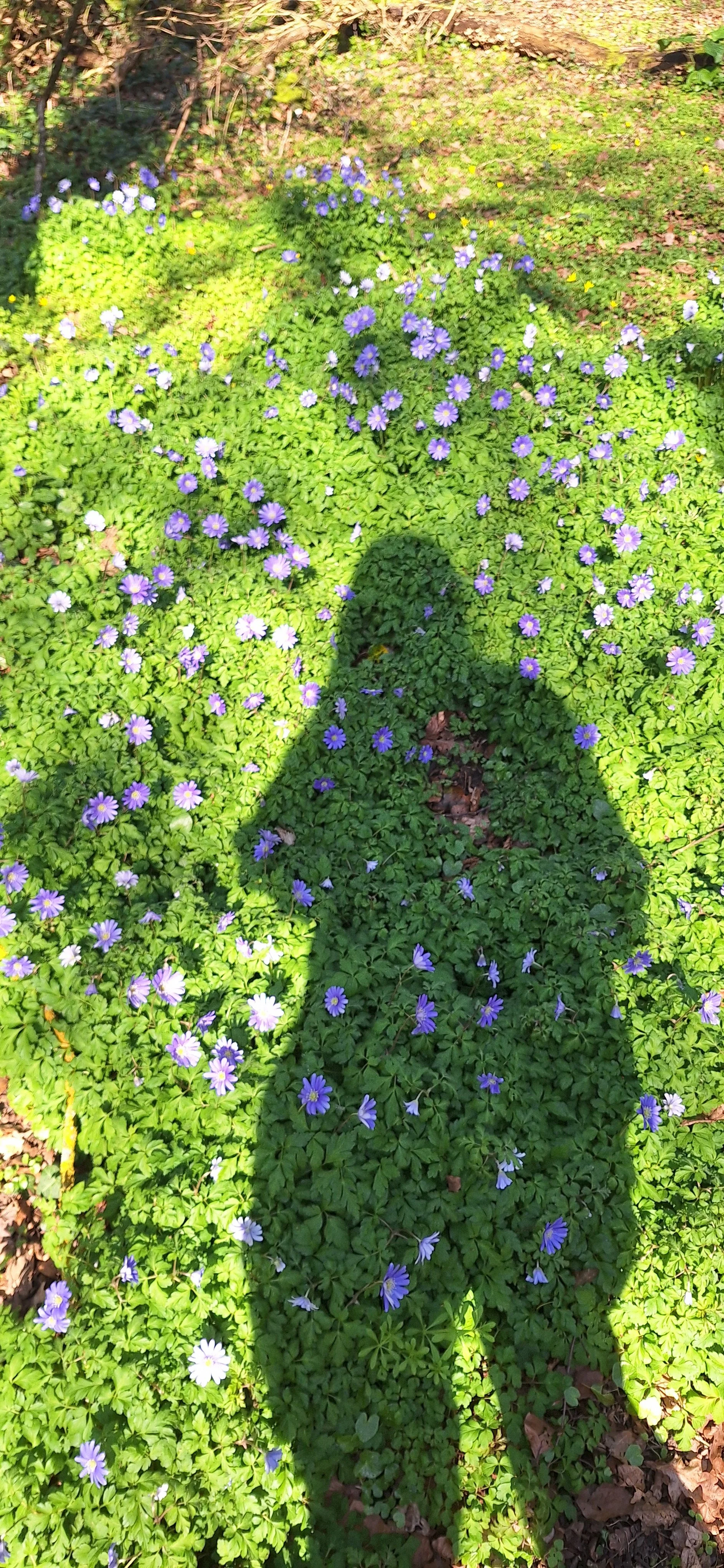
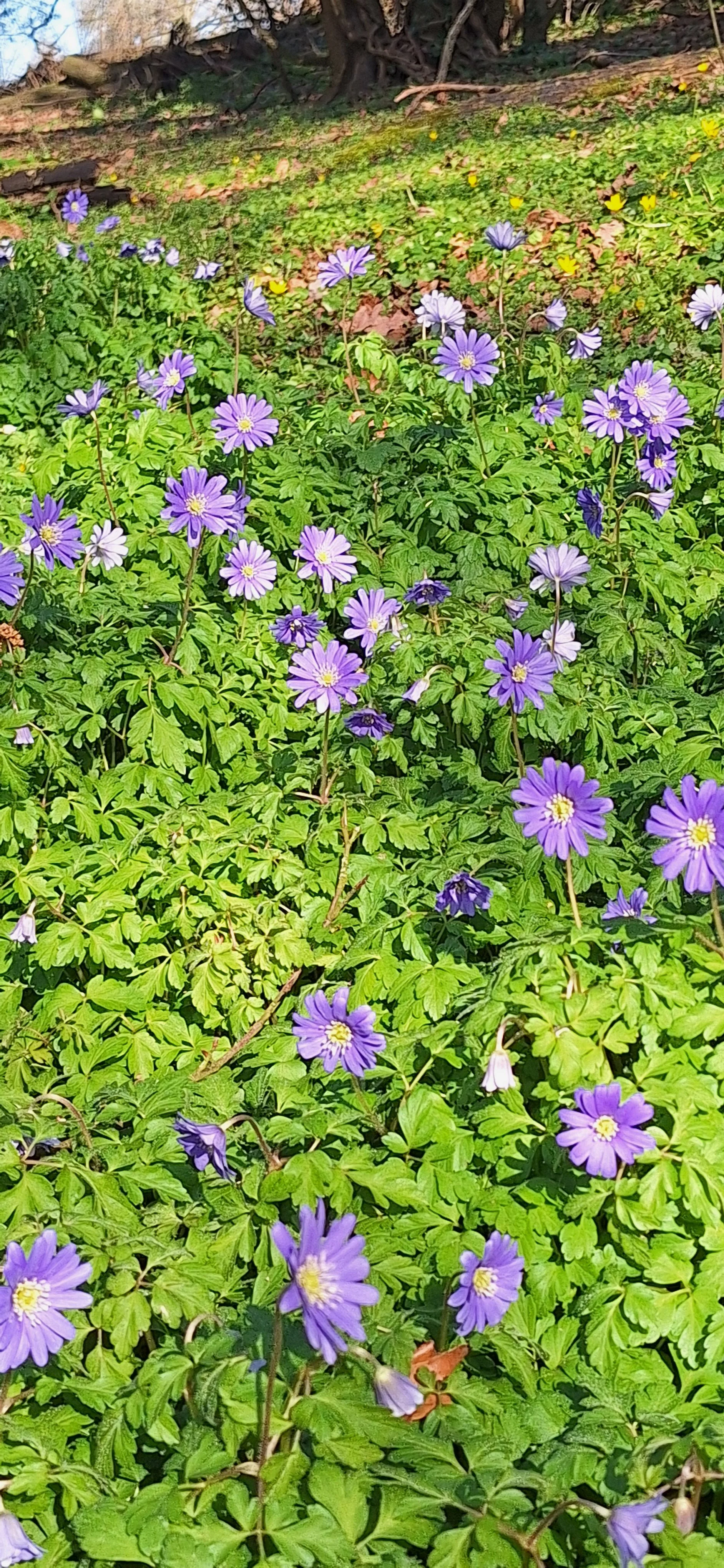
A patch of blue anemone plants from above