Posted on the 15th of April 2026
Cormorant
Scientific Name: Phalacrocorax carbo
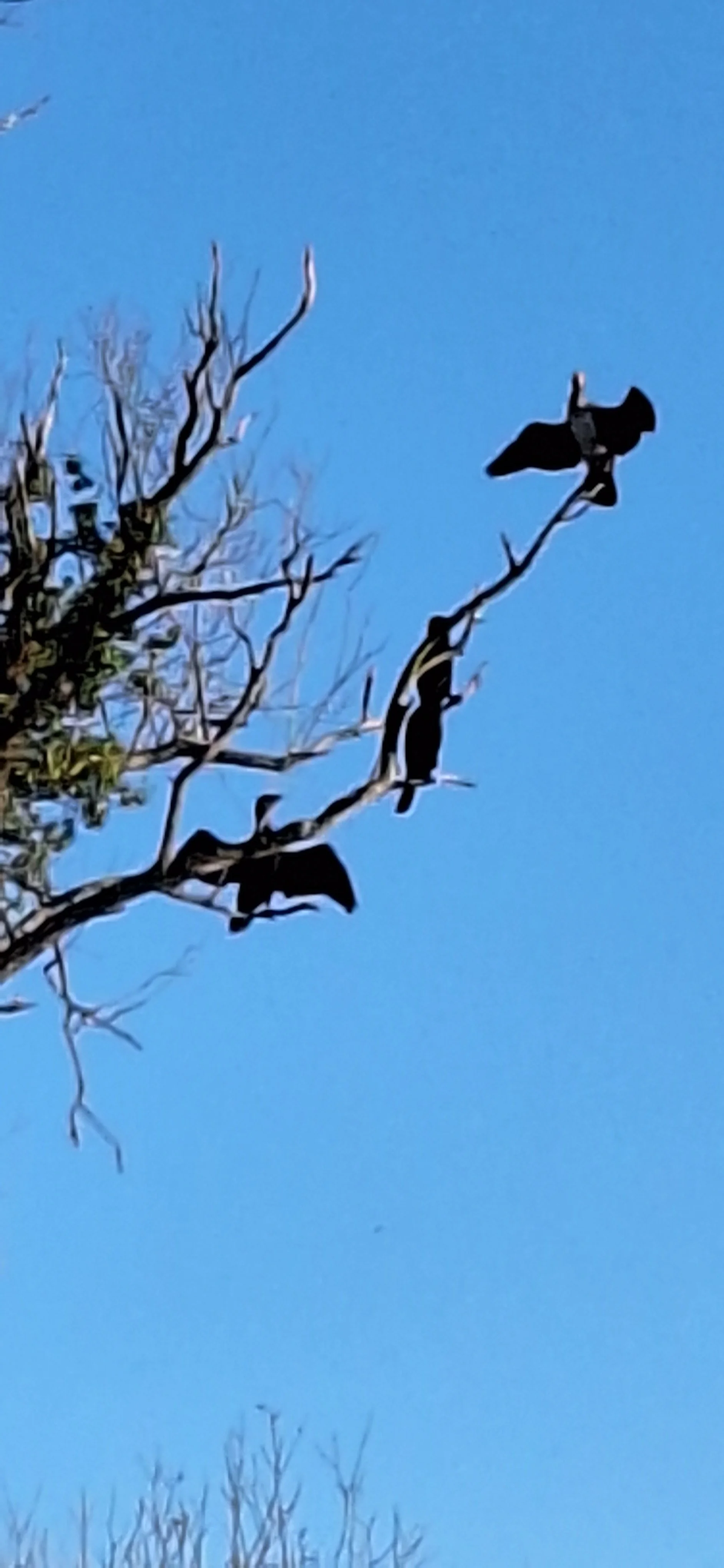
Some cormorants I found drying themselves
Morphology and Range
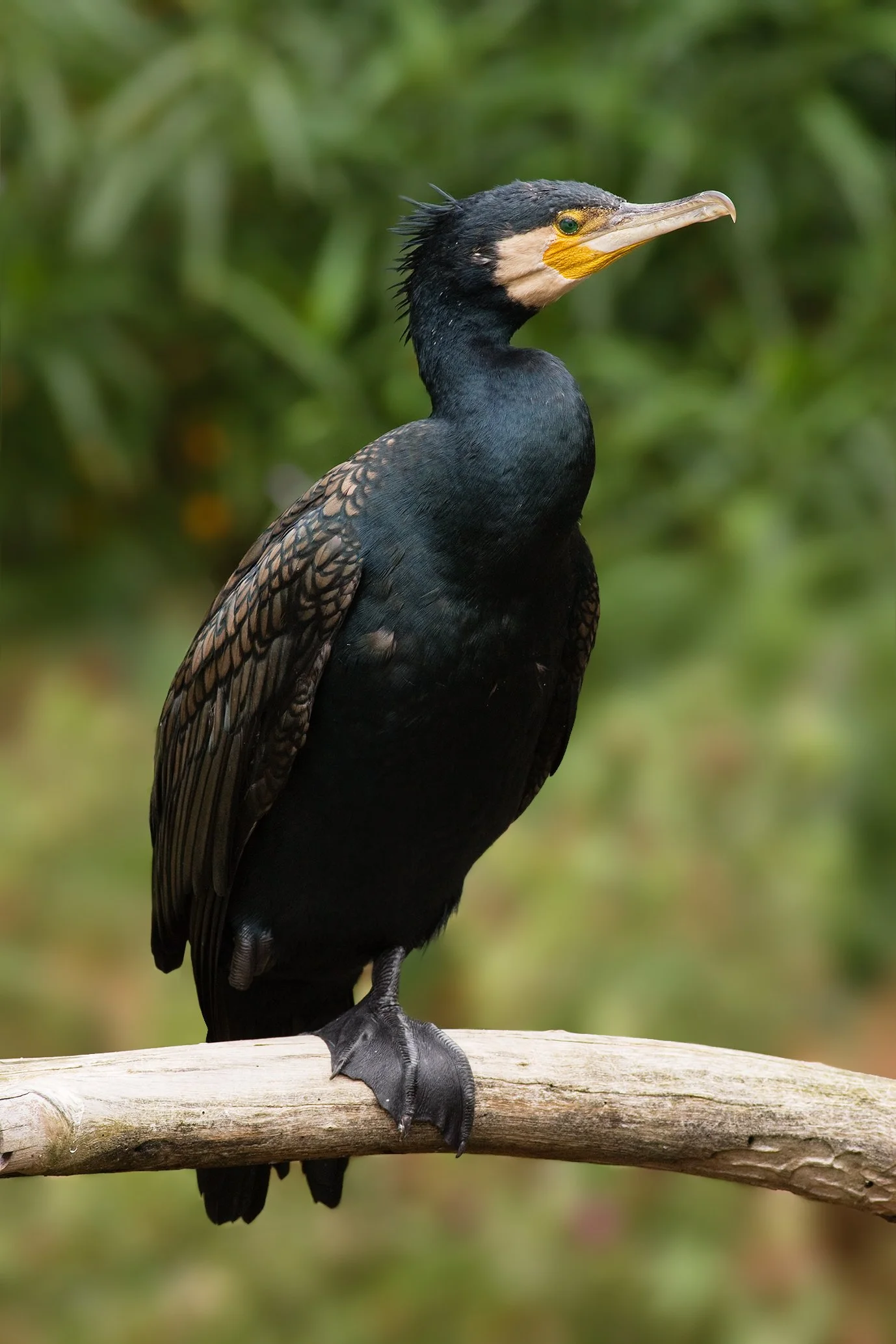
A cormorant sitting on a branch
Credit: JJ Harrison

Cormorants are black birds with cream colouration on their cheeks and the underside of their heads. They have vibrant green eyes, bright yellow colouration around where their grey hooked beaks connect to their head. Cormorants are fairly large birds with an average length of 80-100cm, weight of 2-2.5kg and wingspan of 120-160cm.
Cormorants can be found all over the world. Breeding populations are present on five continents, those being Europe, Africa, Oceania, Asia and North America. Populations cover almost the entire continent of Europe, the only exceptions being particularly mountainous regions, while in North America, cormorants are only present on the east coast. In Africa cormorants are present on the north west coast as well as covering most of the south and east of the continent. Cormorants cover all but the driest regions of Australia and in Asia they can be seen in India, the east of China and the south of Japan. They primarily live around freshwater environments, however, in North America, cormorants tend to live in saltwater habitats.

A cormorant in breeding plumage
Credit: MPF

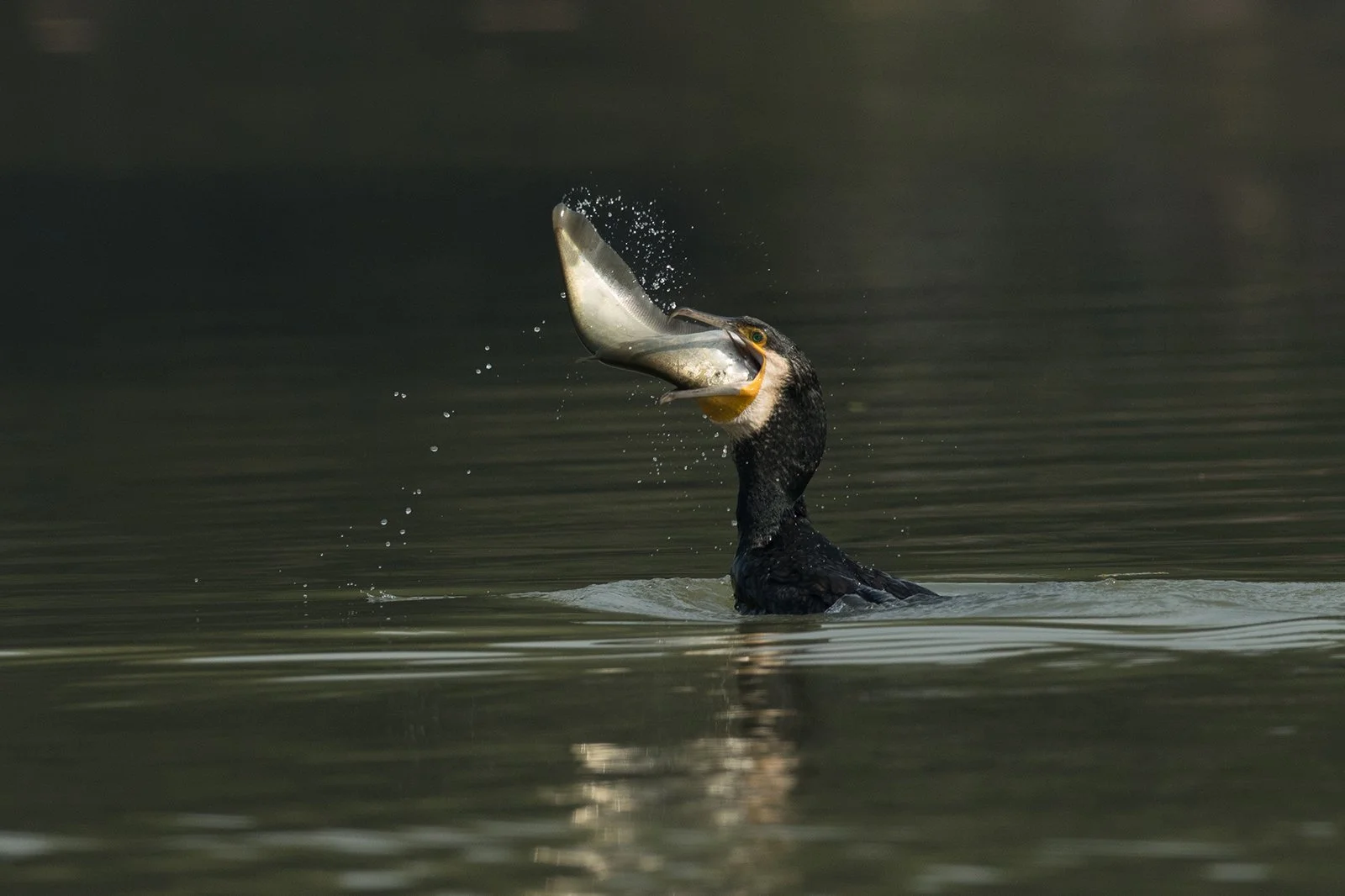
A cormorant that’s caught a fish
Credit: CLPramod

Diet and Reproduction
Cormorants’ diets consist almost exclusively of fish and other aquatic creatures such as crabs and molluscs. They are capable of eating very large prey, with some individuals being observed eating 50cm eels, a 90cm carp and an Atlantic salmon that weighed 1.5kg more than the bird eating it. Cormorants hunt via a method called “pursuit diving”. Sticking their head in the water to spot prey, once it has seen something, it quickly dives into the water to chase after the prey. They open their beaks and grab hold of their prey, and then bring it onto the land where they kill it before consuming, or they just swallow it whole and alive. Cormorant beaks are hooked and can open very wide to help them efficiently catch their prey. As their feathers aren’t waterproof, after they’ve dived and eaten, they can often be seen perching high up with their wings spread out to dry.
Cormorant breeding season takes place around February and they build their nests high up on either cliffs or the top of trees. Females lay three or four eggs, which are incubated by both parents. The chicks hatch after roughly a month, after which the parents take care of them until they flege which on average takes 48-52 days.
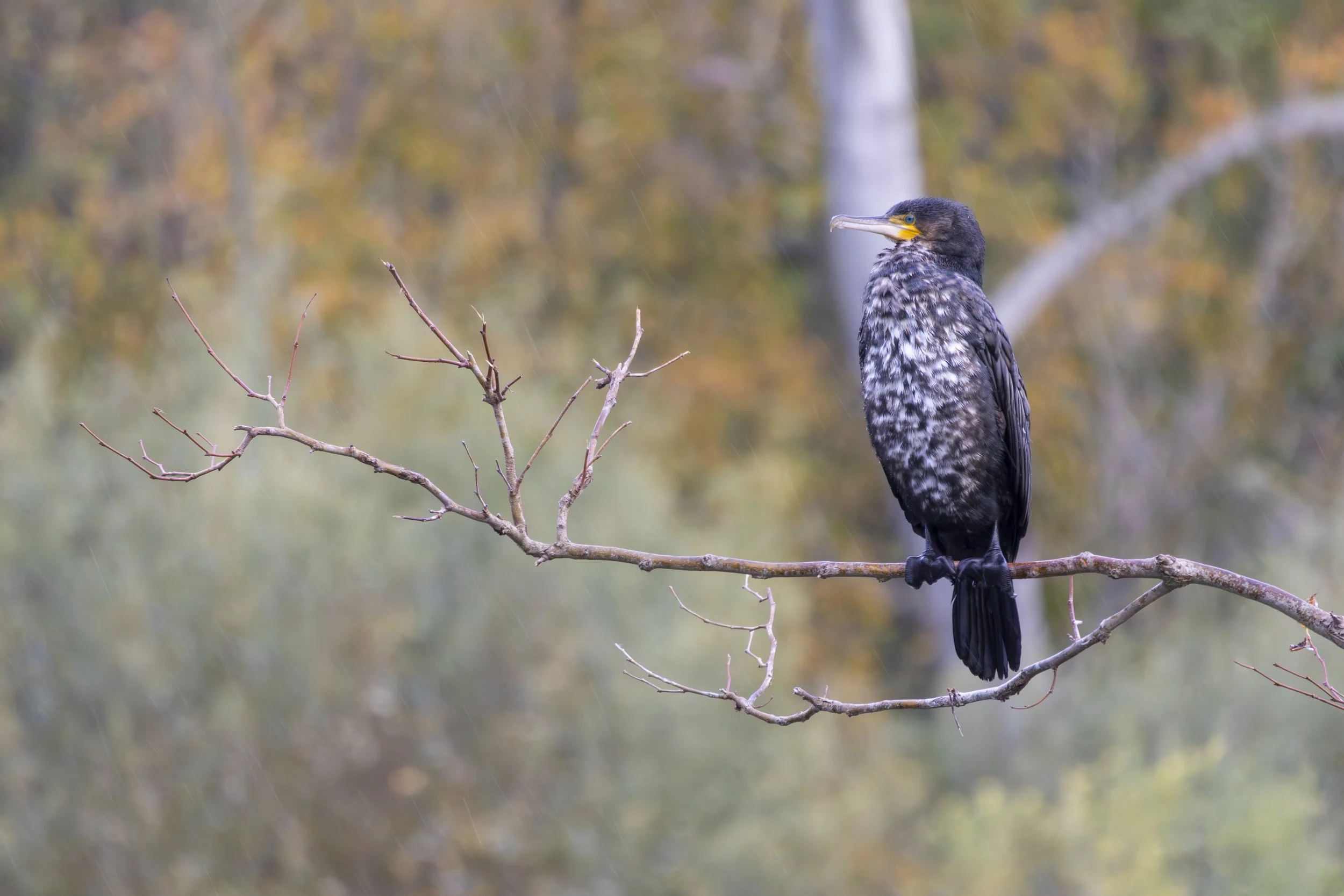
A juvenile cormorant
Credit: Alexis Lours

Fishing and Folklore
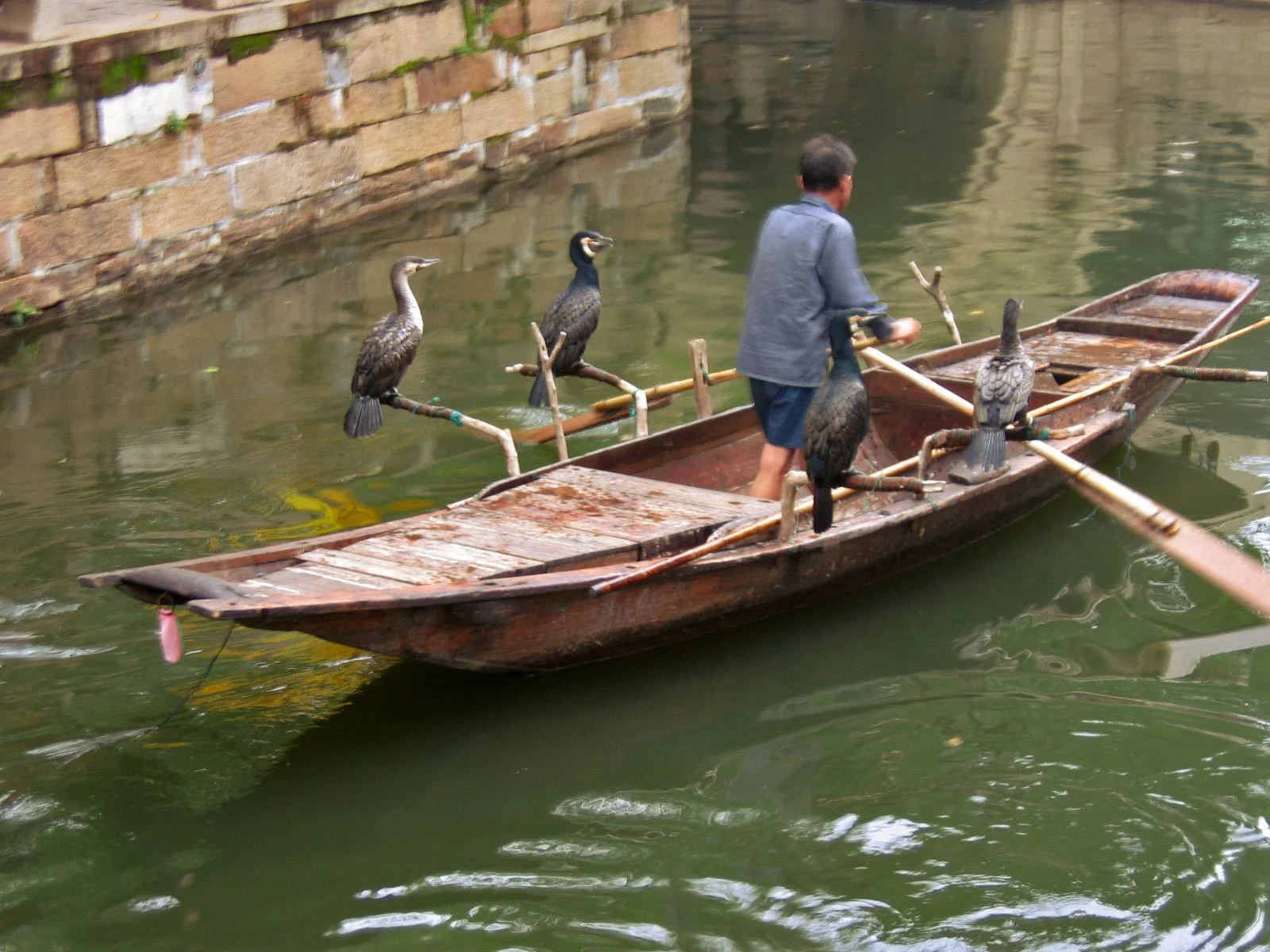
Since as far back as at least the 5th centuary people have used comorants to help them fish. It’s not the most pleasant practice for the birds as fishermen tie a rope around the cormorant's throat just tight enough to prevent it from swallowing the fish. The fishermen are then able to retrieve the fish from the bird by triggering its regurgitation reflex. It’s not all bad for the cormorants though, as every eighth fish they get to keep as a little treat for their cooperation. Some cormorants who have learned this pattern will refuse to dive the eighth time if the rope is still around its throat. Turns out its pretty hard to scam a cormorant.
A mythological creature from Scotland called the “Boobrie” is a shapeshifting creature that would often take the form of a cormorant. The Boobrie is a malevolent creature that would hunt livestock, often taking them when they’re being transported by ship.
A fisherman with four cormorants
Credit: tiarescott
