Posted on the 9th of April 2026
Carrion Crow
Scientific Name: Corvus corone
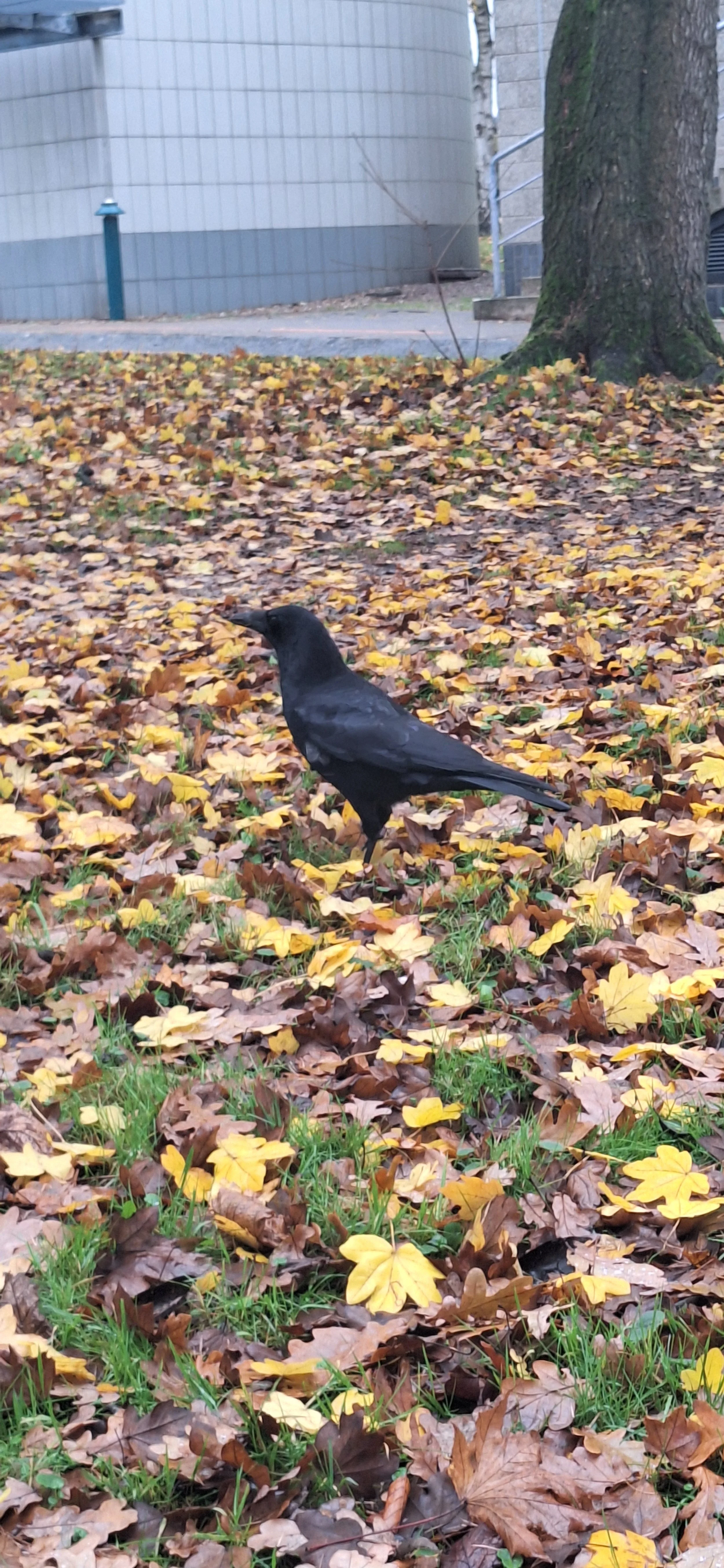
A Carrion crow I found
Morphology and Range
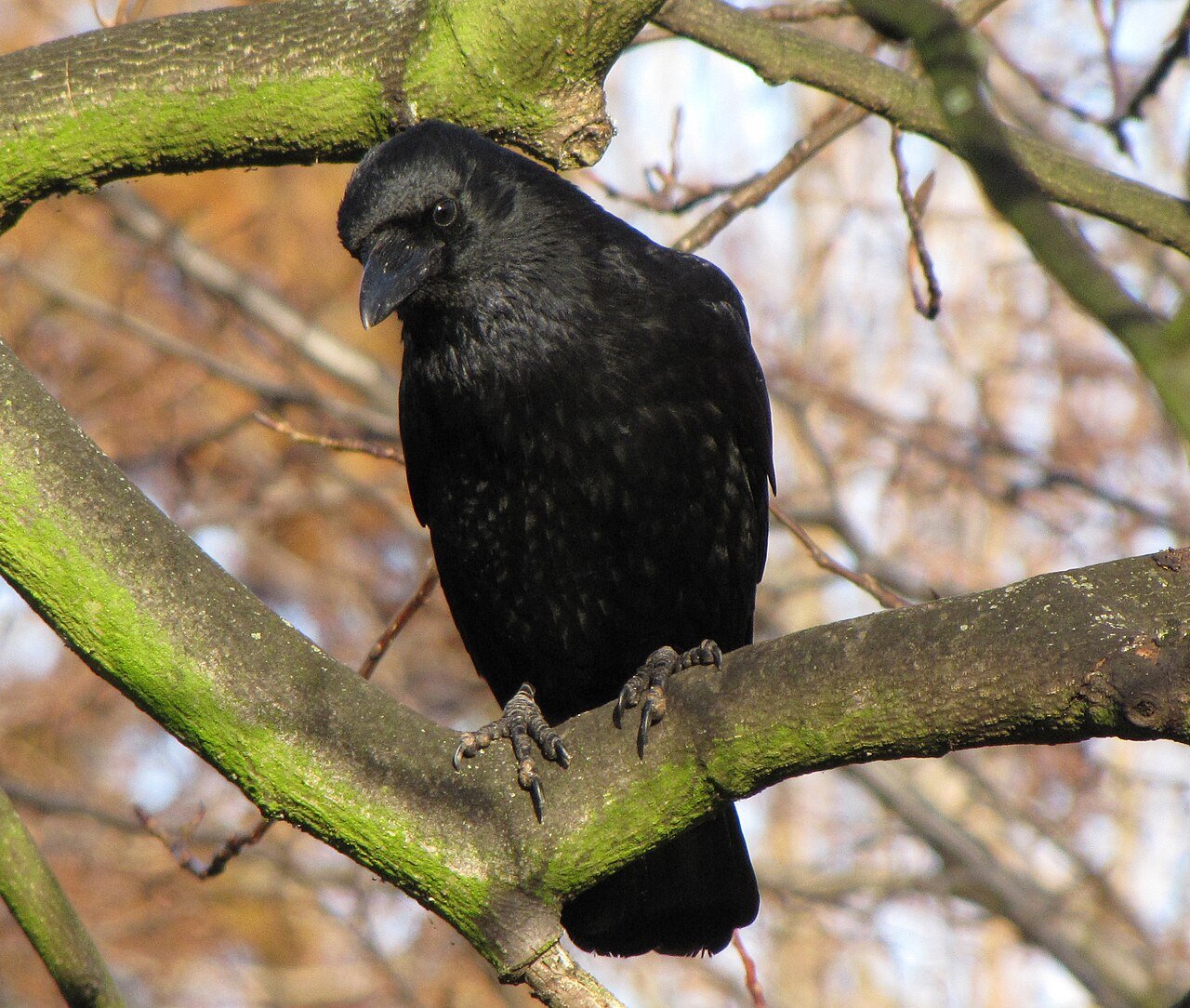
I think everyone knows what a carrion crow looks like, but I’ll describe them regardless. Carrion crows are completely black birds that can look as if they have a blue, green or purple sheen to them. They tend to have a weight of 510g, length of 47cm and wingspan of 98cm. Most of the time they are found on their own but, they can be seen in small groups.
Carrion crows can be found in both western Europe as well as east and central Asia. In the summer, breeding populations can be found in eastern Siberia, but populations aren’t usually seen there in winter. The opposite is true for south east China. In the winter, non-breeding populations can be found around the eastern coast of China, while populations aren’t usually seen there in the summer.
A carrion crow on a tree
Credit: jans canon
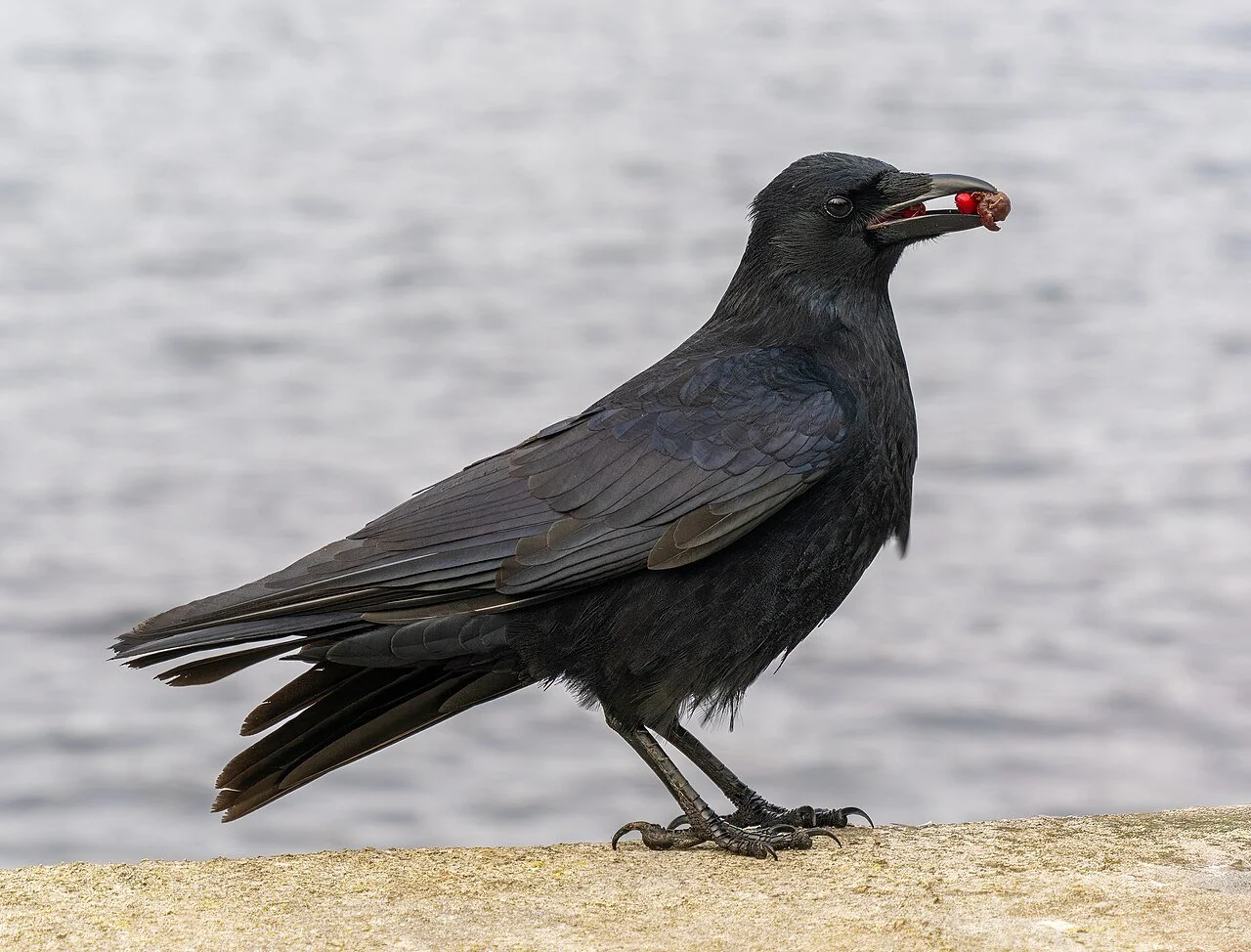
A carrion crow with a berry
Credit: Rhododendrites
Diet and Reproduction
Since carrion crows have the word “carrion” in their name, you would think they eat dead animals. And if you did think that, you’re correct. Carrion crows also eat grains, invertebrates and they occasionally steal and eat the chicks and eggs of other birds. The species has been observed dropping nuts onto roads in Japan so that cars drive over them, cracking the shells. This shows just how intelligent this species can be, learning how to use anthropogenic activities to their advantage.
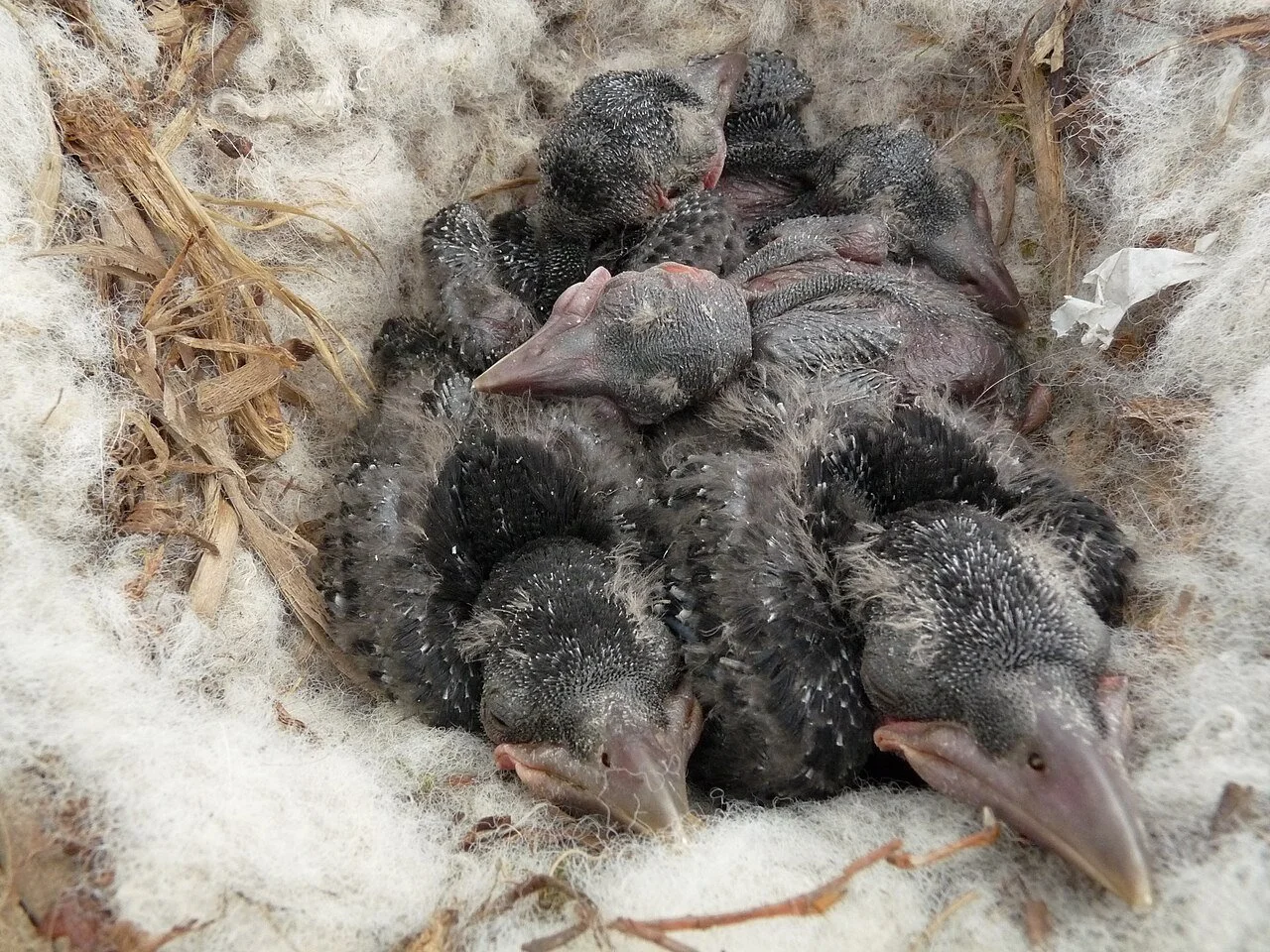
Carrion crows, like their relatives the Eurasian jay, are a monogamous species. They mate around the start of spring, in March and April after which the female lays 3-4 eggs. The female crow incubates the eggs until they hatch, which takes around 20 days. Chicks will fledge after an additional 30 days, but that doesn’t necessarily mean they leave their parents. Sometimes carrion crows will stay with their parents for up to two years. During which the parent birds teach their offspring various foraging behaviours. If the parents have any more chicks over those two years, their offspring may help to take care of their younger siblings. When a carrion crow is around three years old, it reaches sexual maturity and finds a lifelong mate.
Carrion crow chicks in their nest
Credit: Fæ
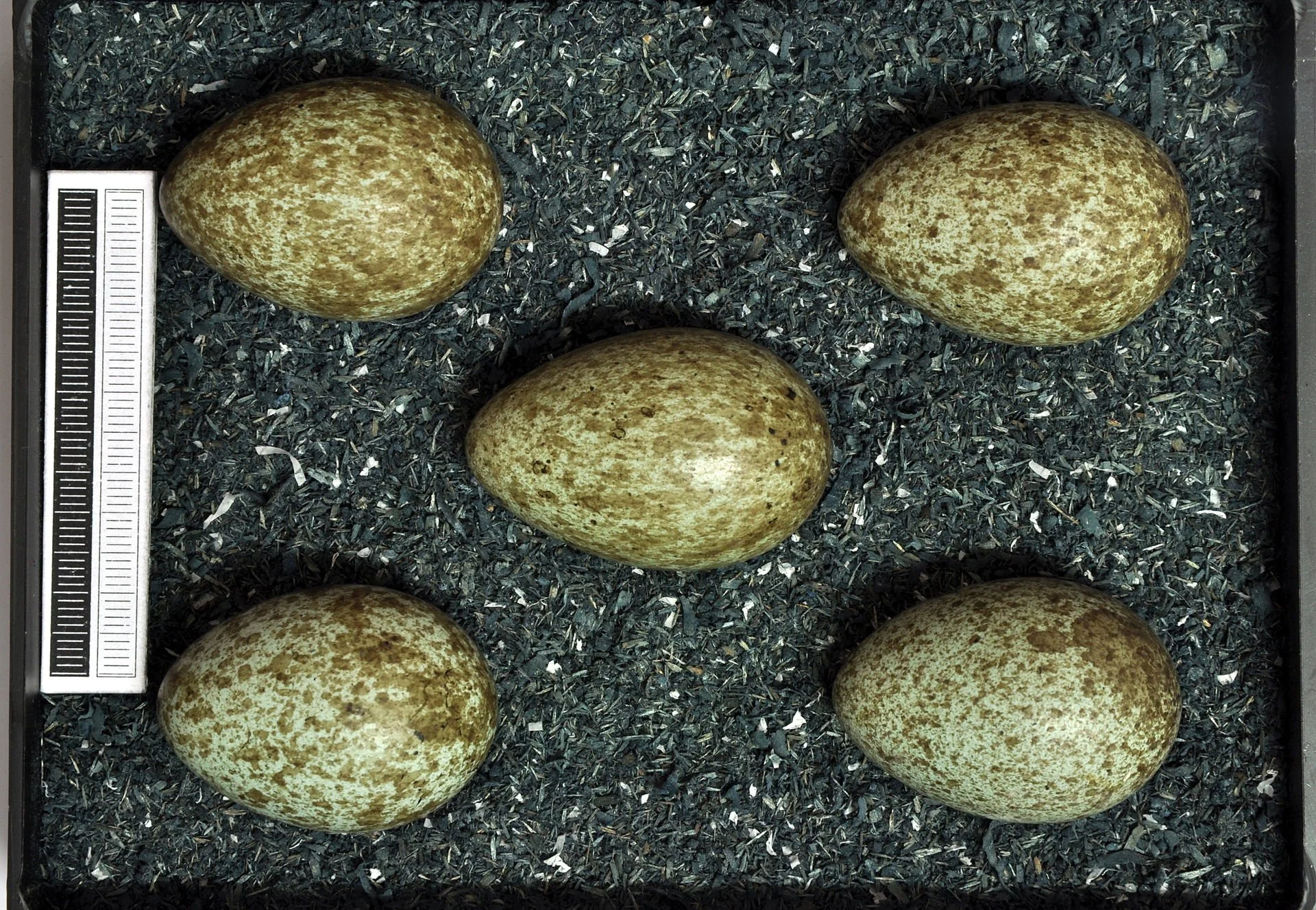
Some carrion crow eggs
Mythology
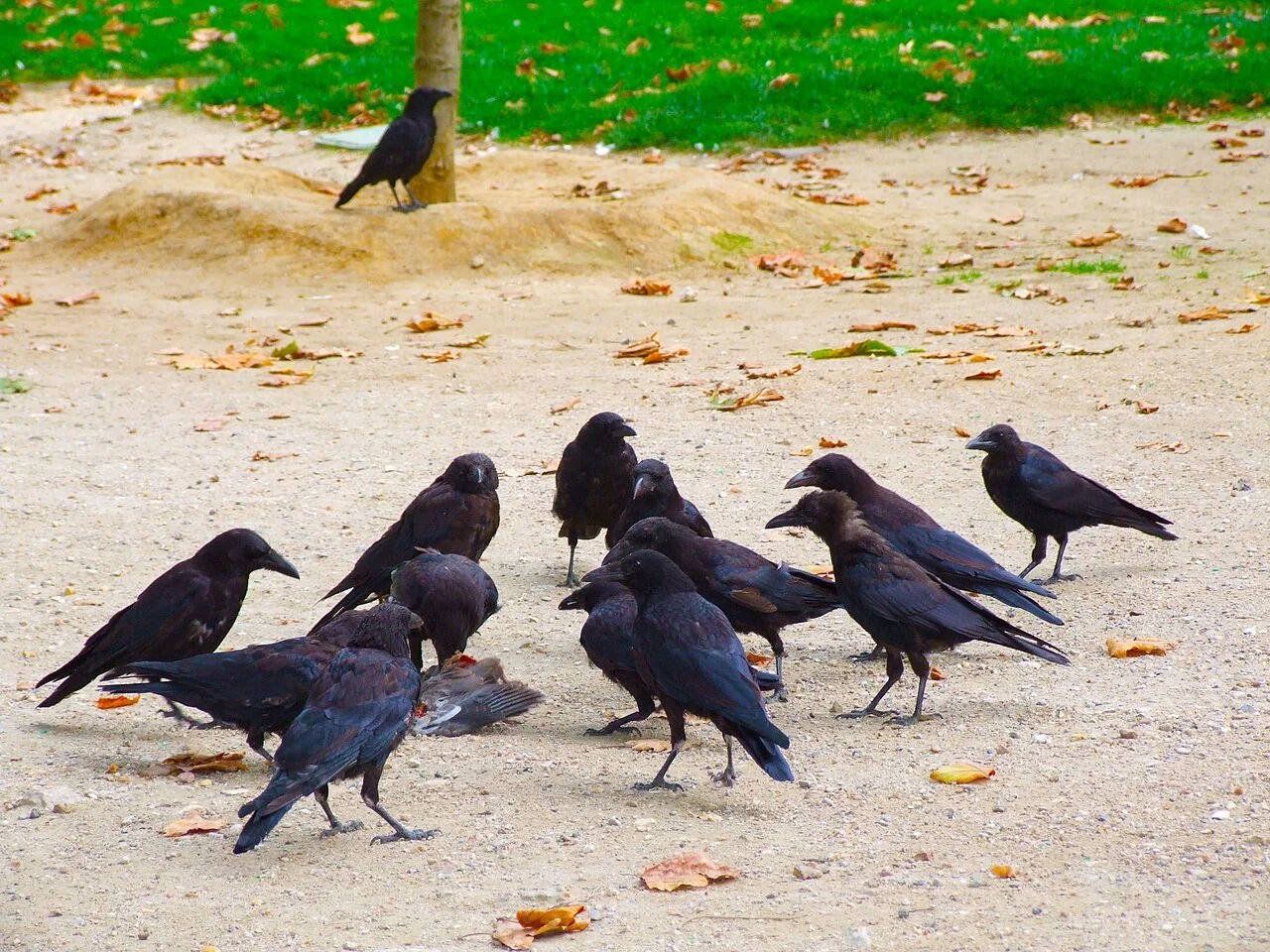
Carrion crows are a symbol of death and bad luck. Fairly expected for a creature whose collective noun is a murder. Scavenging for seeds in farmer’s fields for centuries has lead many to see the species as a destructive creature. An animal that flocks to death, eating that which remains once all life is gone, the carrion. Seeing them so often around the dead had caused some to view them as a psychopomp of sorts. A guide, taking the souls of those who are deceased to the afterlife.
Crows and their close relatives, ravens, have deep ties to the Celtic godess called the Morrígan. A god of war and fate, corvids were seen as her divine messegers which I think fits quite nicely with their psychopomp associations. One myth of the Morrígan states that she is present at every war and battle eithier in her own form or the form of her favorite bird, the hooded crow and the carrion crow. After christianity reached Britain and Ireland, the Celtic religion was twisted into something wrong and evil. As such, the British Isles converted to christianity, crows stong association with death and Celtic myth resulted in them being seen as creatures of satan.
A murder of scavaging carion crows
Credit: Irene Stylianou
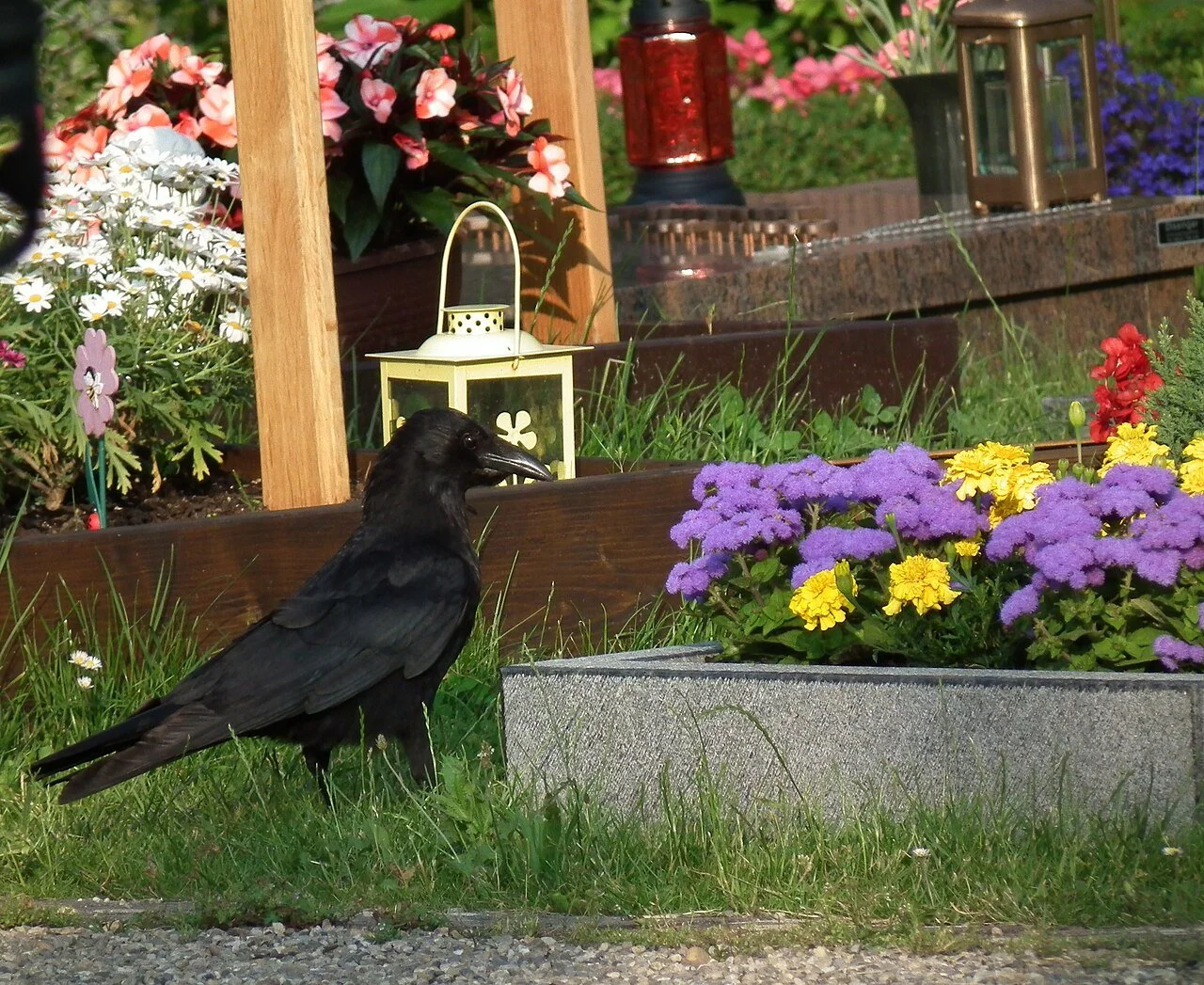
A carion crow by some flowers
Credit: 4028mdk09