Posted on the 29th of November 2025
Gorse
Scientific Name: Ulex europaeus
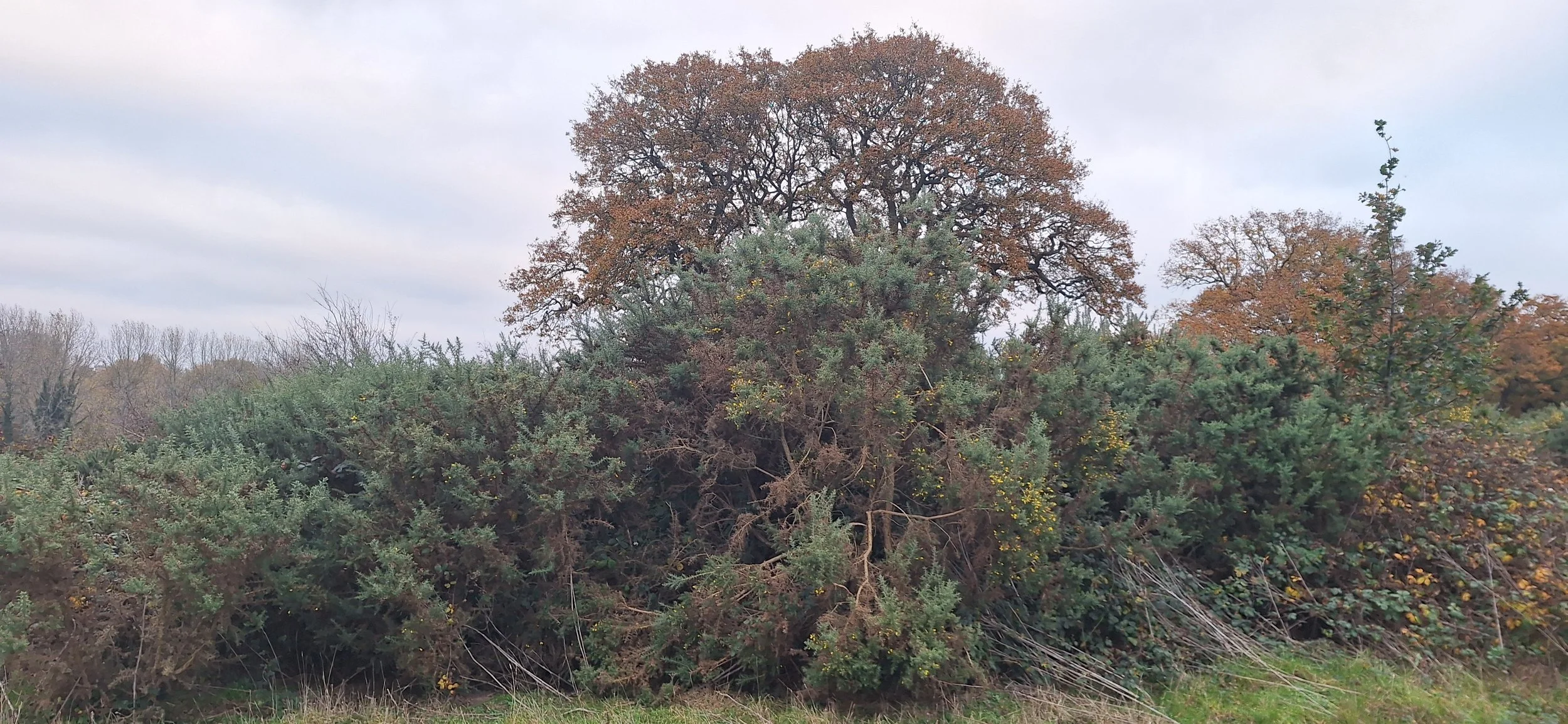
An image of a common gorse plant I found
Morphology and Range
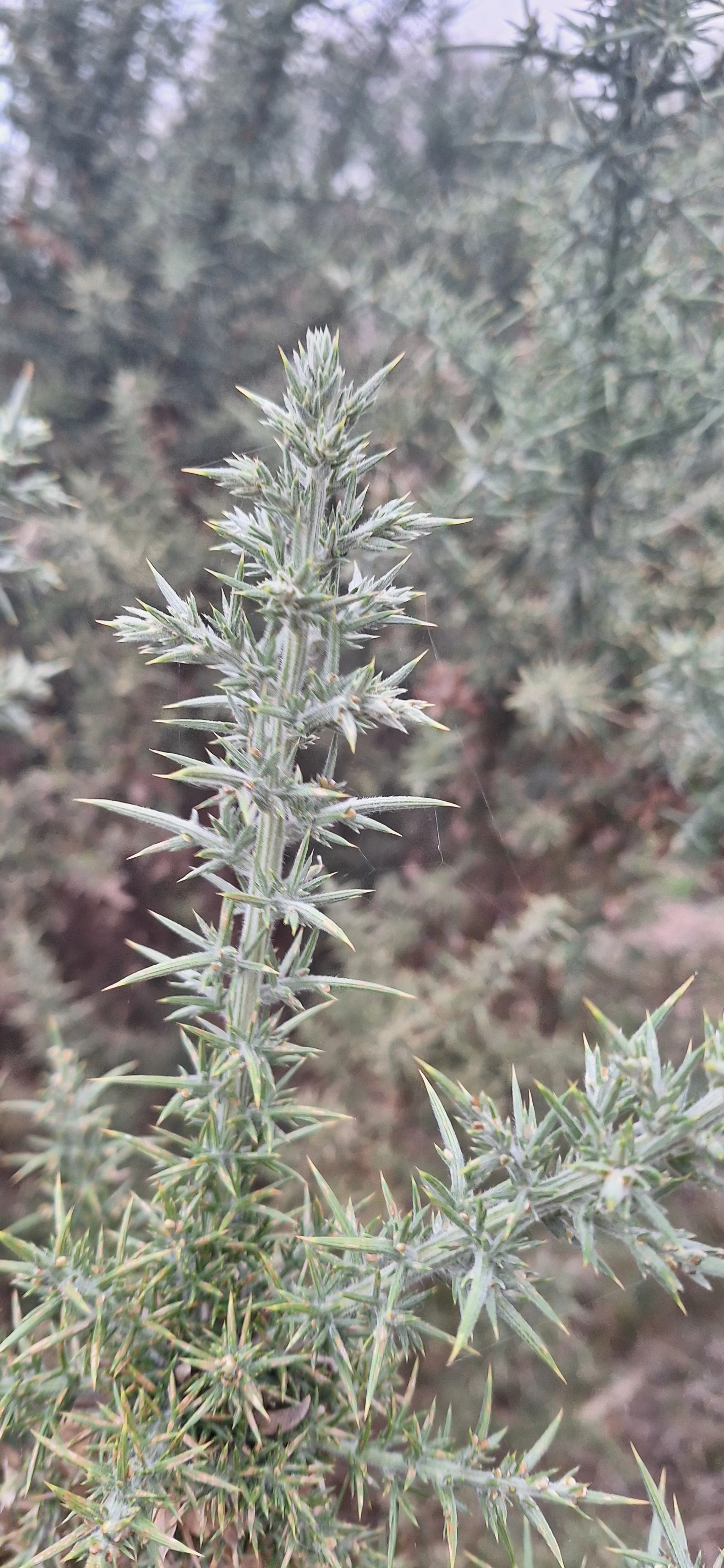
Ulex europaeus, also known as common gorse, is one of approximately 15 species of gorse. This number may not be entirely accurate as my research gave me conflicting information. After spending a lot of time on this 15 was the most accurate number I could find. Common gorse is a perennial, evergreen shrub native to the UK and western Europe. This species is also invasive to most continents, I’ll go into detail with this later.
The shrub can grow up to 4.5 meters tall but is more often around 3 meters. Gorse leaves are modified into sharp, needle like spines. This is likely a defensive adaptation to deter anything trying to eat the plant. Common gorse is highly branched, with each branch covered in these spiney leaves. Common gorse flowers around late winter to early summer.
Gorse, like peas and clovers, is a member of the Fabaceae family, better known as the legumes. As a legume, the fruit of the common gorse is like a pea pod. These pods have a brown-purple colour and contain around three seeds.
A branch of common gorse
Average leaf colour of Common Gorse
Average flower colour of Common Gorse
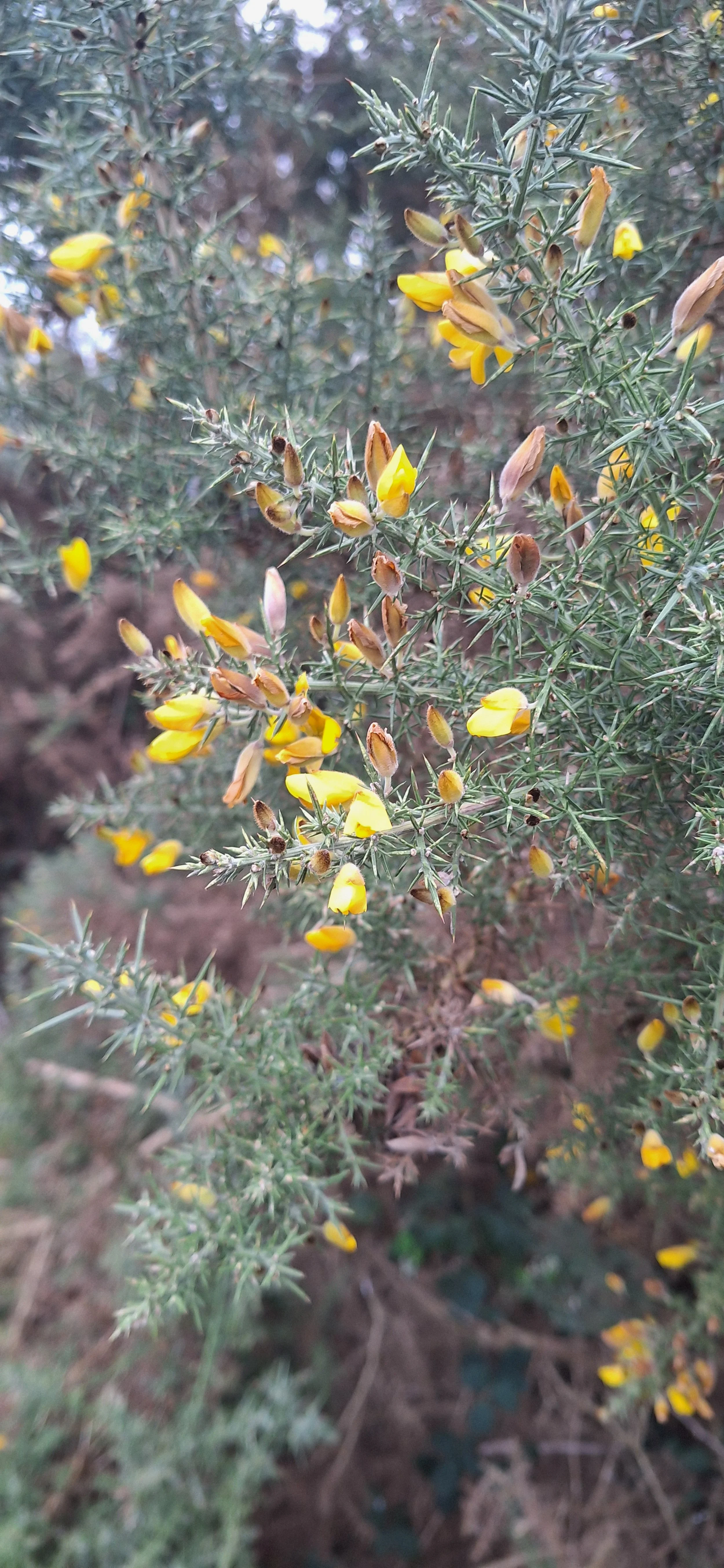
Common gorse with flowers
Invasion, Mythology and Almost Everything else
This section’s idea still doesn’t really work but I’m keeping it anyway as I like it
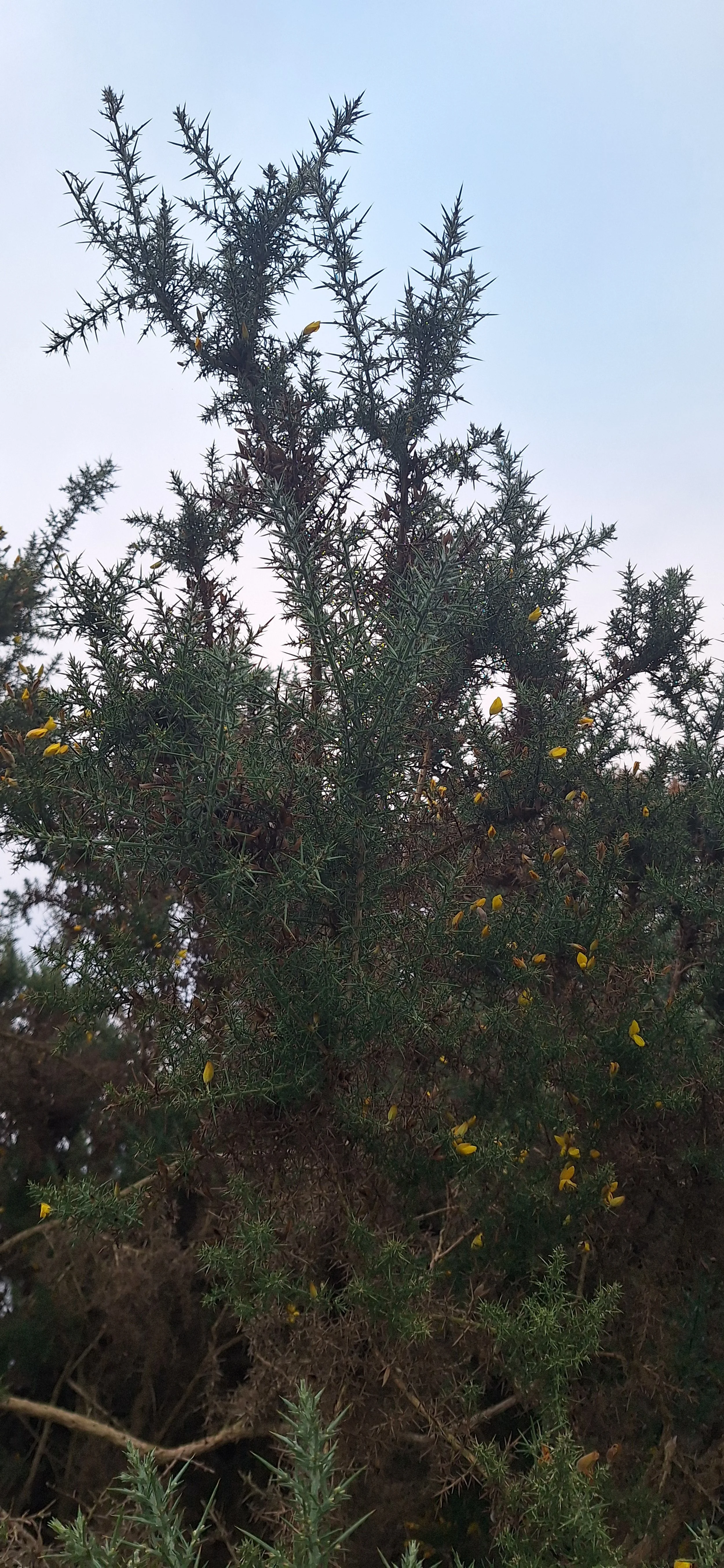
An image of a common gorse plant towering above me
Common gorse is an important part of its native habitat as its nectar is used is a great source of food for insects such as butterflies and it provides shelter to a variety of bird species during the winter. Common gorse is a very pretty plant which has lead to it being introduced around the world. This has lead to gorse being invasive in New Zealand, North America, South Africa, Australia and South America. Gorse is capable of spreading rapidly, out competing native plants and, since common gorse is very flammable, it is a fire hazard. For the reasons listed as well as others, the IUCN has listed Ulex europaeus as one of the top 100 worst invasive species on the planet.
As I’ve already stated, gorse is very flammable. This is due to the plant containing a high concentration of natural oils. The fire created from burning common gorse is very intense and thus was often burnt on Beltane, the Celtic festival marking the first day of summer. While Beltane originates as a Celtic festival, in modern times, both Celtic and non-Celtic pagans celebrate.
Gorse flowers are edible and can be eaten raw. They have also been used in making alcoholic drinks such as wine, giving the drink a yellow hue.
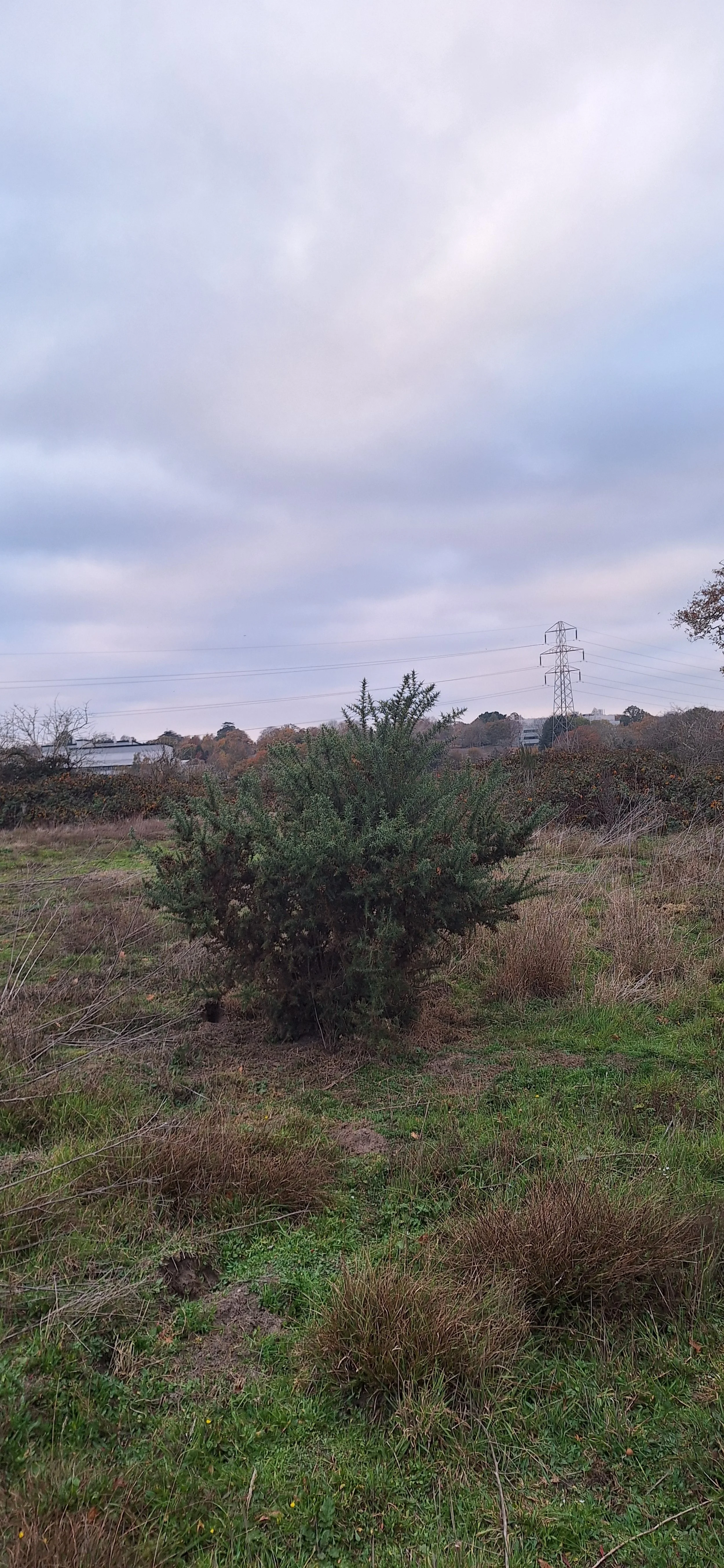
An image of a small common gorse plant