Posted on the 30th of January 2026
Eurasian Magpie
Scientific Name: Pica pica
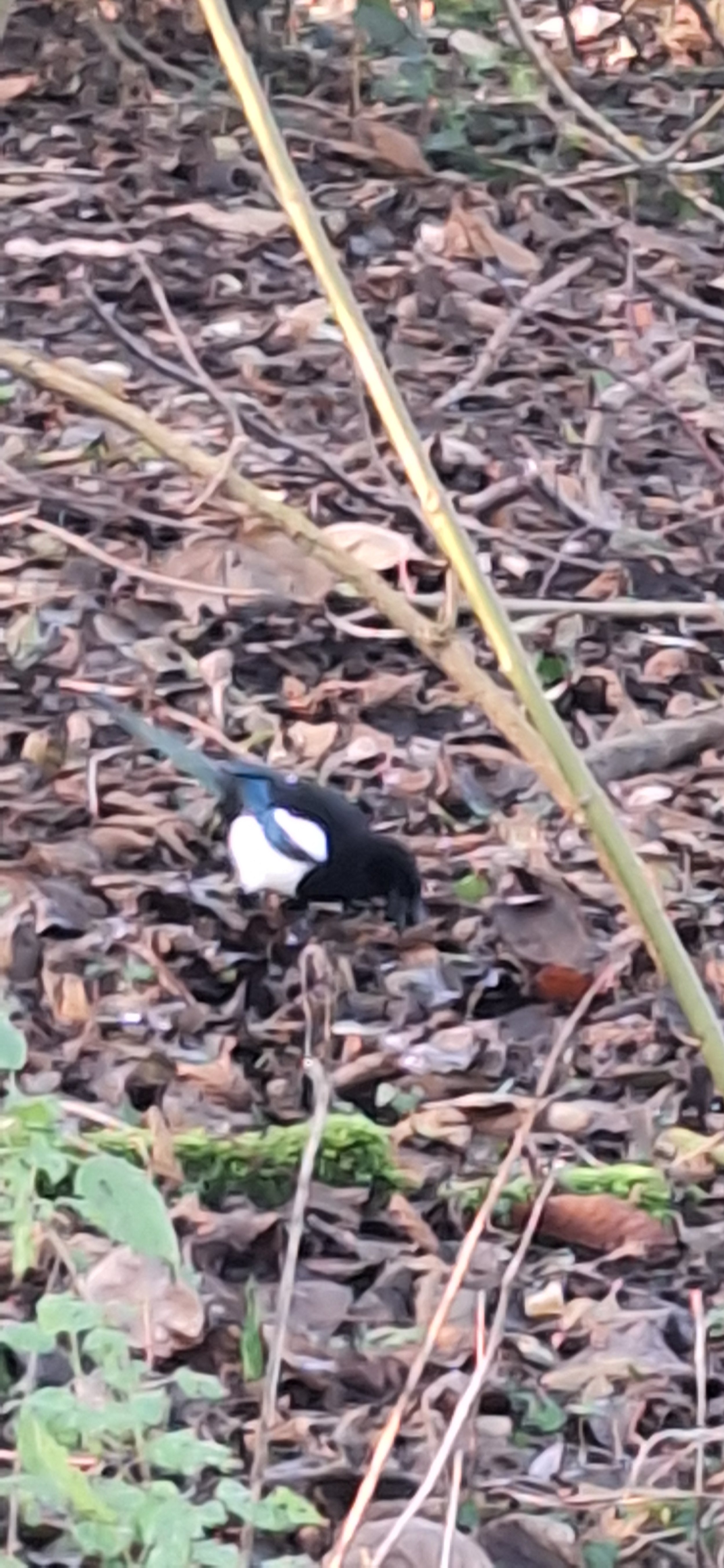
A Eurasian magpie I found on a walk
Morphology, Range and Phylogenetics
The Eurasian magpie is a predominantly black bird with a white breast and has iridescent blue feathers on it’s wings. Magpies have an average wingspan of 56cm, wight of 220g, length and length between 44-48cm.
Magpies can be found throughout Europe and much of Asia as well. However they are absent in northern Scotland and other very cold countries such as Russia. While Eurasian magpies can be found in a great range of locations, they don’t usually move around all that much as the first nest that a magpie ever builds is often within 800 meters of the nests that the grew up in.
Magpies are a member of the Corvidae family so they are closely related to birds such as crows, ravens and jackdaws. In their genus Pica there are seven species of magpies, those being the Maghreb magpie found in north Africa, Asir magpie found in Saudi Arabia, Black-rumped magpie from central China, Oriental magpie from east Asia, Black-billed magpie from north America, Yellow-billed magpie from California and of course the Eurasian magpie
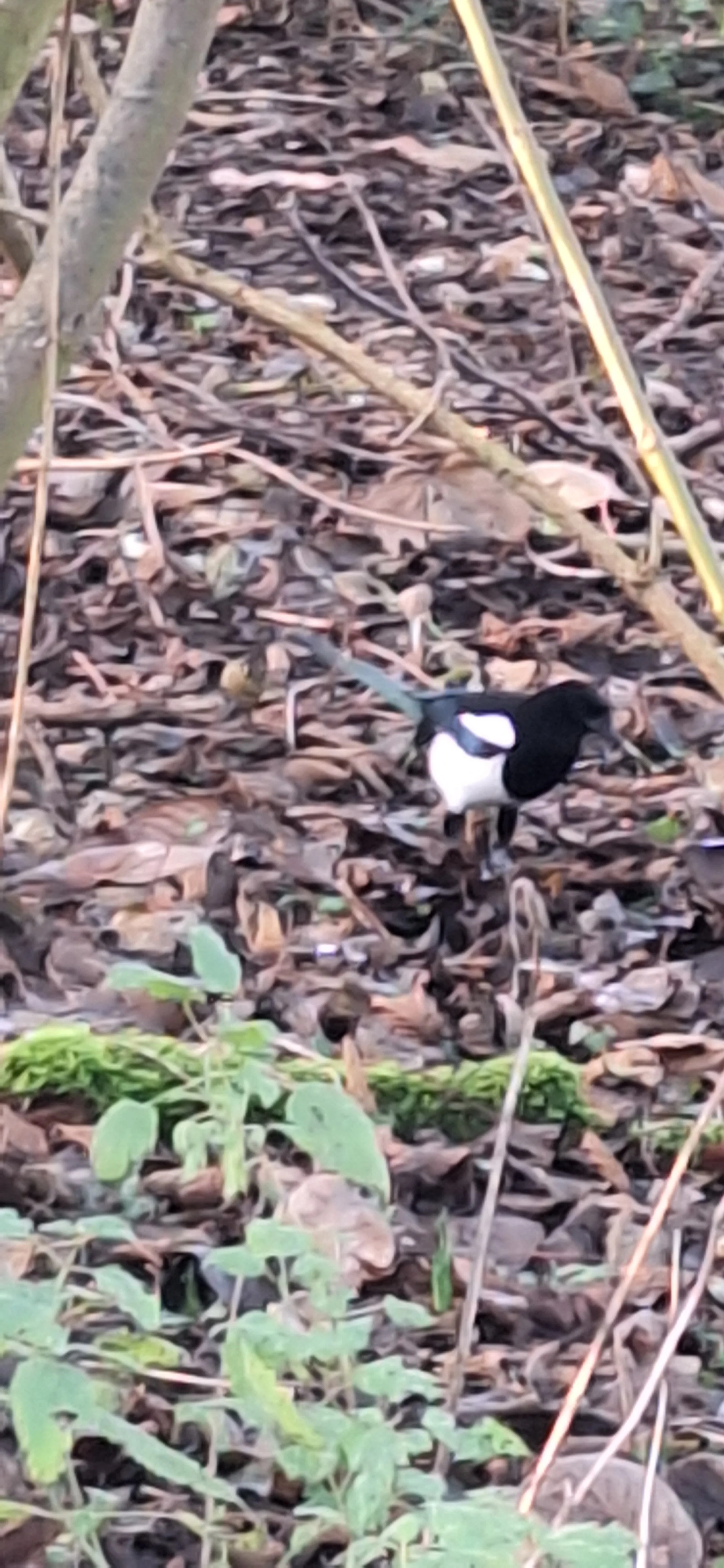
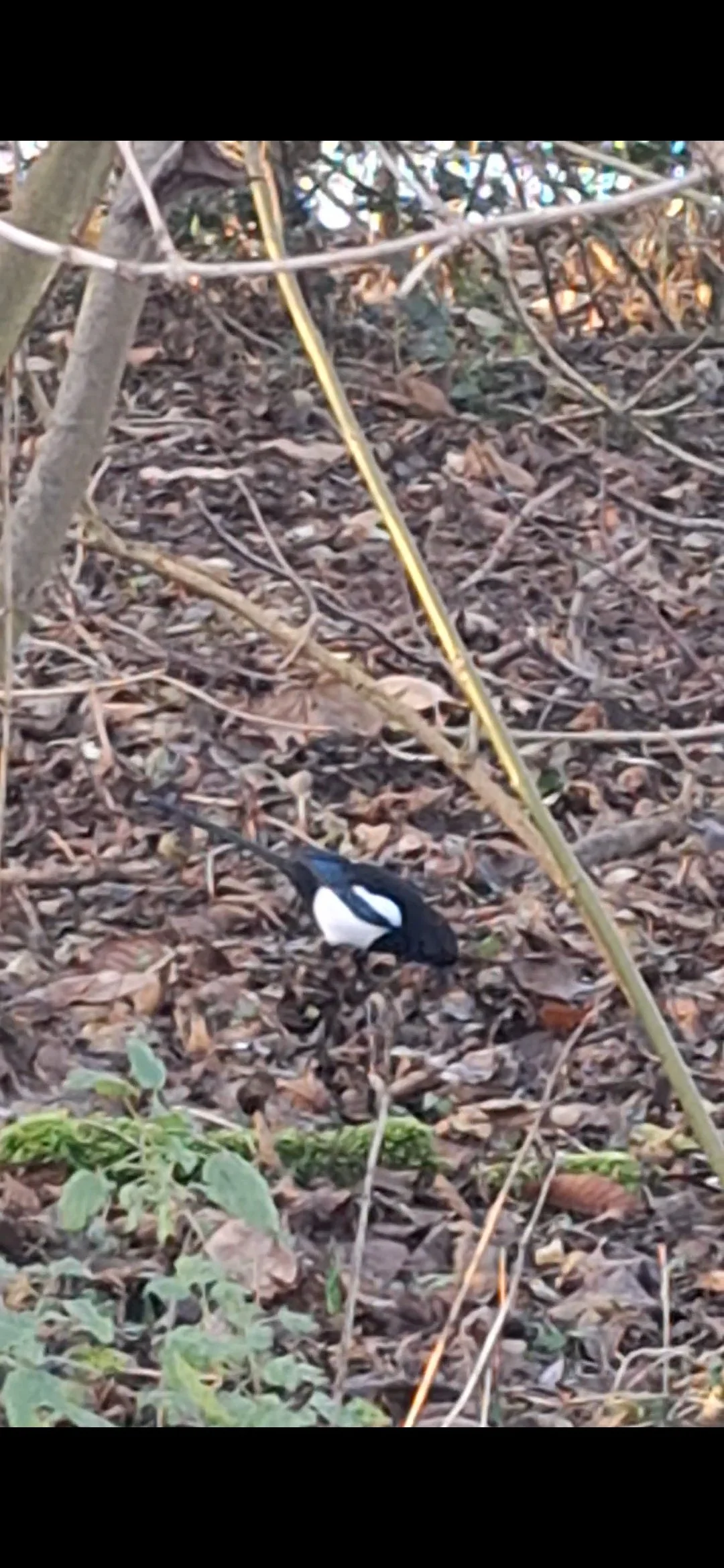
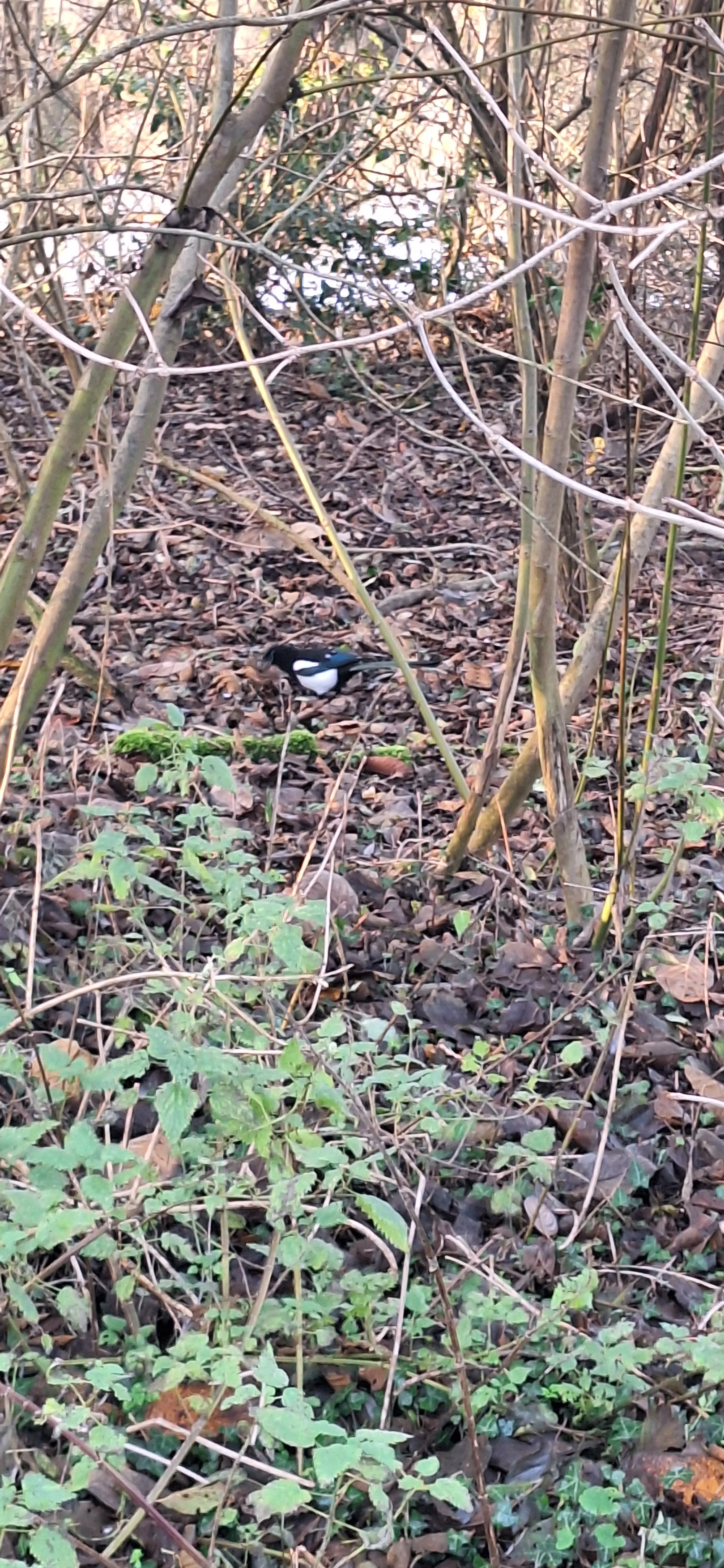
A foraging Magpie
Magpie Mythology and Intelegence
The Eurasian magpie is probably my favorite species of bird. There’s a well know nursery rhyme about magpies that my Nanny used to recite to me every time we came across a magpie when I was little. The nursery rhyme can be read on the right. There are versions of the rhyme that go up to twenty but the first seven is the most well known. When I was little my Nan also taught me to say “Hello Mr. Magpie, how are you today?” every time I see a magpie by itself to avoid bad luck. This superstition likely comes from the magpies association with the devil. Other Christian myths about the magpie include it refusing to enter Noah’s ark and the magpie being the only bird not to cry at the crucifixion.
It’s not just Christianity that demonizes the magpie. A Scottish legend suggest that if you see a magpie at your windowsill it is an omen of death and in a book called “A Guide to the Scientific Knowledge of Things Familiar” by Ebenezer Cobham Brewer (Who was actually born in Norwich), it’s stated that seeing “A single magpie in spring, foul weather will bring”.
Magpie’s are not just very intelligent birds but are thought to be one of the most intelligent animals, being one of the few species capable of recognizing themselves in a mirror. Some research even suggest that they have comparable intelligence to great apes. Magpies are also known to use tools and are thought to have an episodic memory because of this and they’re ability to store food to eat at a later date. Their excellent memory helps magpies to predicted the behavior of their predators and prey.
Magpie nursery rhyme:
One for sorrow, two for joy,
Three for a girl, four for a boy,
Five for silver, six for gold,
Seven for a secret never to be told.
Here's a video of a foraging magpie I found on my walk (Please excuse how shaky my hands are)
Magpies are omnivores and excellent foragers. They can often be seen along roadsides eating roadkill, the carrion makes a very easily meal for them. Other than carrion, Eurasian magpies eats insects, grains, worms and pretty much anything edible that a human might accidently drop on the ground.
Magpies are a monogamous species and so they tend to mate for life. Mating usually takes place in the spring, specifically April, and they lay an average of 5-8 eggs. Magpie eggs are light blue and covered in brown speckles which to me looks similar to an unprocessed chrysocolla crystal. These eggs take a little under a month to hatch and then take a further month to fledge. So if a pair of magpies lay their eggs right at the start of April, they’re offspring would fledge around the end of May or start of June. Magpies make excellent parents, putting their intelligence to good use by cutting up food to the perfect portion size for its offspring.
Diet and Reproduction
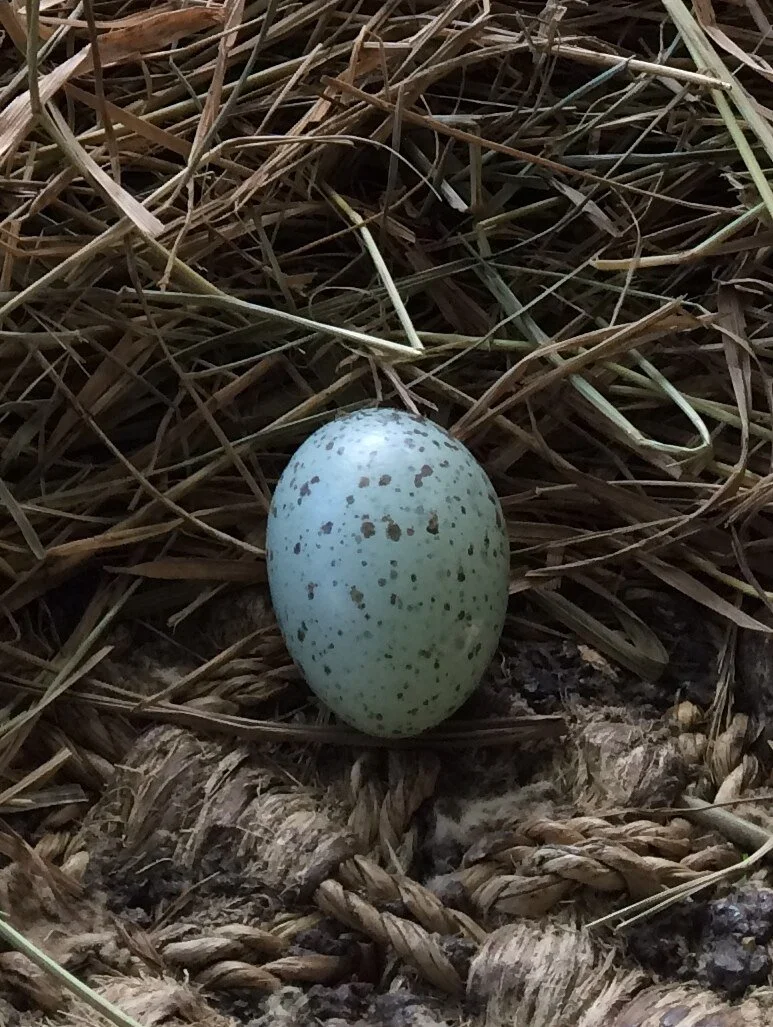
A Eurasian magpie egg
Credit: User-Bowdie on Wikipediae