Posted on the 14th of February 2026
Ring-necked parakeet
Scientific Name: Psittacula krameri
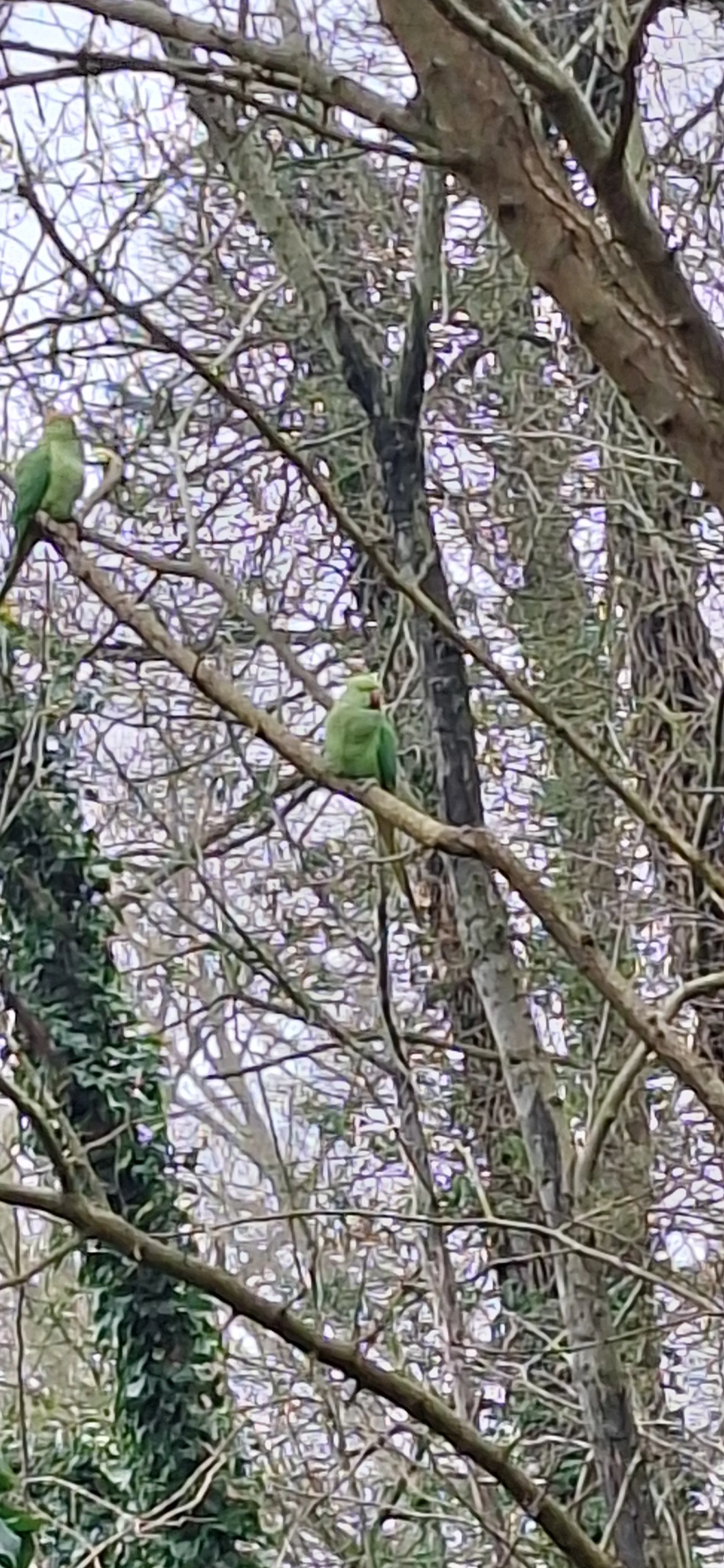
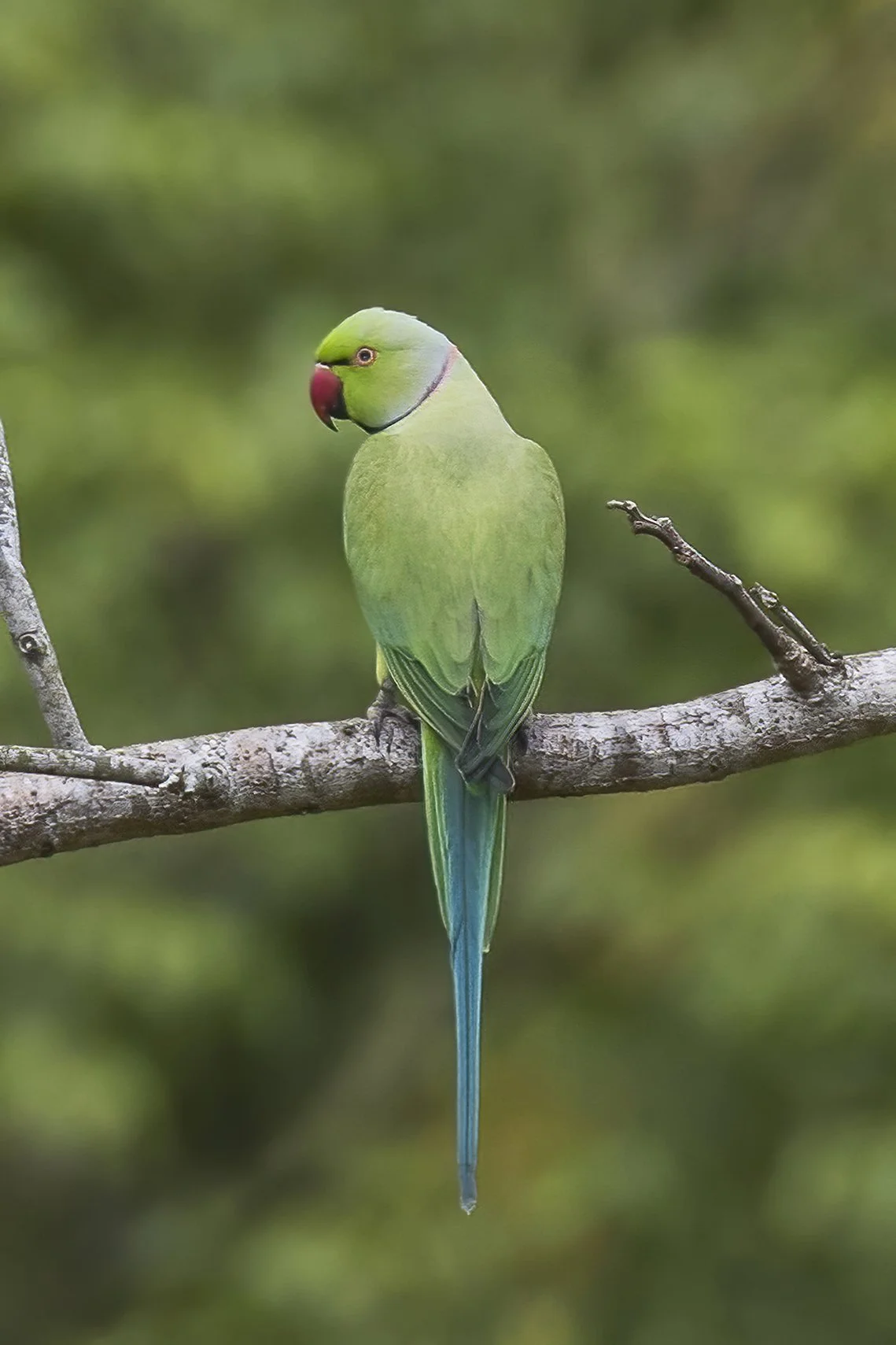
A Ring-necked parakeet I found on a walk
Morphology and Range
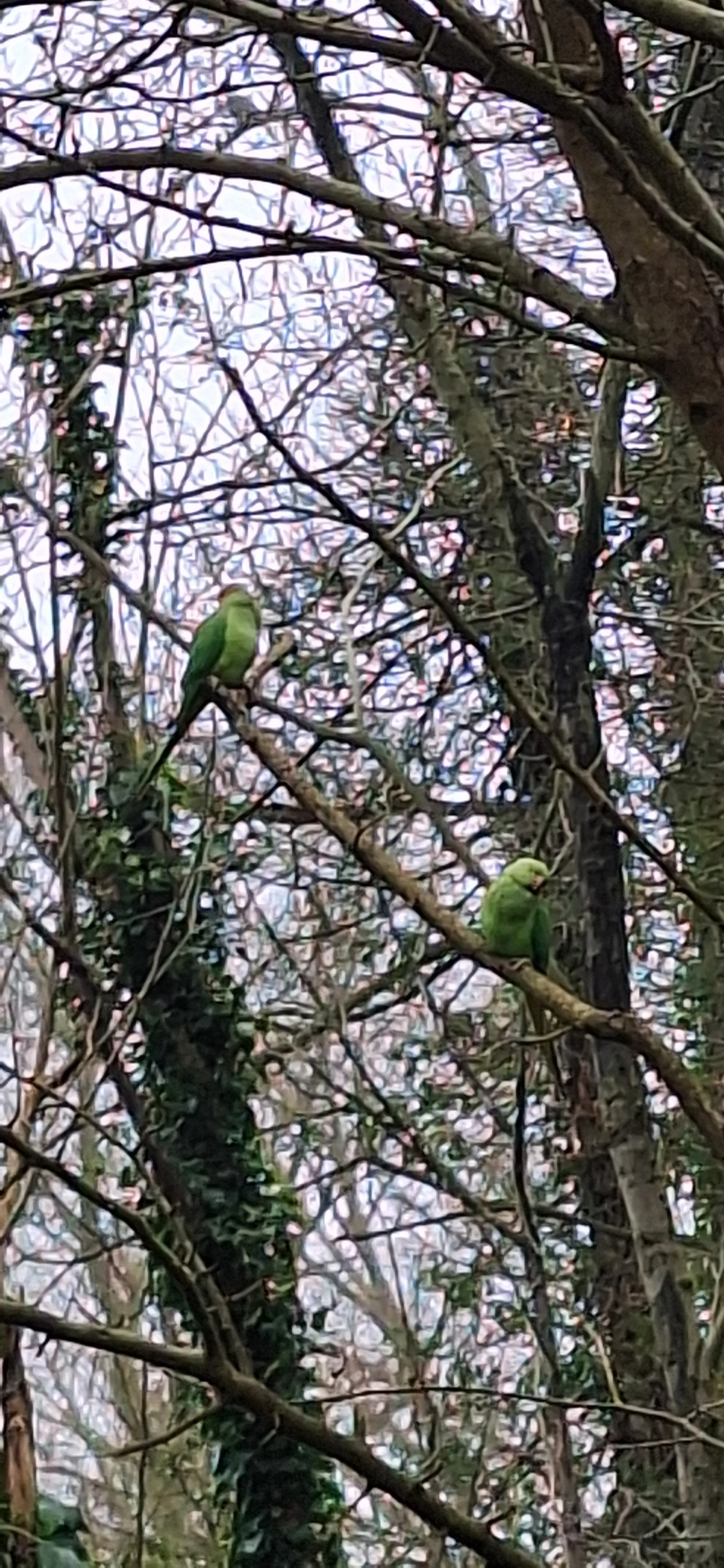
Two Ring-necked parakeets sitting on a branch
The ring-necked parakeet (also known as the rose-ringed parakeet) is a green bird with a pink beak, yellow underside to its tail feathers. Males are coloured black underneath their mouth and around the neck while females have little to no black on them. Ring-necked parakeets have an average wingspan of 45cm, length of 40cm and weight of 110-130g.
No species of parrot is native to the UK. This species of parakeet is native to India and can be found in a belt across Africa just south of the Sahara. Current populations of the parakeet in the UK are thought to have originated from pets that were released in 1969. However breeding pairs have been recorded in the UK as early as 1885, those populations supposedly kept breeding until the 1930s but aren’t related to the current population. Ring-necked parakeets can be found all around the the UK, from the south of Scotland all the way to Brighton. Naturalised parakeet populations aren’t exclusive to the UK they can be found in several other European countries such as Germany, Spain and the Netherlands.
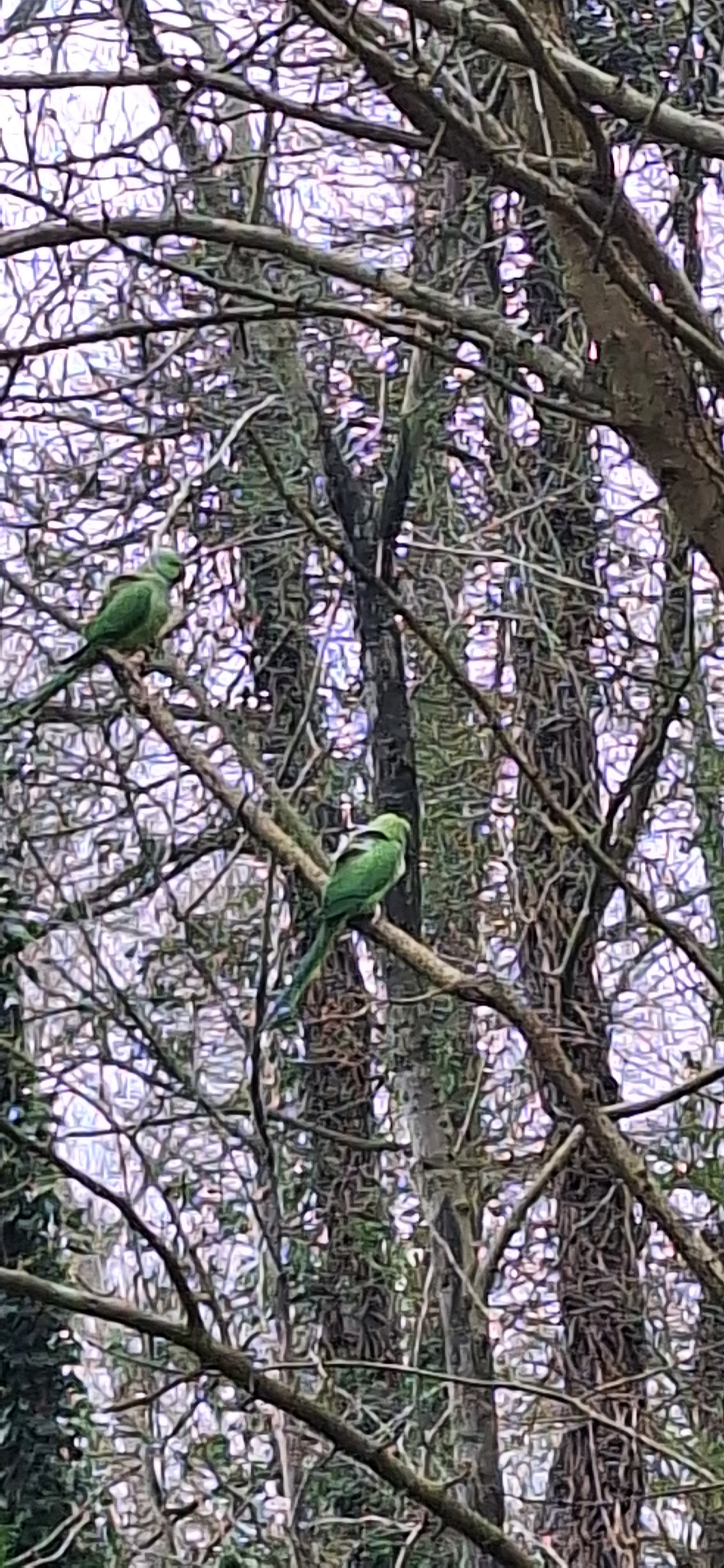
Two Ring-necked parakeets sitting on a branch
Diet, Predation and Reproduction
Ring-necked parakeets primarily eat a variety of plant matter such as fruit, seeds, nuts, flowers, leaves of plants such as dandelions and occasional even tree bark. This species of parakeet can be a destructive feeder as they’ve been known to accidently break bird feeders while using them. Despite being a relatively recent introduction to the UK, many species have already begun to exploit parakeets as food source. Grey squirrels predate on their eggs and young parakeets, while birds of prey such as the peregrine falcon and tawny owls eat the adult birds.
In the UK they make their nests in the first couple months of the year. These nests are built inside tree cavities where the female then lays and incubates 3-4 pale green eggs that hatch after around 23 days and then fledge 40-50 days later.
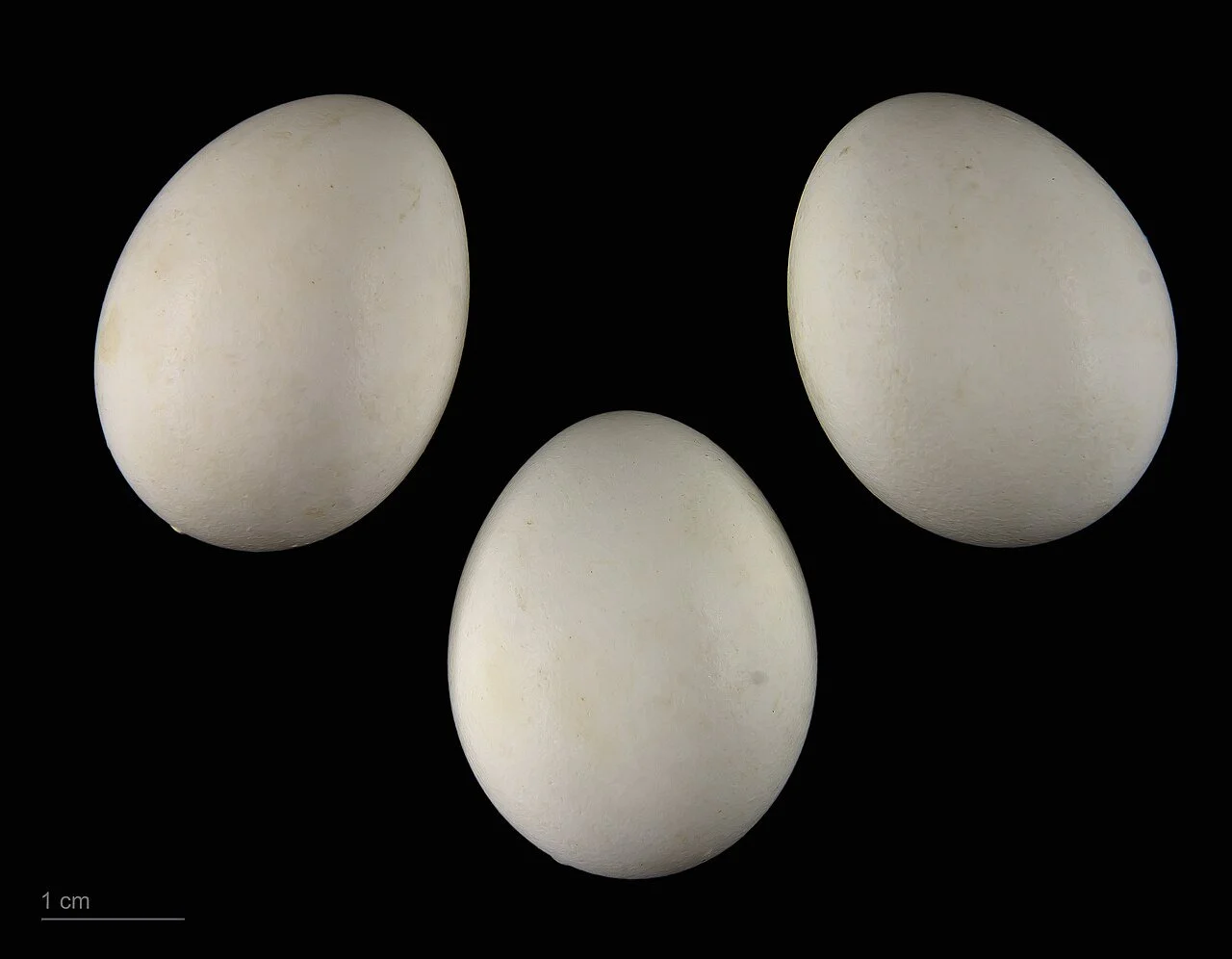
Two Ring-necked parakeet eggs with a 1cm scale bar Credit: Roger Culos
Mimicry
Like many species of parrot, the ring-necked parakeet is capable of mimicking a wide variety of sounds including human speech. They can even be taught how to say specific words and phrases. Most bird species have an organ similar to the larynx called the syrinx. The syrinx can be found where the lungs branch into the trachea and allows birds to produce several different tones at once. It is through a combination of the syrinx and precise tongue movements that parrots such as the ring-necked parakeet can produce human words. There are a few reasons as to why parrots have this ability, my favorite being that it’s for when an individual joins a new flock, they can mimic the new flock’s dialect to integrate more seamlessly. For some reason imagining flocks of parrots with different accents is really funny to me.
A Ring-necked parakeet close up Credit: Charles J Sharp