Posted on the 15th of February 2026
European Robin
Scientific Name: Erithacus rubecula
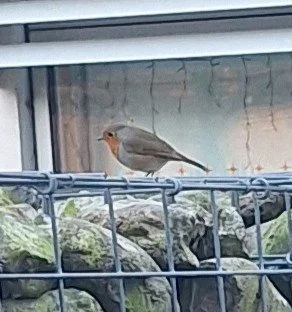
A robin I found on my way to a lecture
Morphology and Range
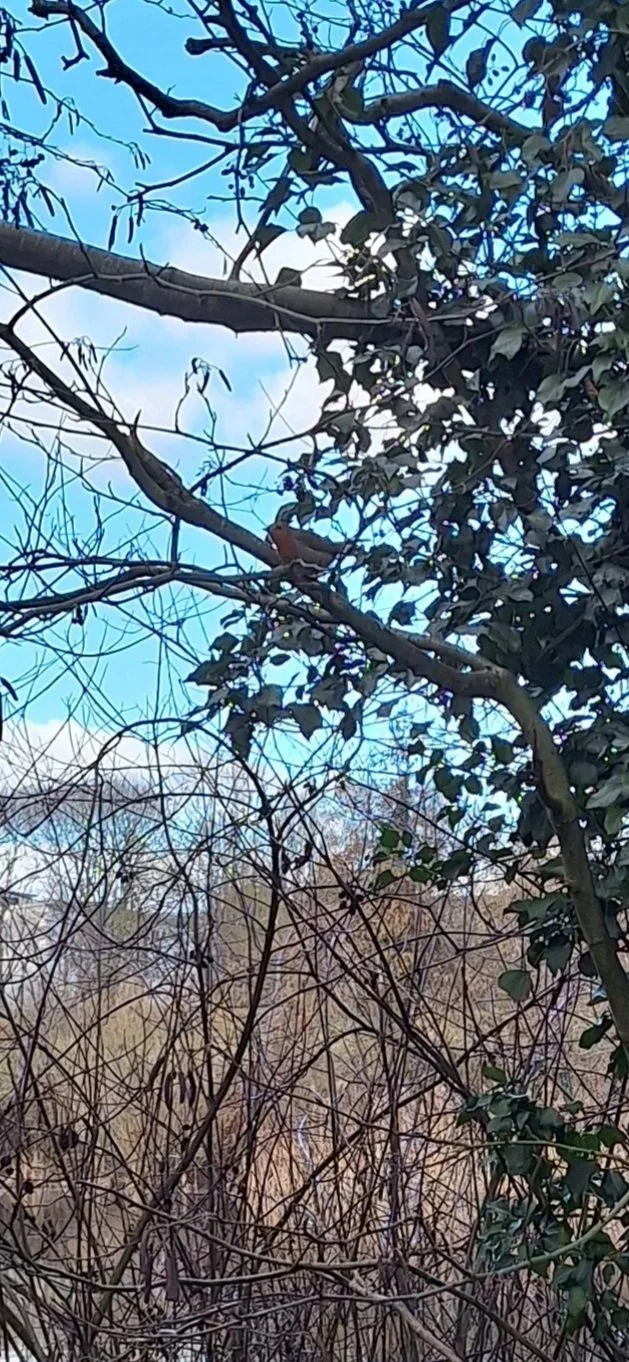
The European Robin is a garden bird with a bright red/orange breast and face. The rest of the Robin’s body is covered in light brown feathers. European Robins have an average length of 14cm, wingspan of 21cm and weight between 14 and 21 grams. I personally found this quite surprising, I aways assumed that Robin’s where smaller, maybe ping-pong ball sized. Having now given it some thought, I think this is likely because I’ve always seen them from a couple meters away which made them look smaller in perspective. Another fact that I had assumed wrong about the European Robin is that only the males have the bright colouration. I had assumed this as it’s very common for birds to have this sort of sexual dimorphism where only the male is brightly coloured. As it turns out both male and female robins have this iconic colouration.
As you can probably guess from the name this species can be found throughout almost the entirety of Europe. There’s only a couple places in Europe where they can’t be found such as Iceland and the north-east of Sweden. Populations can also be found in west Asia and the far north of Africa.
A European Robin sitting on a tree branch
Average feather colour of the breast of a European Robin
Average feather colour of the back of a European Robin
Average feather colour of the underside of a European Robin
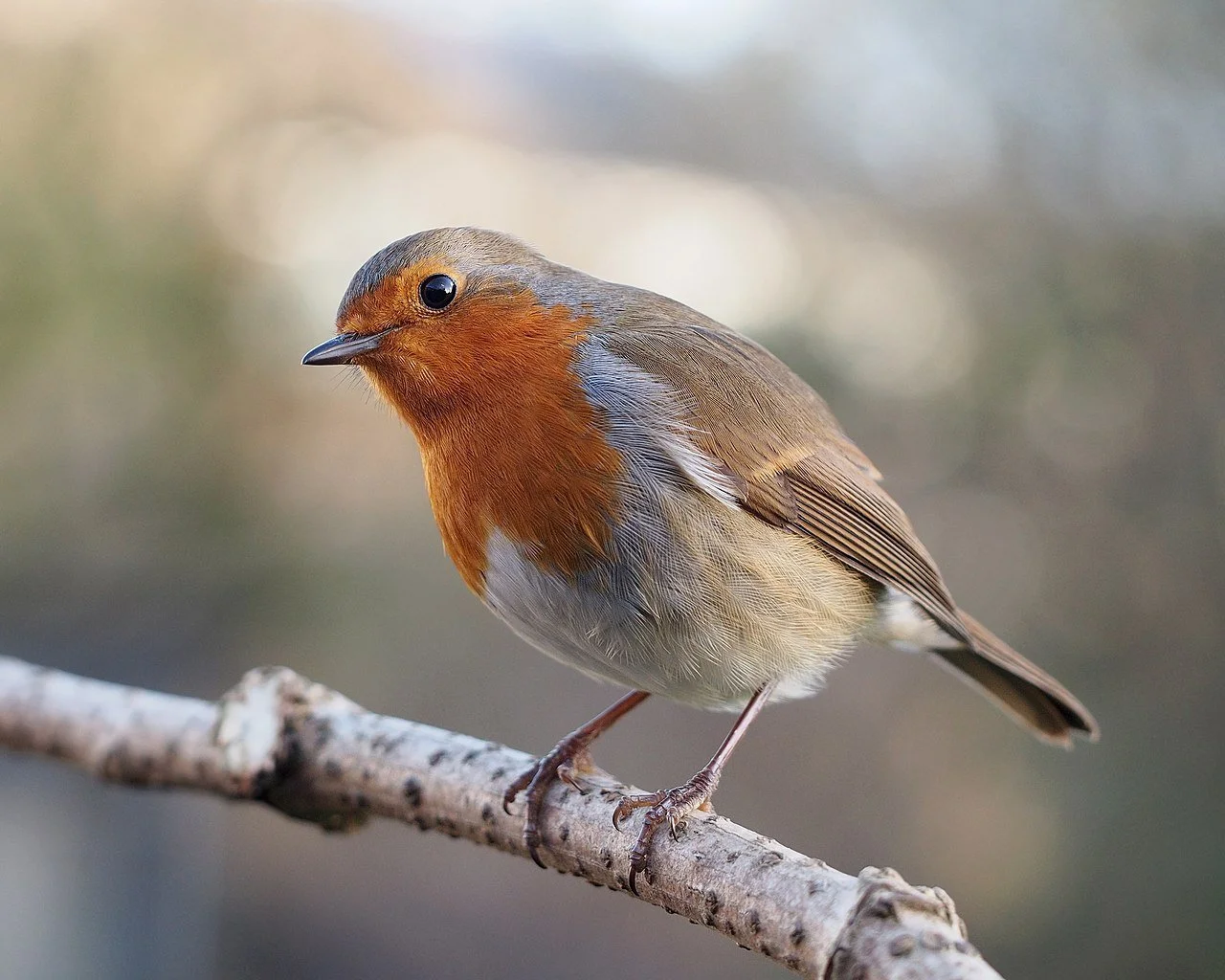
A European Robin close up
Credit: Francis C. Franklin
Robin Diet and Breeding
Small invertebrates such as insects and worms are a staple in the European robin’s diet, providing them with an excellent source of proteins. Robin’s also eat a variety of seeds, nuts and fruits.
Robins typically mate at the beginning of the year between the months of January and March. Robins are non-monogamous so they have different mates each breeding season. Males use their red breast to compete with each other for attention of a female. When it’s time to build a nest robin’s like to make them somewhere where they’ll be sheltered such as behind some ivy. A few years ago I actually got to see some robin chicks grow up as their nest was built behind some ivy in my garden next to the conservatory. The conservatory has this weird window that faces a brick wall about 30 cm away from it, which was where the robins decided to build their nest. Once the nest has been built, robins lay an average of 5 cream coloured eggs. These eggs hatch after approximately 13 days, they then only take around two weeks to fledge.
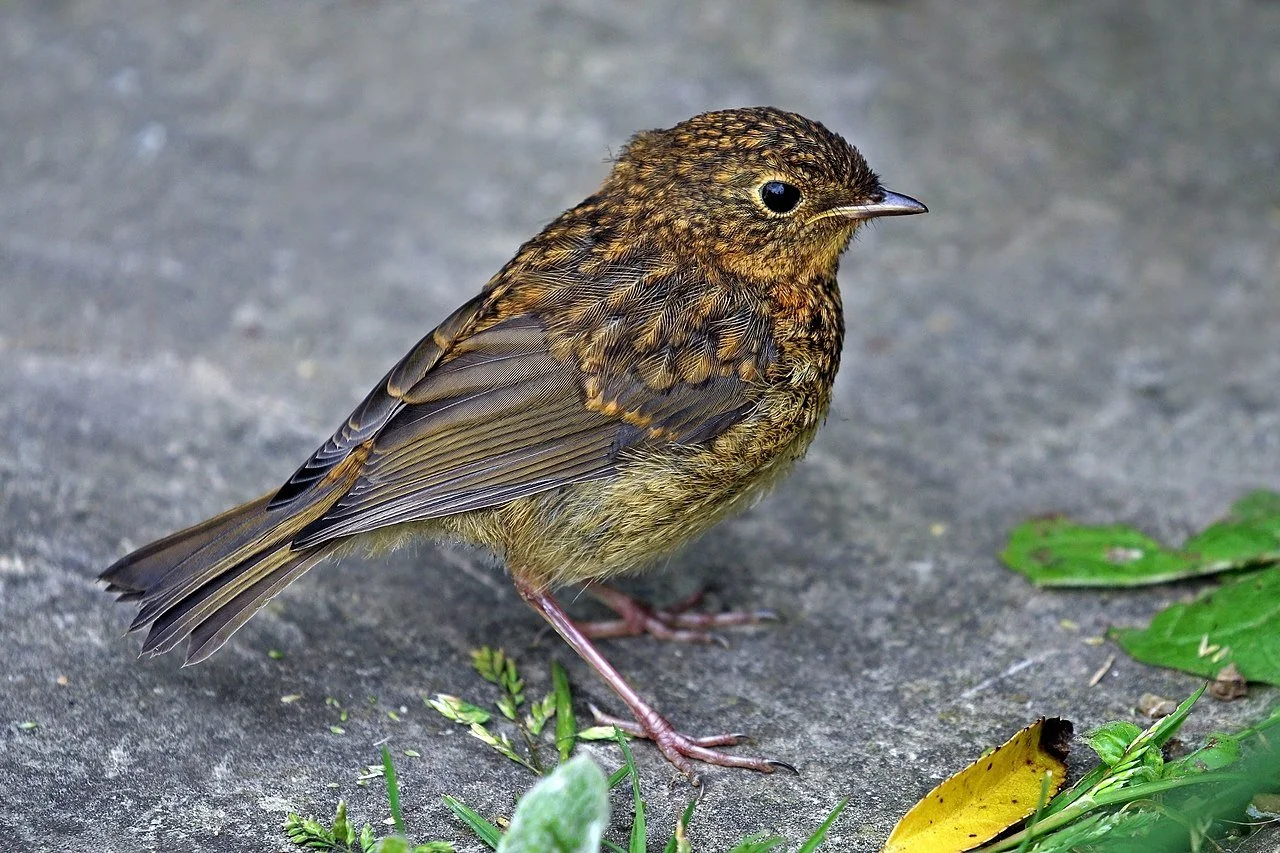
A juvenile European Robin
Credit: Charles J. Sharp
Here I’m going to talk about some myths about the European Robin that come from the British isles. Please take the information in this section with a pinch of salt as in my research there was a lot old myths robins where retroactively added to within the past few year. This was usually from websites selling products that they wanted to seem more authentic. Hopefully all the information here is accurate but there is a chance that I was fooled by some misinformation.
The European Robin is heavily associated with Christianity. Probably the most well known connection between the two is Christmas as Robins have appeared on Christmas cards since the Victorian era. However a lesser known connection is a Welsh origin myth from Christianity as to how the robin got its red breast. In the myth the robins red breast comes from the blood of Christ spilling on the robin as it tries to remove Jesus' crown of thorns during his crucifixion.
There are also Celtic myths about the robin from before the christianization of the British isles. In Ireland robins where seen as messengers that could traverse between worlds. Another Celtic belief of robins being a symbol of protection on and warmth emanating from the they’re fire coloured breast. These two belfies converge as seeing a robin was a sign of a deceased family member’s spirit being near and watching over you. The robins connection to spirits is likely the reason why killing a robin was thought to bring bad luck.