Posted on the 28th of October 2025
Common Snowberry
Scientific Name: Symphoricarpos albus
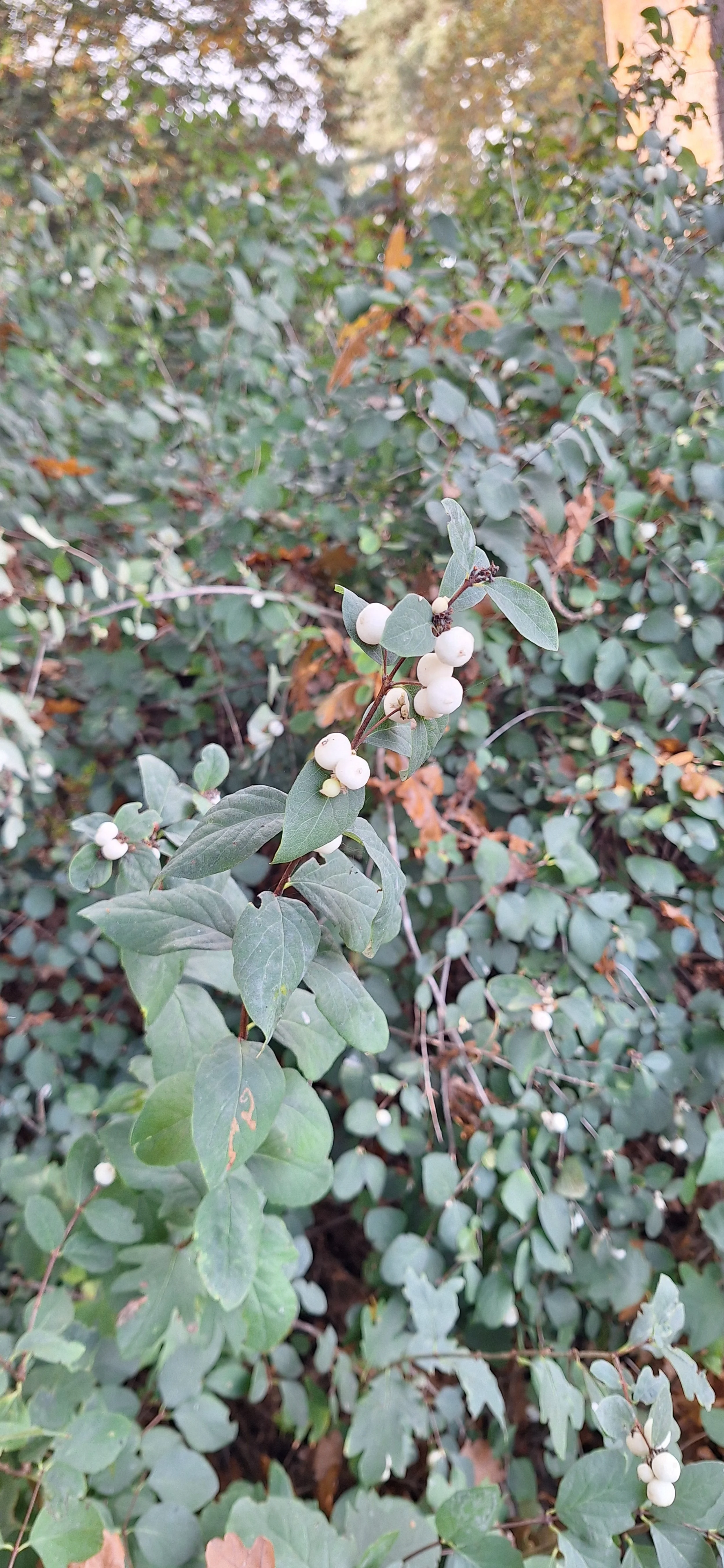
An image of a snow berry plant I found
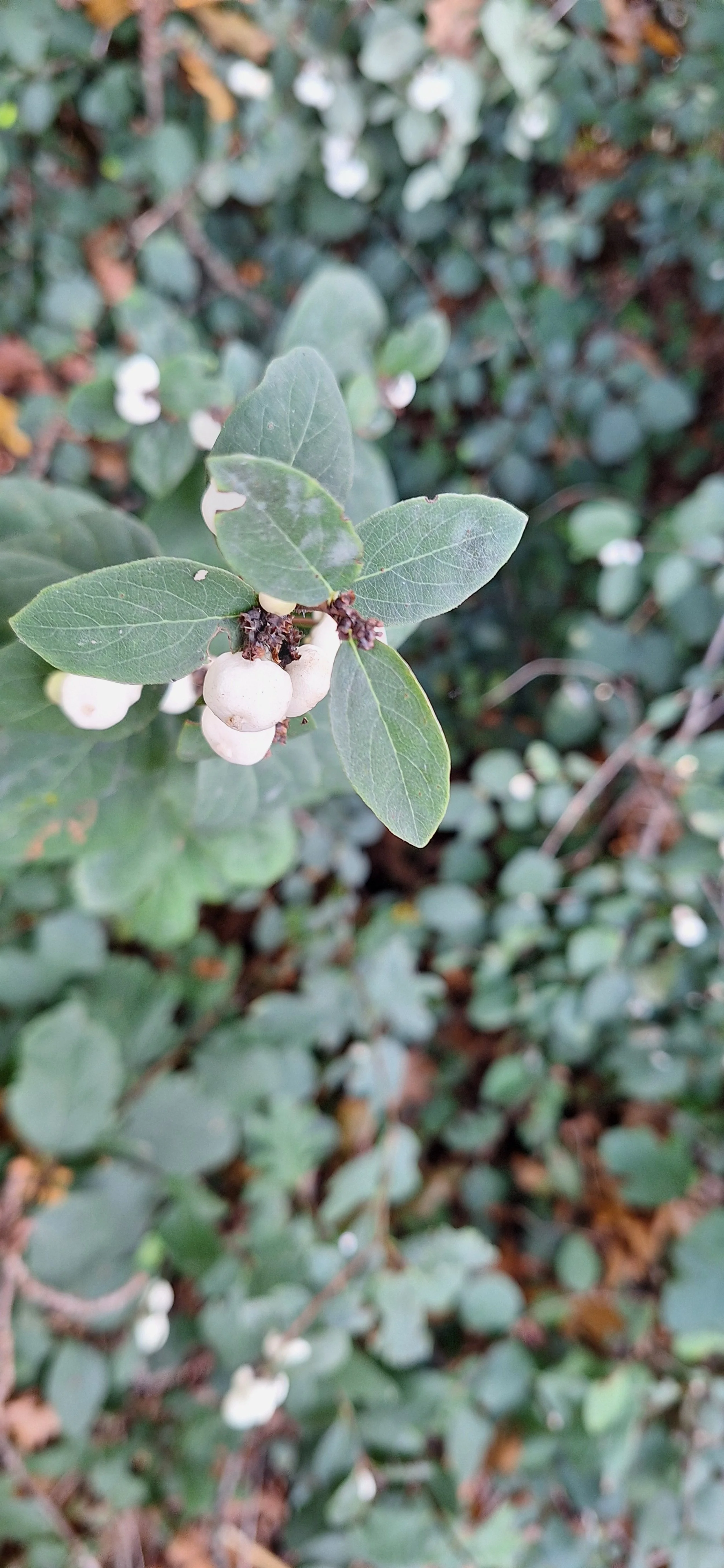
An image of the top of a Common Snowberry plant
Morphology and Range
The common snowberry is one of 15 species of snowberry and is native to North America. Common snowberries can however be found all over the world as it is a very popular ornamental plant. Snowberries are deciduous shrubs that often grow to around a meter tall and two meters wide. They have oval leaves that when you average out the colours of you get a colour with the hex code #92ae99 which can be seen on the right. And because I can’t do anything normally I also averaged out the colours of the berries (#E9E3EF), exterior of the flower (#D0ABB7) and the interior of the flower (#CCD6DC).
I don’t have any pictures of a flowering Common Snowberry because they flower during late spring and early summer. The flowers appear in bunches along the stem of the plant and have a light pink coloration. They are usually pollinated by insects and once pollinated they slowly become white berries that ripen around autumn and early winter. Snowberries are named after these white berries, their berries are also the reason for two of the plants alternate names, ghostberries because of the white coloration and waxberries as the berries have a waxy coating. I think the berries look like little white pumpkins because of their rounded shape and slightly flattened bottom. Snowberries have a fleshy interior with many seeds, similar to tomatoes.
Average leaf colour of a Common Snowberry
Average berry colour of a Common Snowberry
Average exterior flower colour of a Common Snowberry
Average interior flower colour of a Common Snowberry
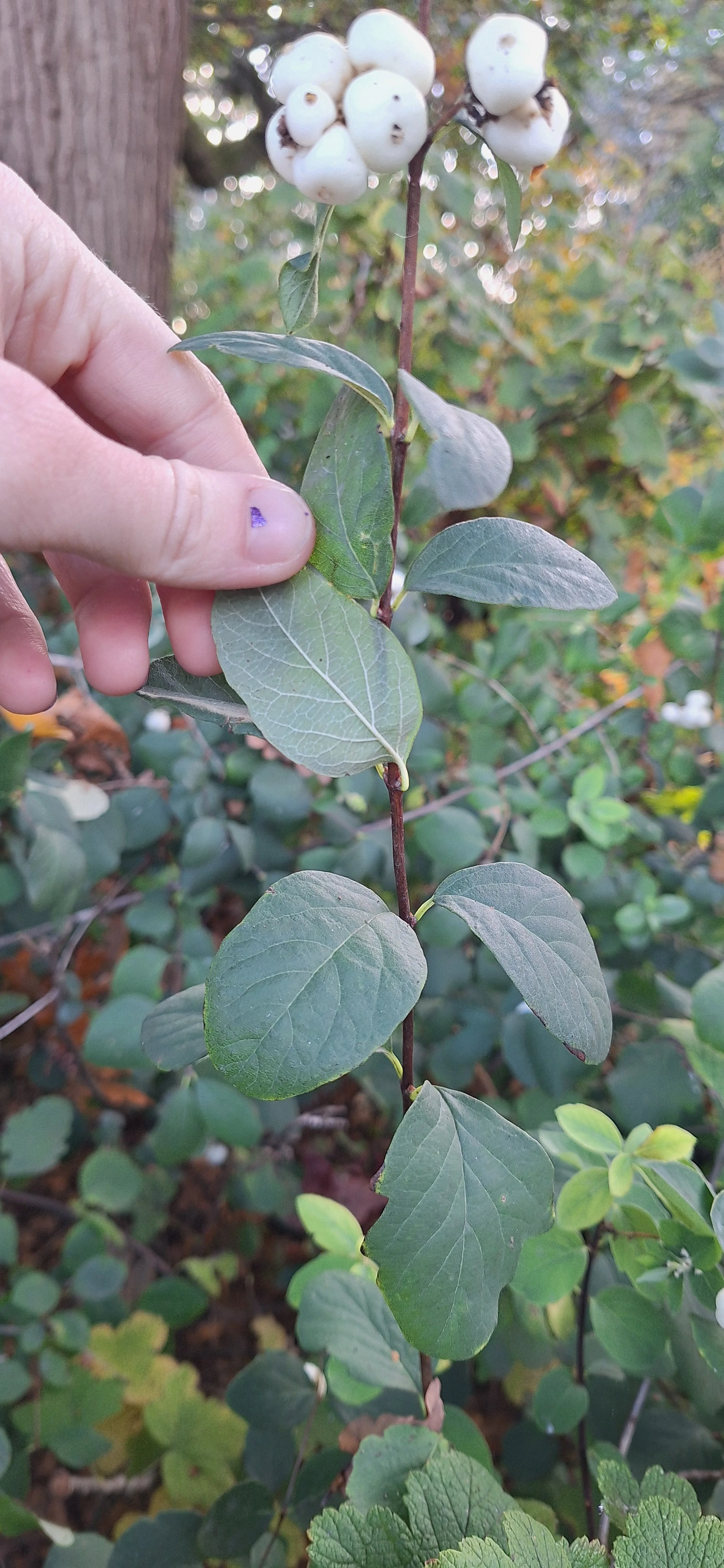
An image of the underside of a Common Snowberry leaf
Toxicology, Habitat and Everything else
I didn’t think this sections idea though but I like the last section too much to change it
The berries of the Common Snowberry is an essential food source for birds and small mammals during the winter. However the fruit is toxic to humans, which is a shame because they look like they would taste nice. If, for some reason, you decide to try some snowberries you can expect to feel dizzy, have stomach pains and eventually start vomiting. This is because the berries contain high concentrations of saponins as well as small amounts of chelidonine.
In the wild Common Snowberries can be found in woodland and floodplains. They are a hardy plant capable of tolerating temperature of -20°C at the lowest and 35°C at the highest. One gardening website I stumbled upon during me research said that Common Snowberries can grow in acidic, neutral and alkaline soil. Since the website didn’t give me an exact pH range the Common Snowberry must surely be able to survive soils within the pH range of 1-14 /s.
Snowberries have been used to create shampoo as the saponins in them create a foam when mixed with water. Snow berries have also been used as disinfectants and traditional medicines.
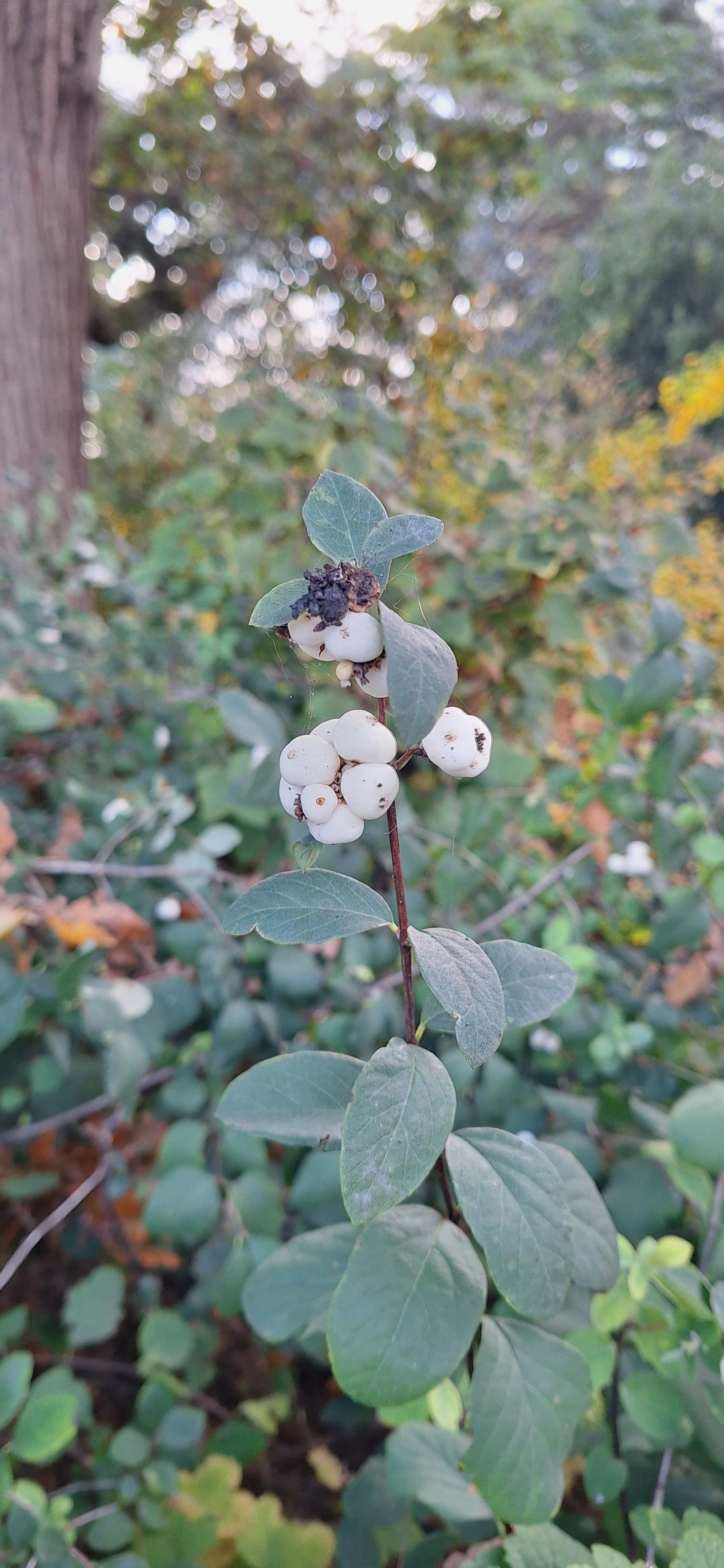
An image of a Common Snowberry plant