Posted on the 9th of April 2026
Snowdrop
Scientific Name: Galanthus nivalis
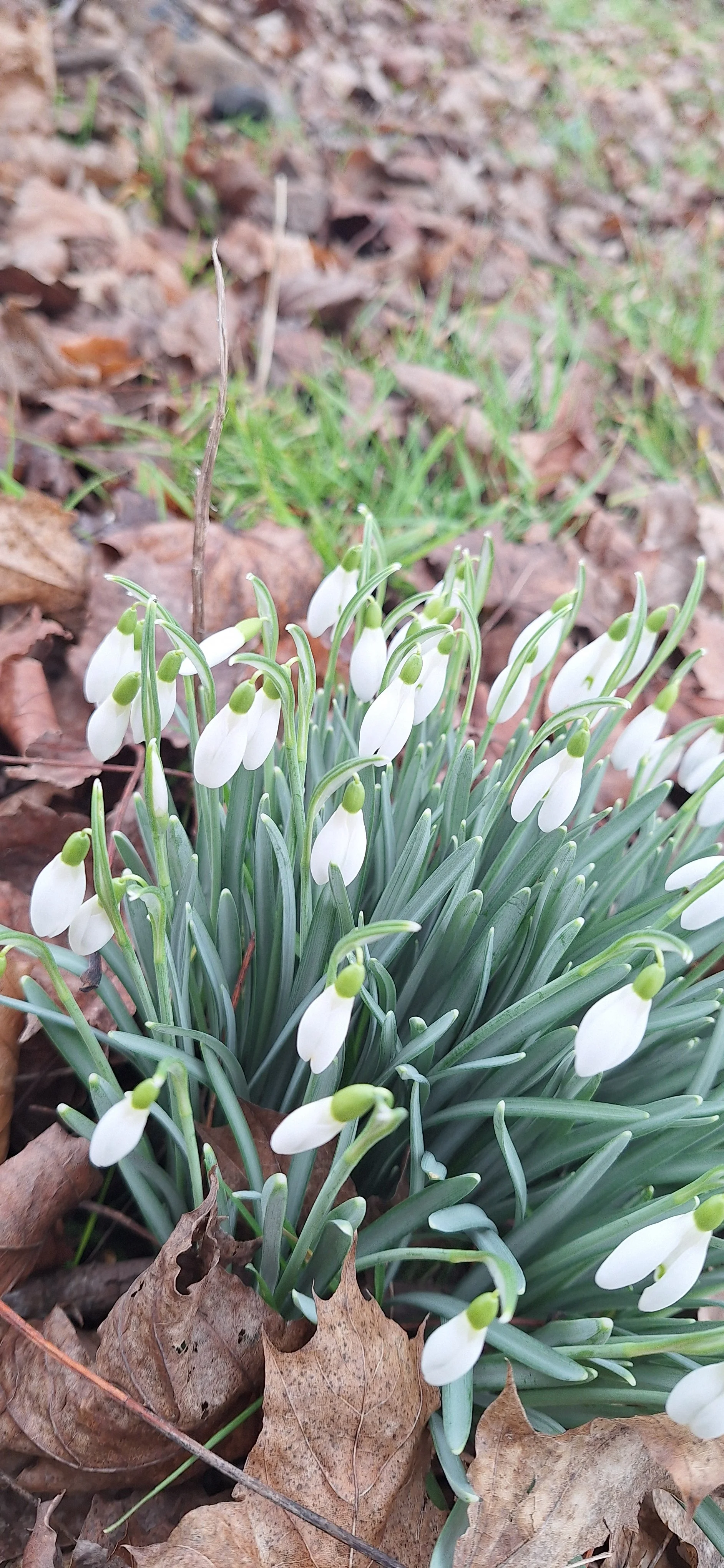
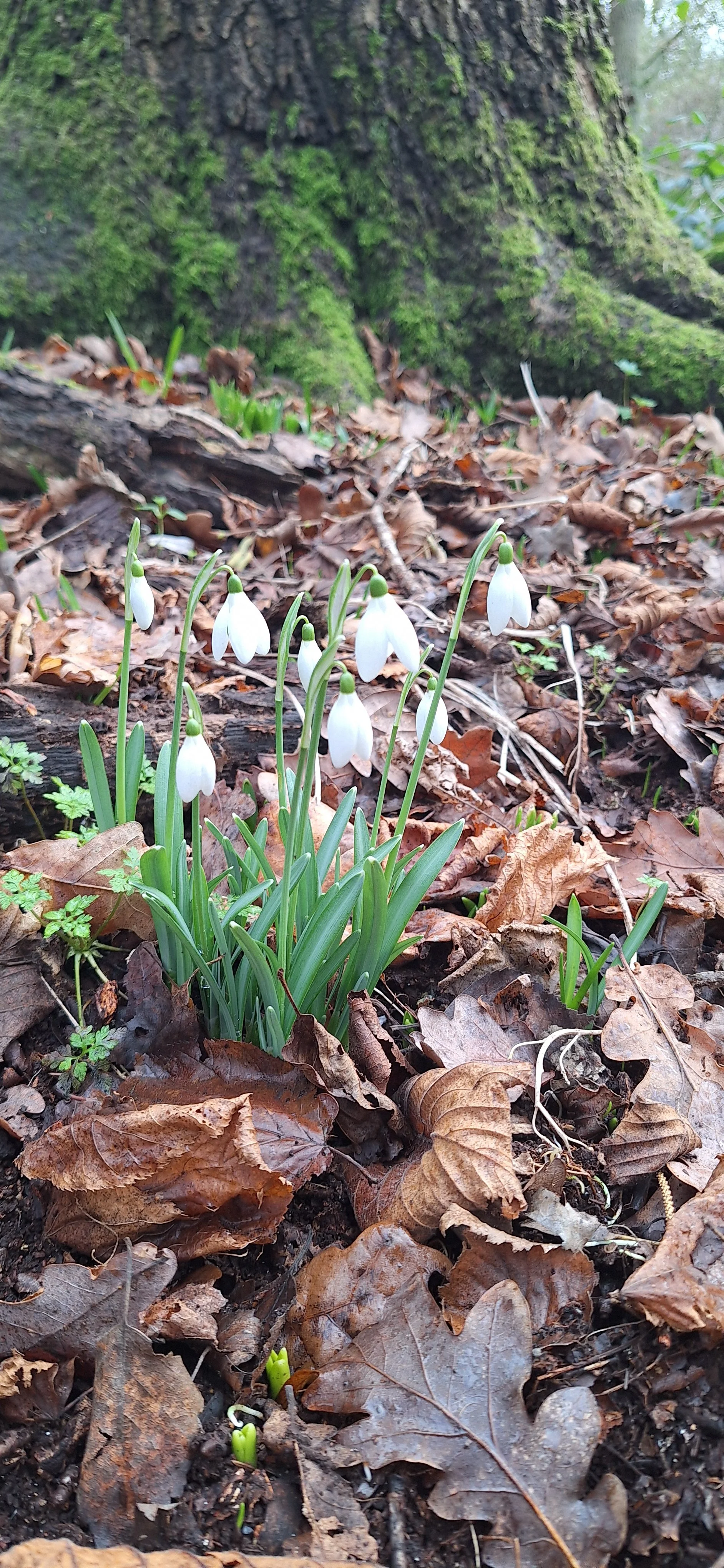
A group of snowdrops I found
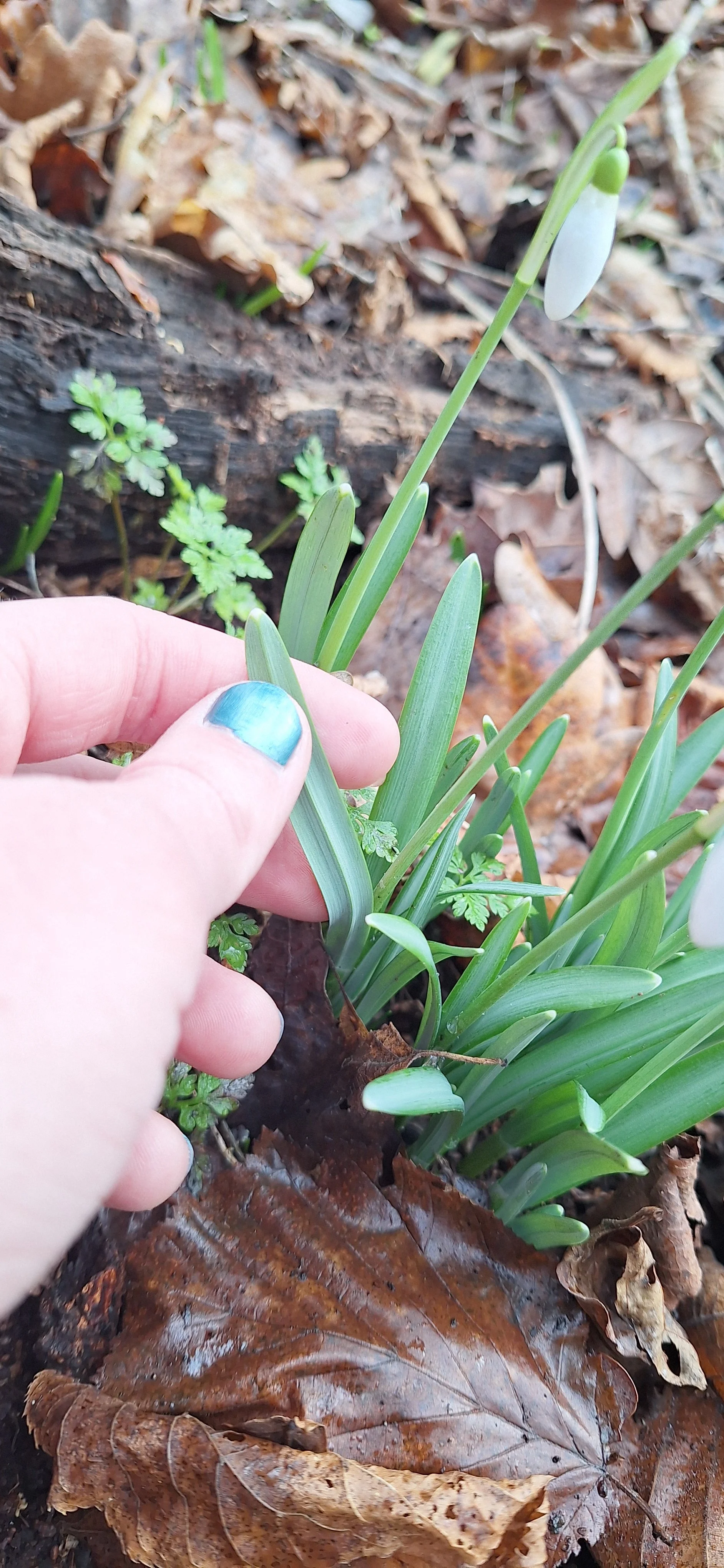
The underside of a snowdrop leaf
Morphology and Range
Snowdrops are a very welcome sight, being one of the first plants to flower at the start of a new year. The plant grows to between 7-15cm centimeters tall and flowers between January and March. The flowers aren’t made up of petals, instead being made up of sixtepals than look like petals. Three tepals are larger and are the white segments of the flower you see on the outside, covering the inner three tepals. The inner tepals are smaller and have a green upsidedown V shaped pattern on them. Snowdrop flowers are nodding, which means that the flowers droop downwards. The plant has basal leaves, this means that the leaves grow at the base of the stem. These leaves have a dark green colouration with a greyish hue to them.
Snowdrops can grow in most places but tend to grow in woodlands, along paths and in fields. Despite growing all over the UK, snowdrops aren’t native to the island. Snowdrops are native to mainland Europe, being found all over the continent. They can be found as far west as Spain and as far east as Ukraine. Many other species of snowdrop can be found on the continent as well.
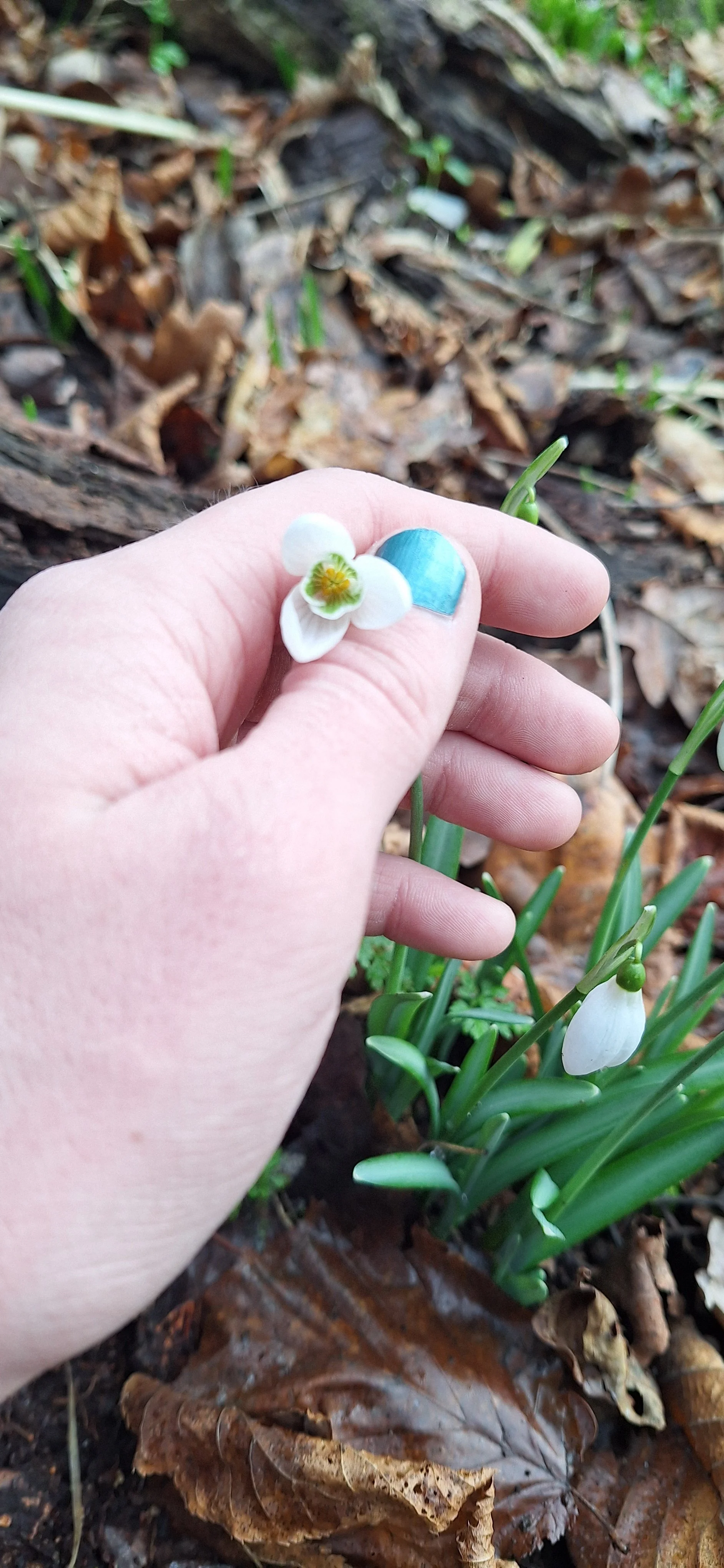
The inside of a snowdrop flower
Toxicity and Mythology
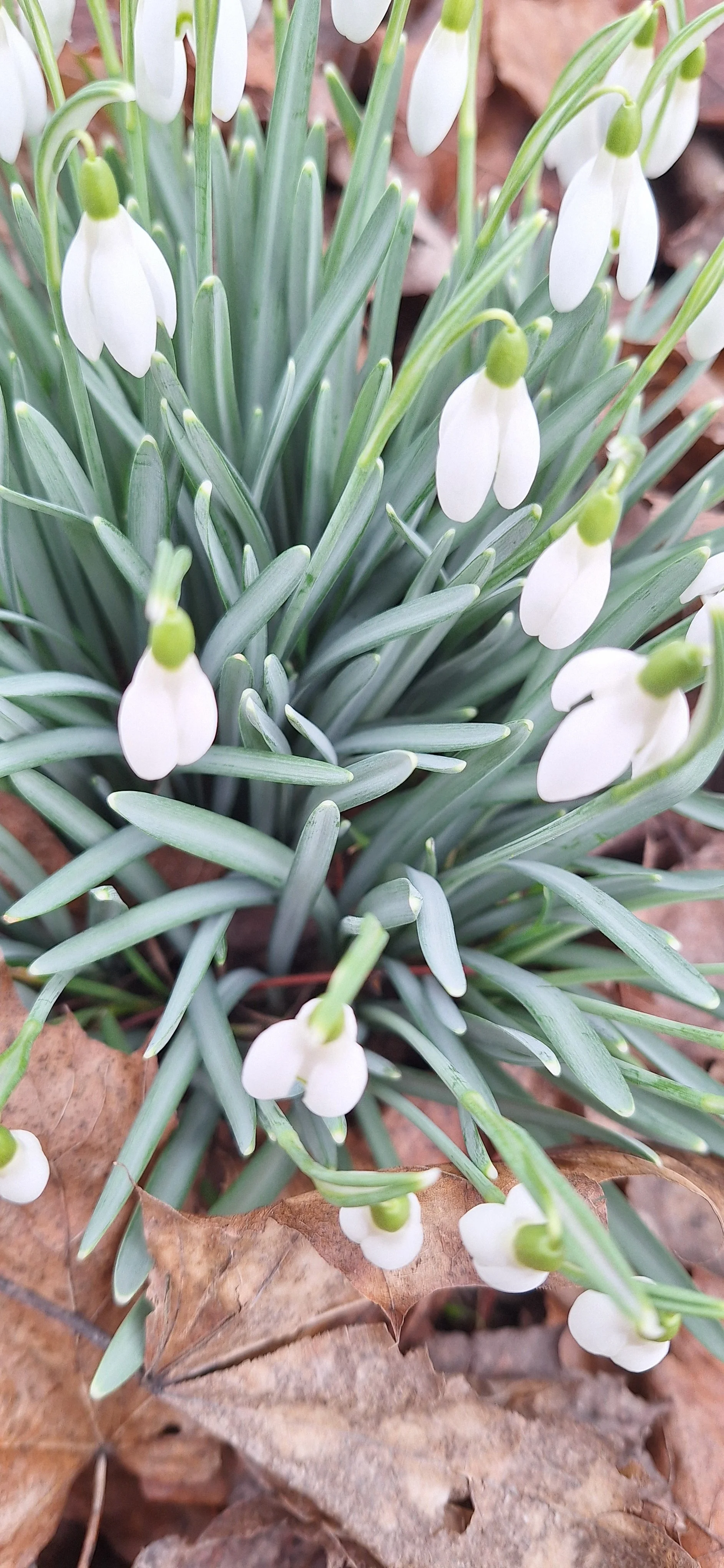
A snowdrop plant from above
Snowdrops are poisonous, ingesting one could cause increased salivation, diarrhea, nausea and vomiting. If someone were to eat a lot of snowdrops and thus get a much larger dose of the poison, they may also experience circulatory problems, sweats, drowsiness and even potential paralysis. While it is a very bad idea to ingest a snowdrop, they can be used for medical purposes. Snowdrops contain a molecule called galantamine. Galantamine, in moderate amounts, can be used to treat Alzheimer's. It’s not a cure for the disease, it does slow down its progression. Snowdrops also contain an active lectin, which is an insecticide. Some potatoes have been genetically modified to produce the compound using genes found in snowdrops.
Snowdrops have two almost opposing symbolisms in mythology. Snowdrops are a sign of hope and a sign of death, not quite opposites but fairly close. The plant usually grows relatively close to other members of its species, so you get these grove-like patches of them. As such, seeing a single solitary snowdrop is an unusual sight and is supposedly an omen of death. Their connection to death also stems from them often growing in graveyards. Due to these deathly associations, taking a snowdrop across a threshold would bring disease. More light-heartedly, snowdrops symbolise hope as they are one of the first plants to appear at the beginning of spring. After the emptiness of winter, subtly white flowers appear, ushering in the bounty of spring. A sign that the hardship of the year’s harshest season is finally over.
A snowdrop plant under a tree