Posted on the 4th of April 2026
Grey Squirrel
Scientific Name: Sciurus carolinensis
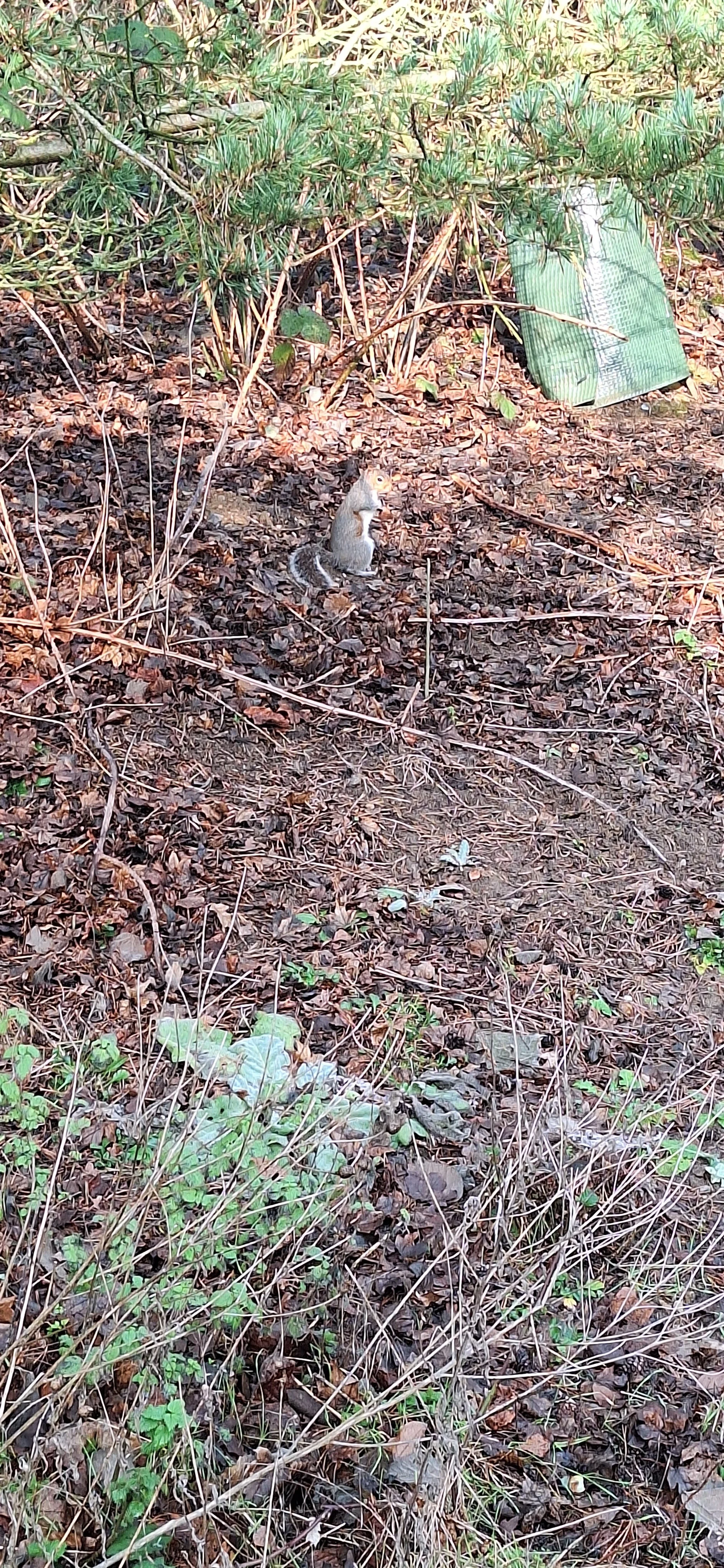
A grey squirrel I found
Morphology and Range
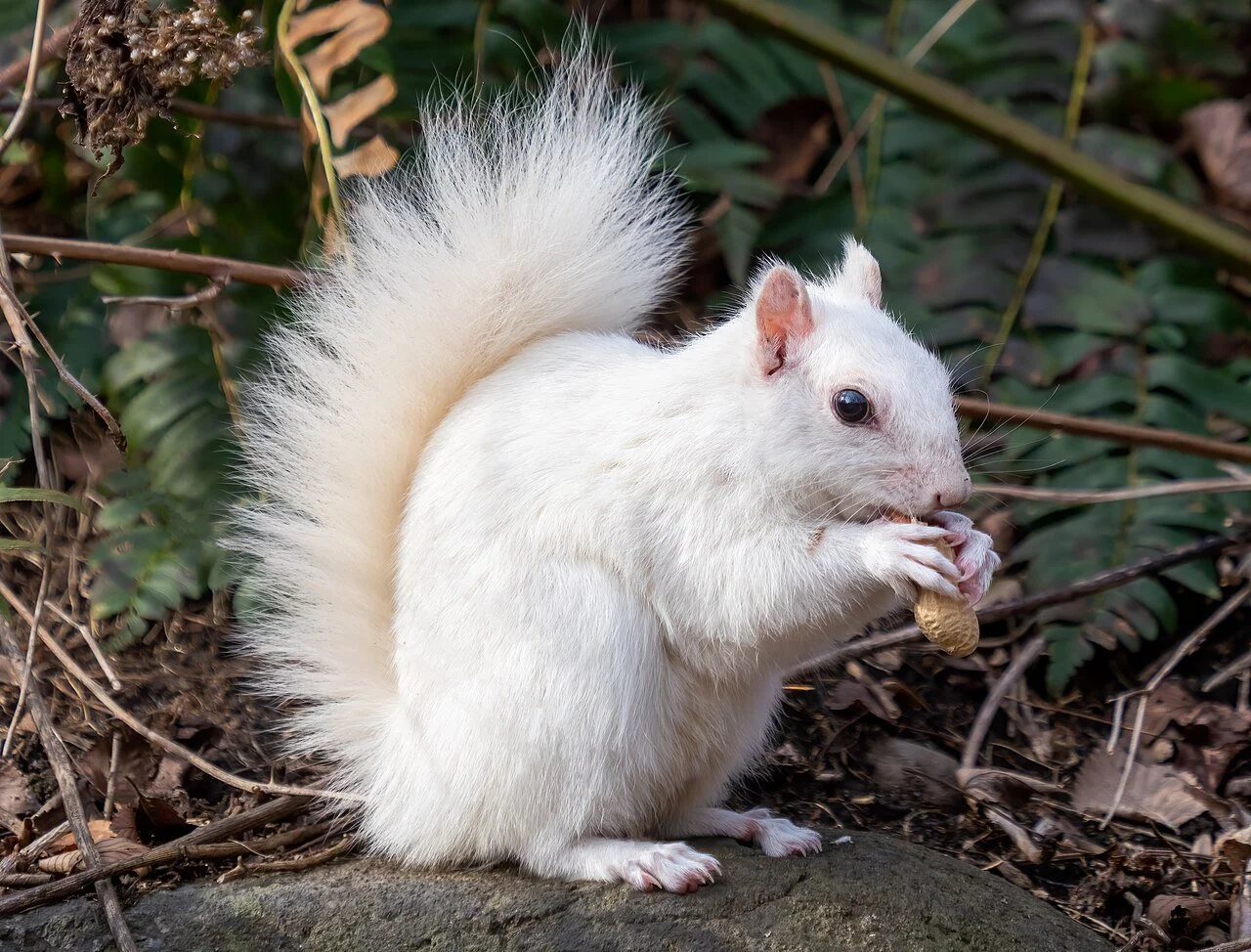
A white grey squirrel eating a nut
Credit: Rhododendrites
.jpg)
Grey squirrels are small arboreal mammals that have slender bodies and large bushy tails. They typically weigh around 400-650g, their bodies have a length of 24-28.5cm and their tails tend to be 19.5-24cm long. Just in case their name didn’t make it clear, grey squirrels are grey. More specifically, they have a mottled grey and brown colouration with a white underside. The species mottled colouration helps them to hide on trees, inside shrubs and on detritus covered forest floors.
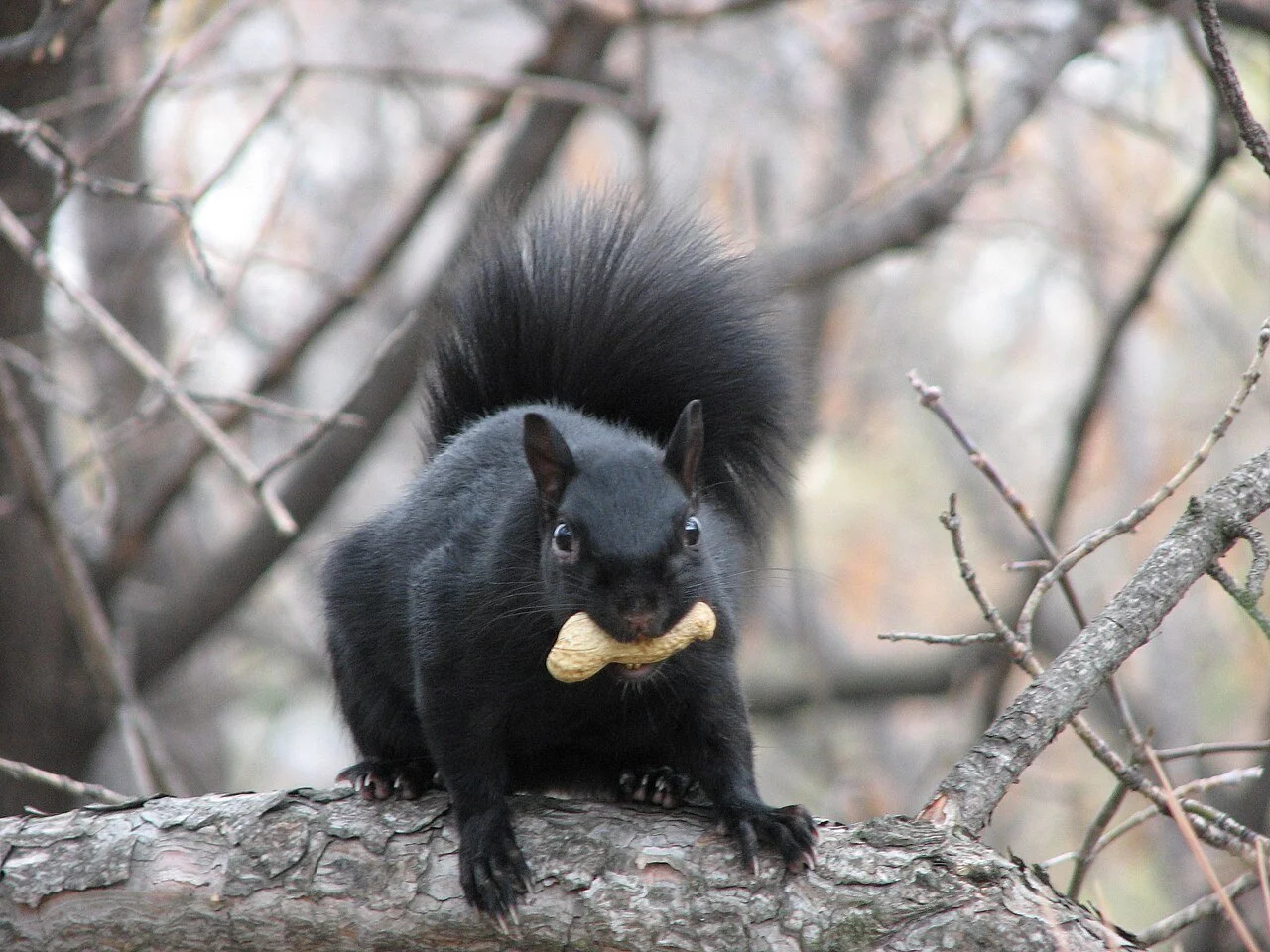
It’s a well known fact that grey squirrels are invasive to the UK, originating from North America. They are only native to the east of North America but populations have been introduced and are thriving in the west of North America. Several morphs (colour variations) of grey squirrels can be found in America. These morphs mean that grey squirrels aren’t necessarily grey as they can be white, black and brown.
A black grey squirrel eating a nut
Credit: D. Gordon E. Robertson

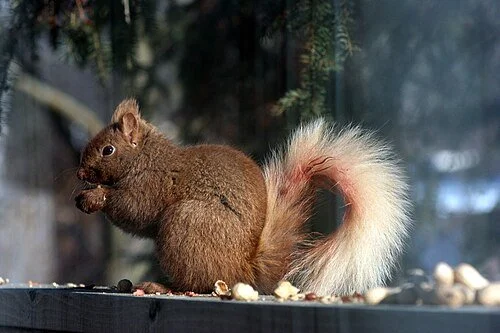
A brown grey squirrel eating a nut
Credit: Robert Taylor
.jpg)
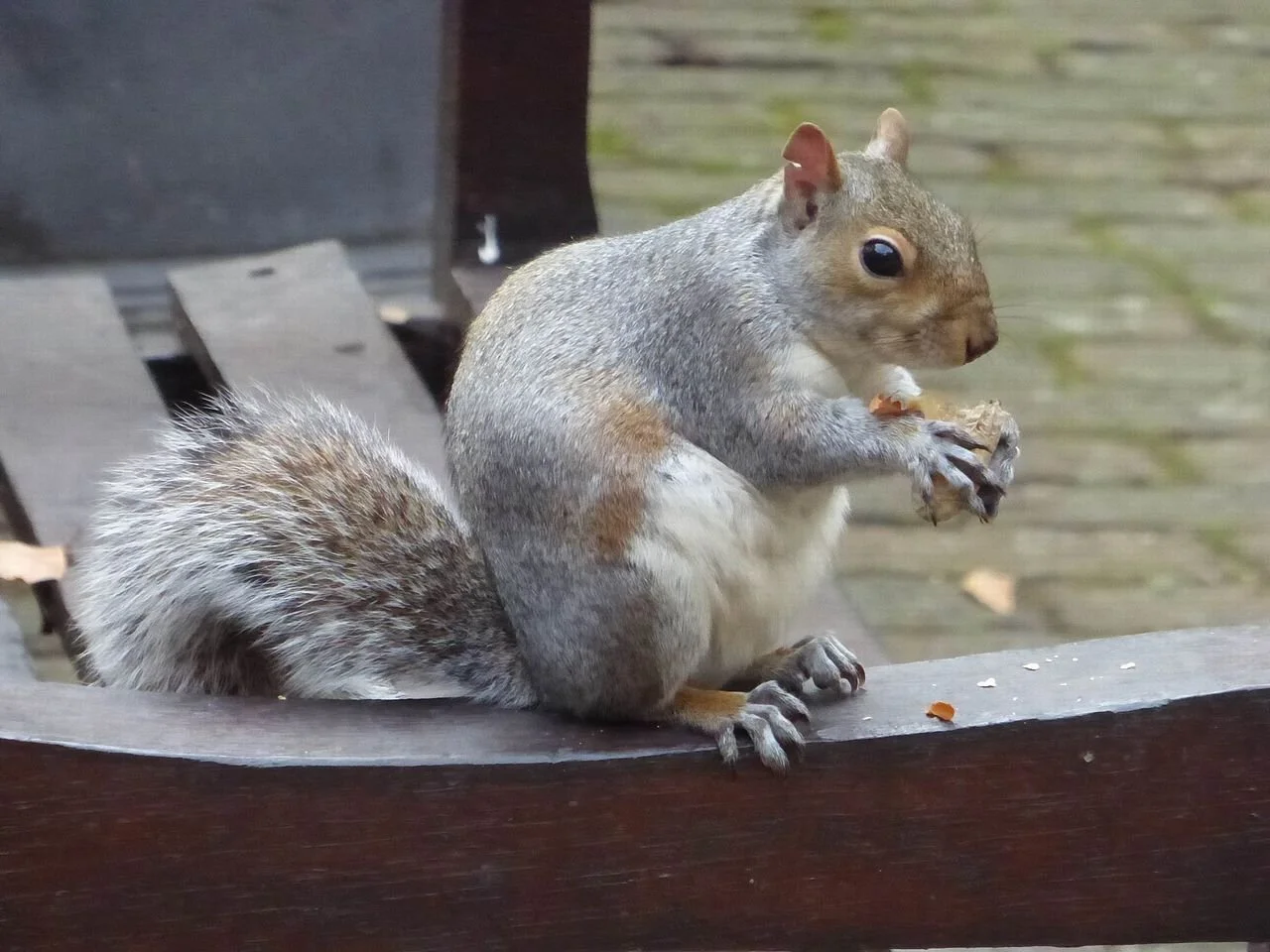
A grey squirrel eating a nut
Credit: HH58

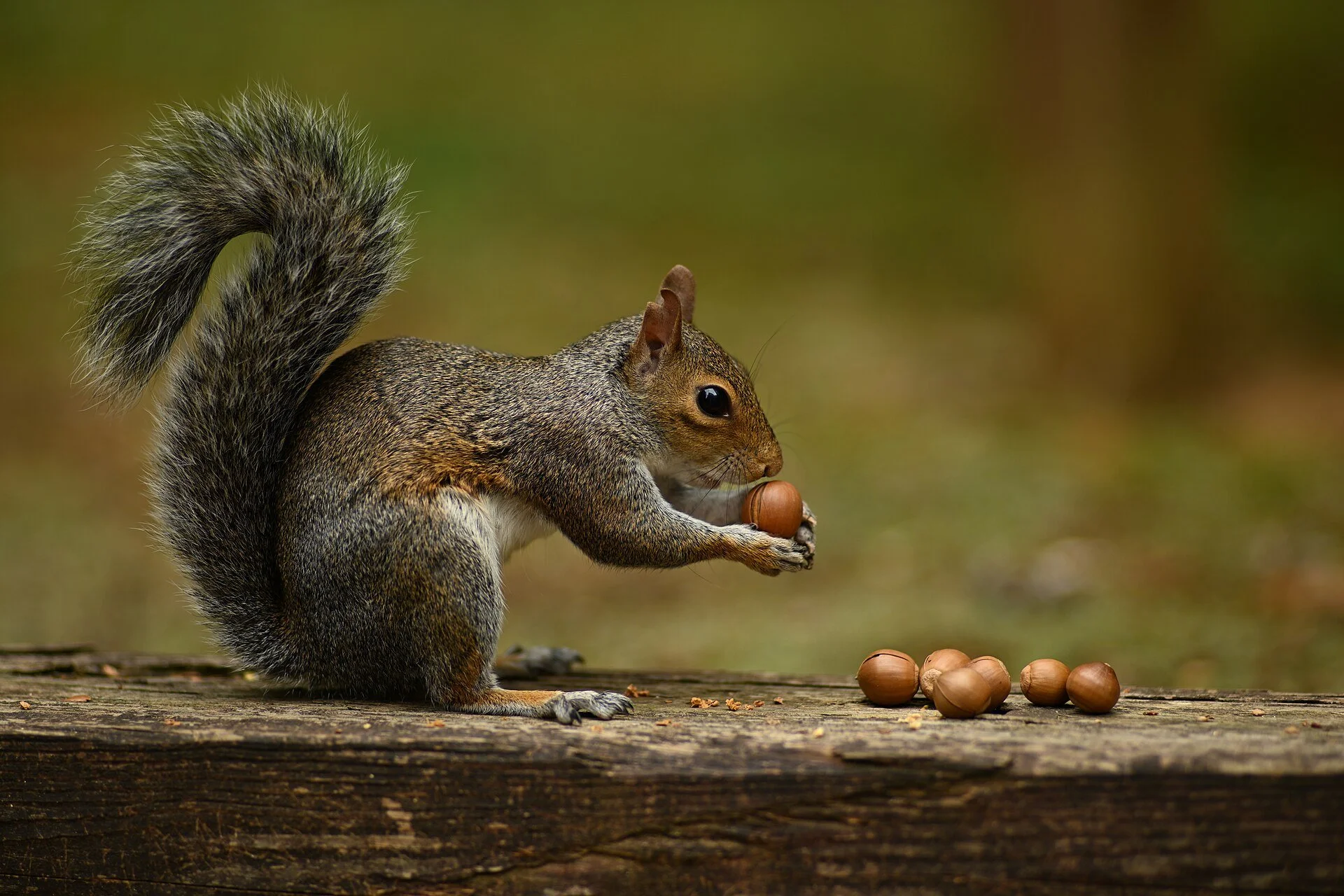
A grey squirrel eating some acorns
Credit: Dkwikiedt

Diet and Reproduction
Grey squirrels’ diets include pine cones, acorns, nuts, flowers, buds and bird eggs. They often bury acorns and nuts during the autumn to store food for the winter, however they sometimes just pretend to bury food, especially if they think another squirrel is watching them. Squirrels often try to find out where other squirrels have buried food so that they can steal it during the winter. By only pretending to bury food this tricks other squirrels so they don’t know where the real food is hidden and thus can’t steal any.
Like many species of birds grey squirrels make nests in trees, in which they have and raise their offspring. These nests are called drey. Dreys are much less structured than a typical nest, looking like an asymmetrical bundle of dry leaves and twigs. Females have up to two litters of 3-4 offspring a year. The first litter is usually in January or Febuary with the second litter being in June or July. Females raise their litters by themselves, taking care of them for around 12 weeks, at which point they’re old enough to take care of themsleves. Grey squirrels are born hairless and blind, taking 3-4 weeks to grow fur and only opening their eyes after 5 weeks.
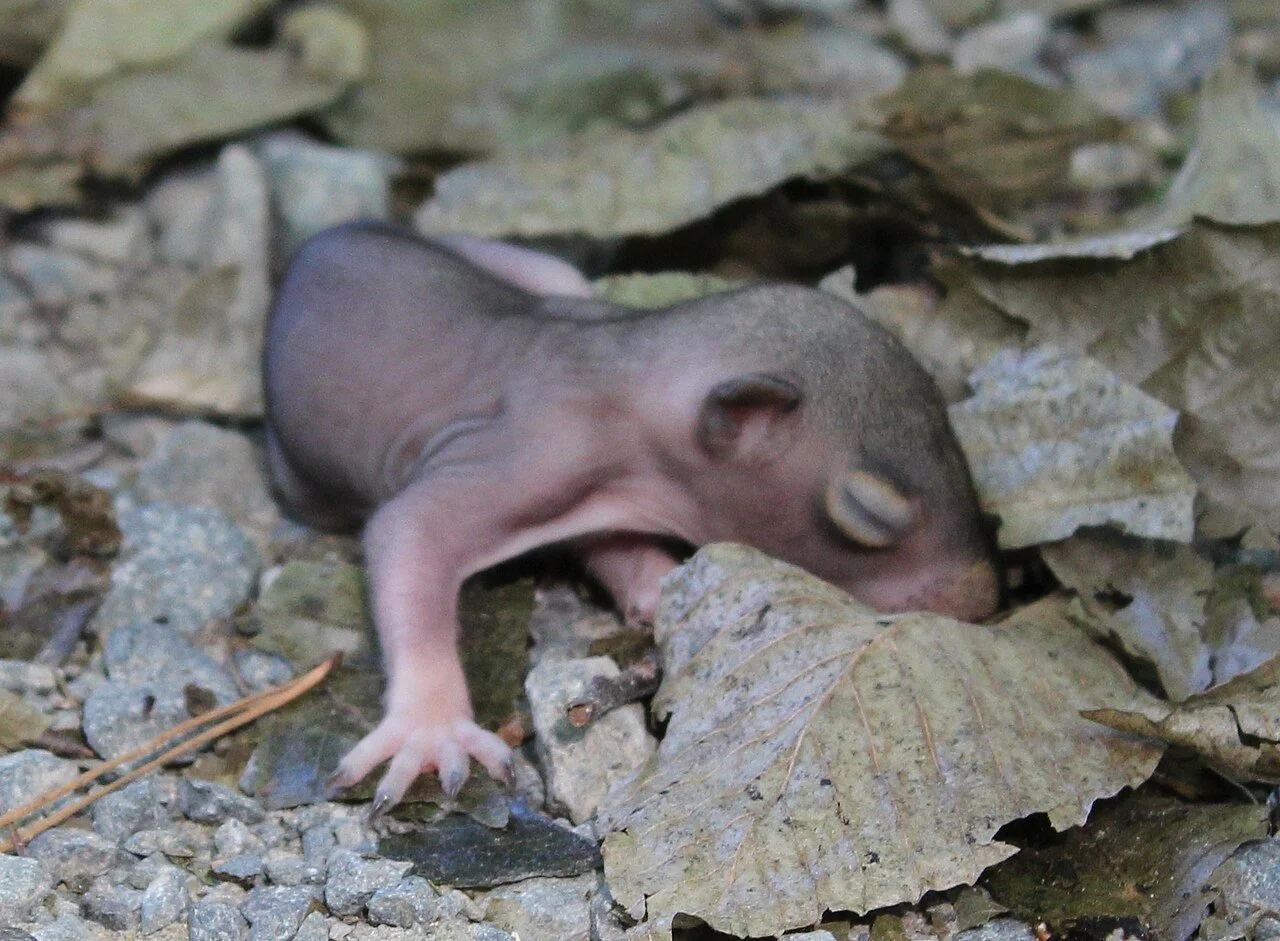
A juvenile grey squirrel
Credit: Hameltion
.jpg)
Invasion and Disease
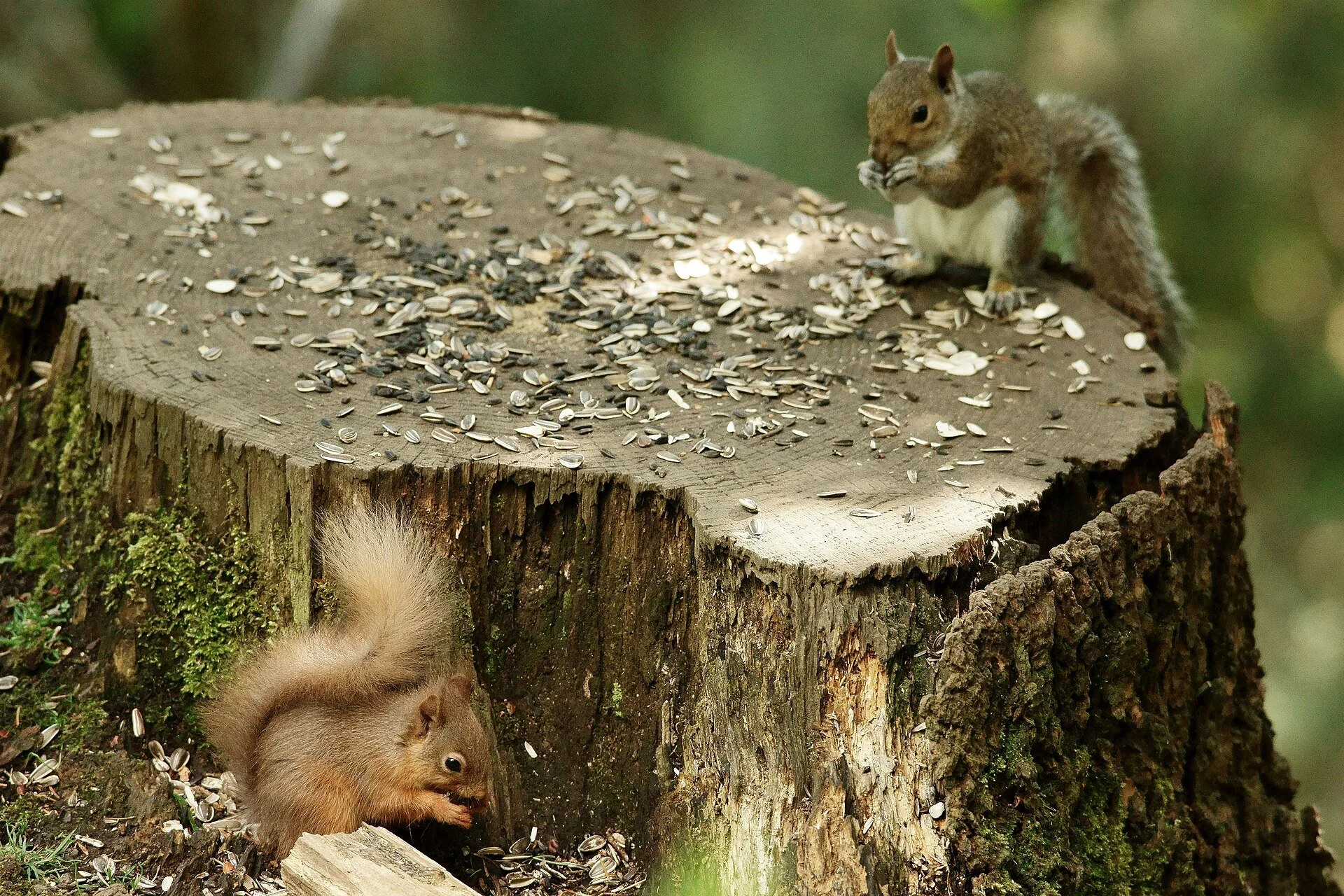
Grey squirrels were first introduced to the UK in 1876. The grey squirrels outcompeted red squirrels and introduced a disease called squirelpox to them. The disease caused the deaths of many red squirrels that had little to no natural immunity to the diesease. Grey squirrels have many more kits in a year than red squirrels do, which helped to rapidly increase the grey’s numbers. This rapid increase in the grey squirrel’s population helped them to push red squirrels out of their native habitats.
Squirrel pox isn’t the only disease that grey squirrels are a pathogen vector of. Grey squirrel can have lyme disease, tularemia, typhus and several types of plague. All of which can be transferred to humans if bit or are in close proximity.
A grey squirrel and a red squirrel eating seeds
Credit: Peter Trimming
.jpg)