Posted on the 10th of April 2026
White Comfrey
Scientific Name: Symphytum orientale
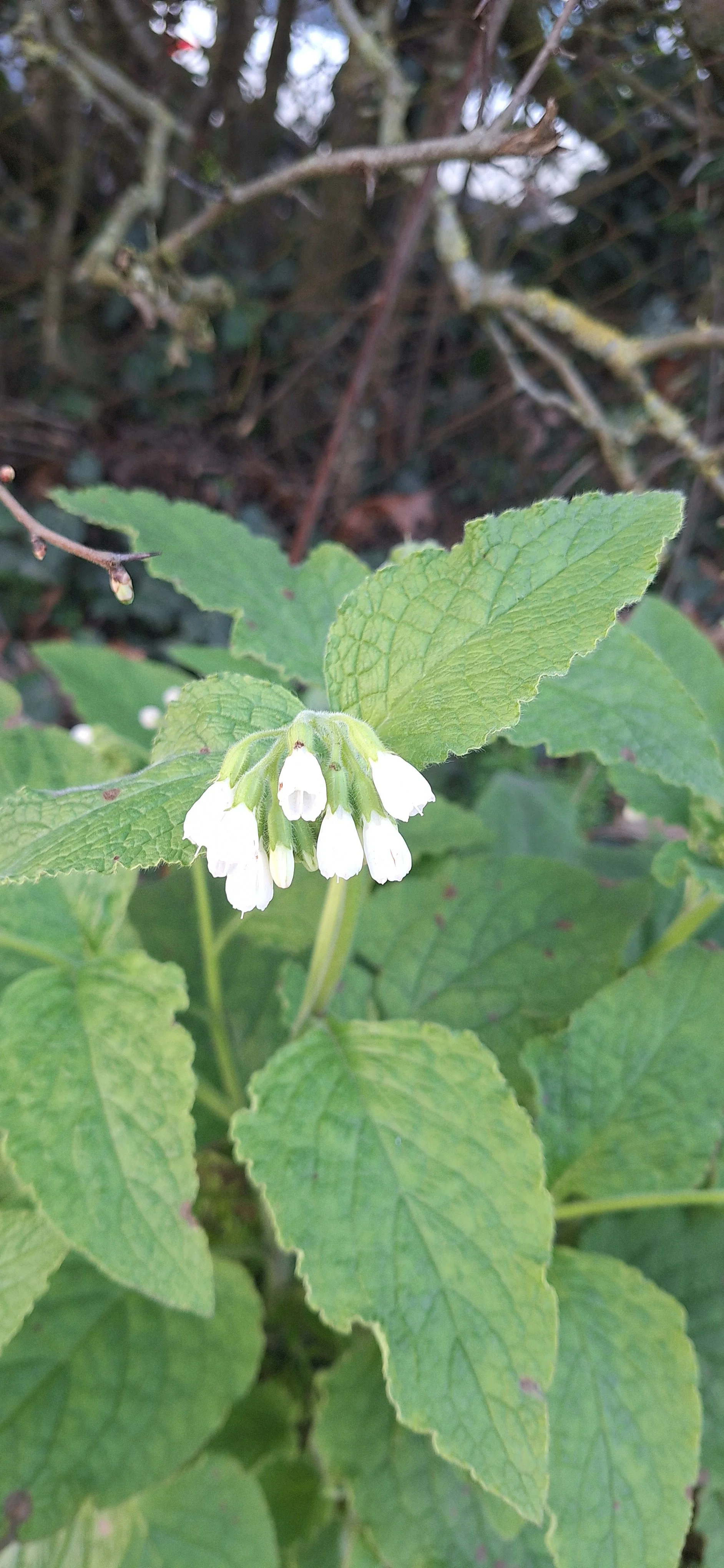
A white comfrey plant
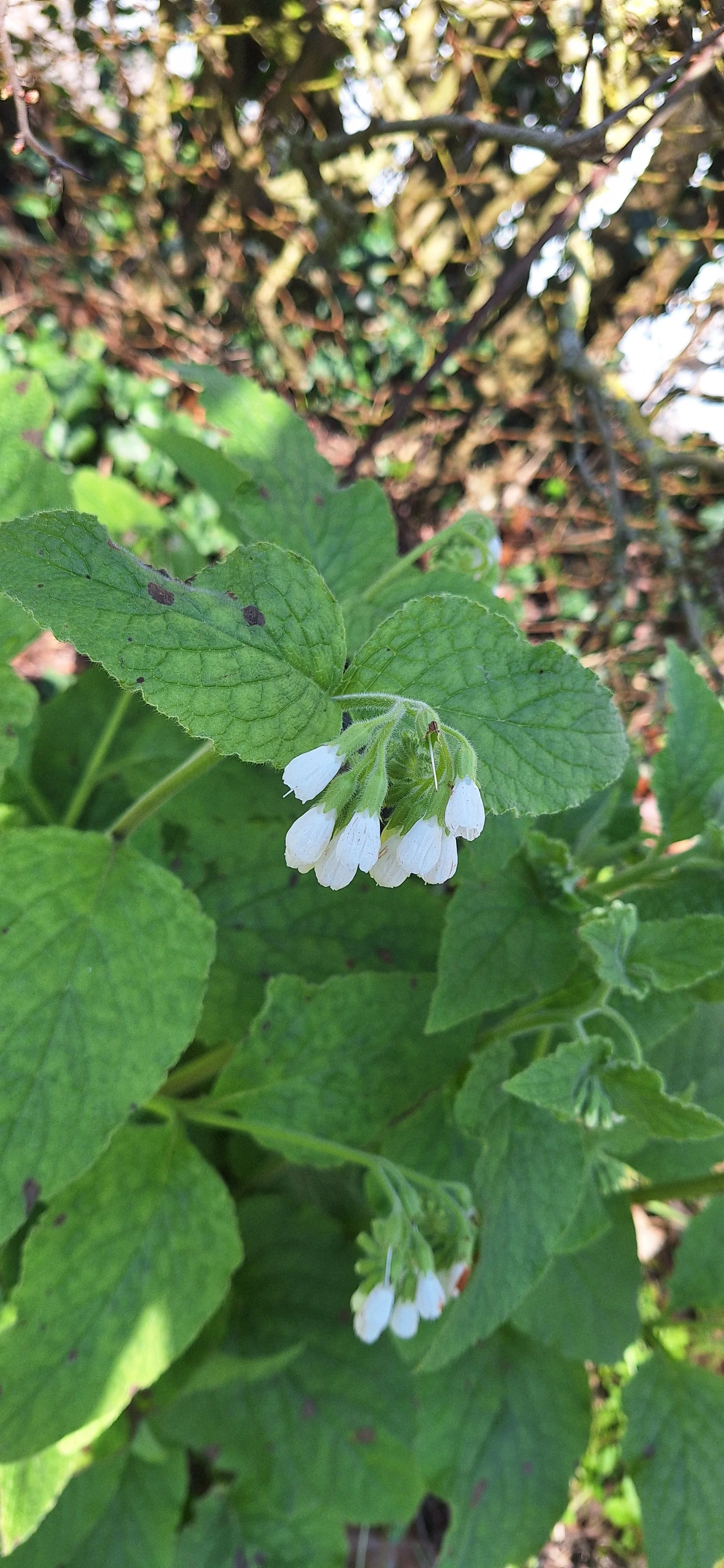
The flower of a white comfrey plant
Morphology and Range
White comfrey is a perennial plant, capable of growing up to 70cm tall. It is a member of the Boraginaceae family, meaning it is a relative of plants such as forget-me-nots and borage. Like many of its relatives, white comfrey has pubescent stems and leaves. This means that the plant has many small hairs covering the stems and leaves. Several flowers grow from the tip of each stem and droop downwards, appearing between March and June. The flowers are tube-shaped, being made up of five white petals with the calyx extending down roughly half the length of the flower. The leaves of the plant are dark green with an ovate shape and have a crinkled margin.
White comfrey is native to the north west of Turkey and the south of Russia; however has been introduced all over Europe. Naturalised populations can be found in France, Italy and of course the UK. The UK has one of the largest populations of the plant, quite possibly harbouring more individuals than the plant’s native range does.
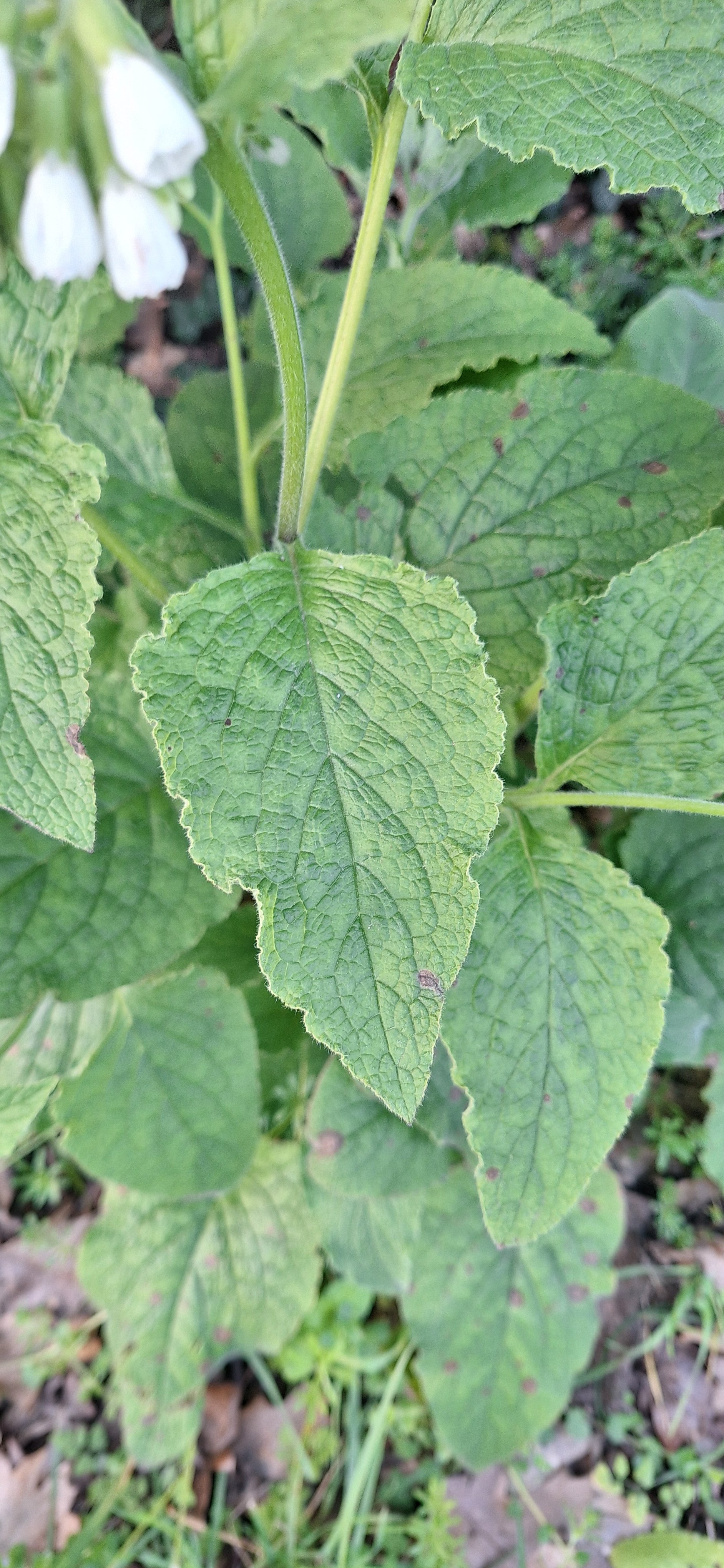
The leaf and stem of a white comfrey plant
Toxicity, Medicine and Spellcraft
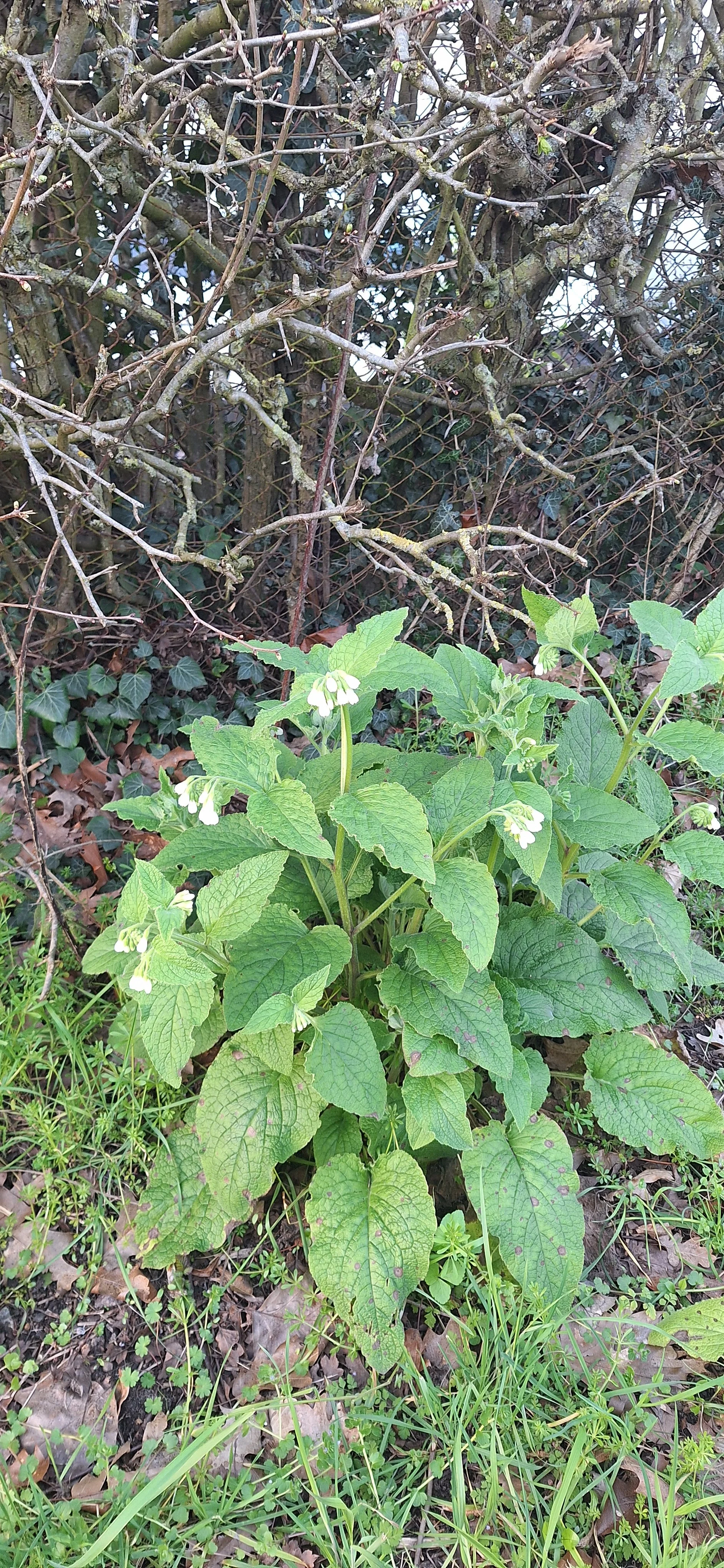
A white comfrey plant
White comfrey is very toxic. Coming into contact with the hairs that cover the plant can cause skin irritation, and consuming the plant can cause liver damage. Despite its toxicity, or rather because of it, it has been used to create various natural remedies. White comfrey has anti-inflammatory compounds within it which have been used to treat joint conditions such as gout and arthritis. When used as a remedy, it’s only used in small quantities because of the liver failure risk. I wouldn’t recommend consumming it in any quantity, though, as a 2018 paper by Mei. et al. suggest that it is carcinogenic.
I usually like to talk about the mythology of the plants I post about, however, there seems to be little to no myths about comfrey. Instead lets talk about the plant’s uses in spellcraft (I’m not classifying this as mythology as there are still a lot of practising witches today). Comfrey has traditionally been used in spellcraft for centuries. More specifically, it has been used to create charms and spells for abundance and protection. Comfrey has also been used in healing and fertility spells. However, given how toxic and carcinogenic the plant is, it would likely be a very valuable plant to use when casting a curse or hex.
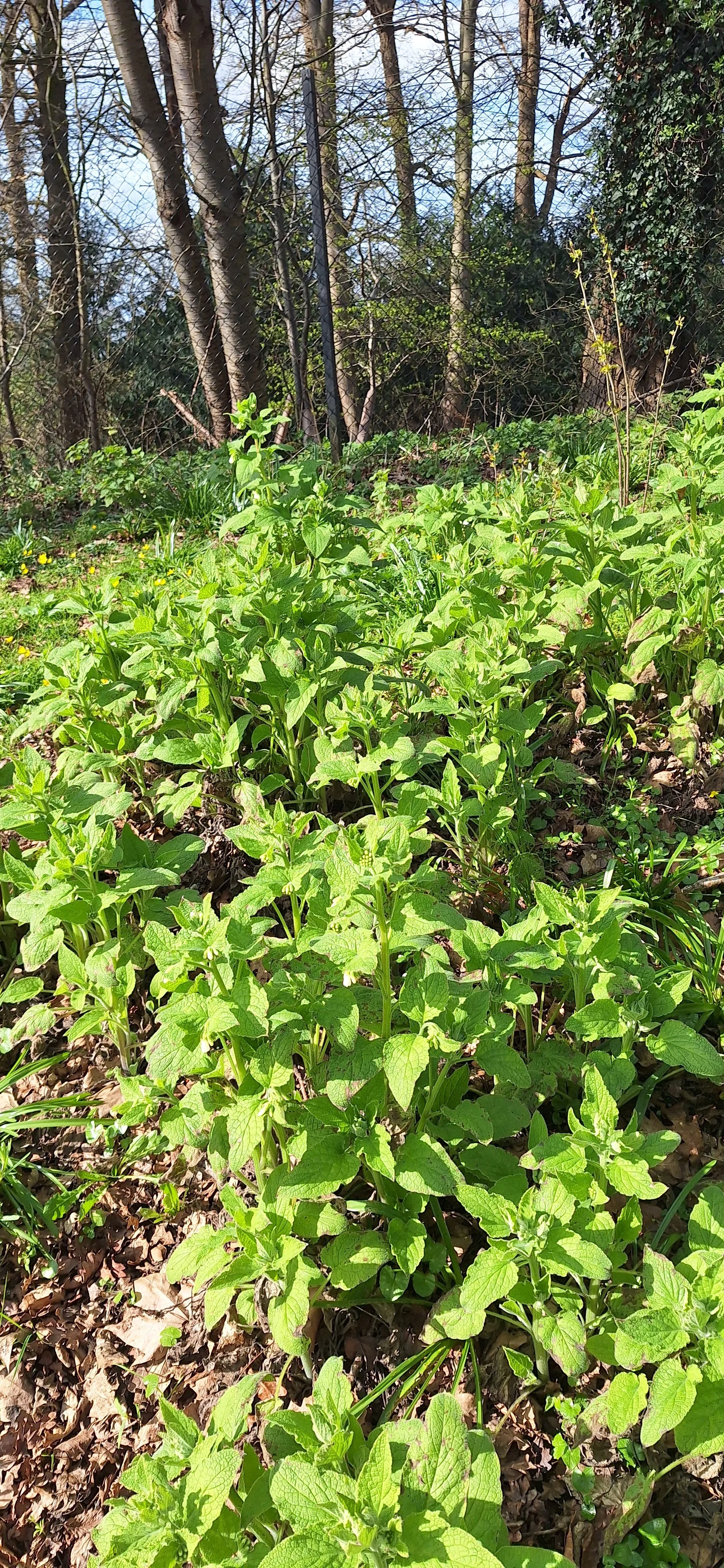
A patch of white comfrey plants