Posted on the 30th of March 2026
Eurasian Wigeon
Scientific Name: Anas penelope
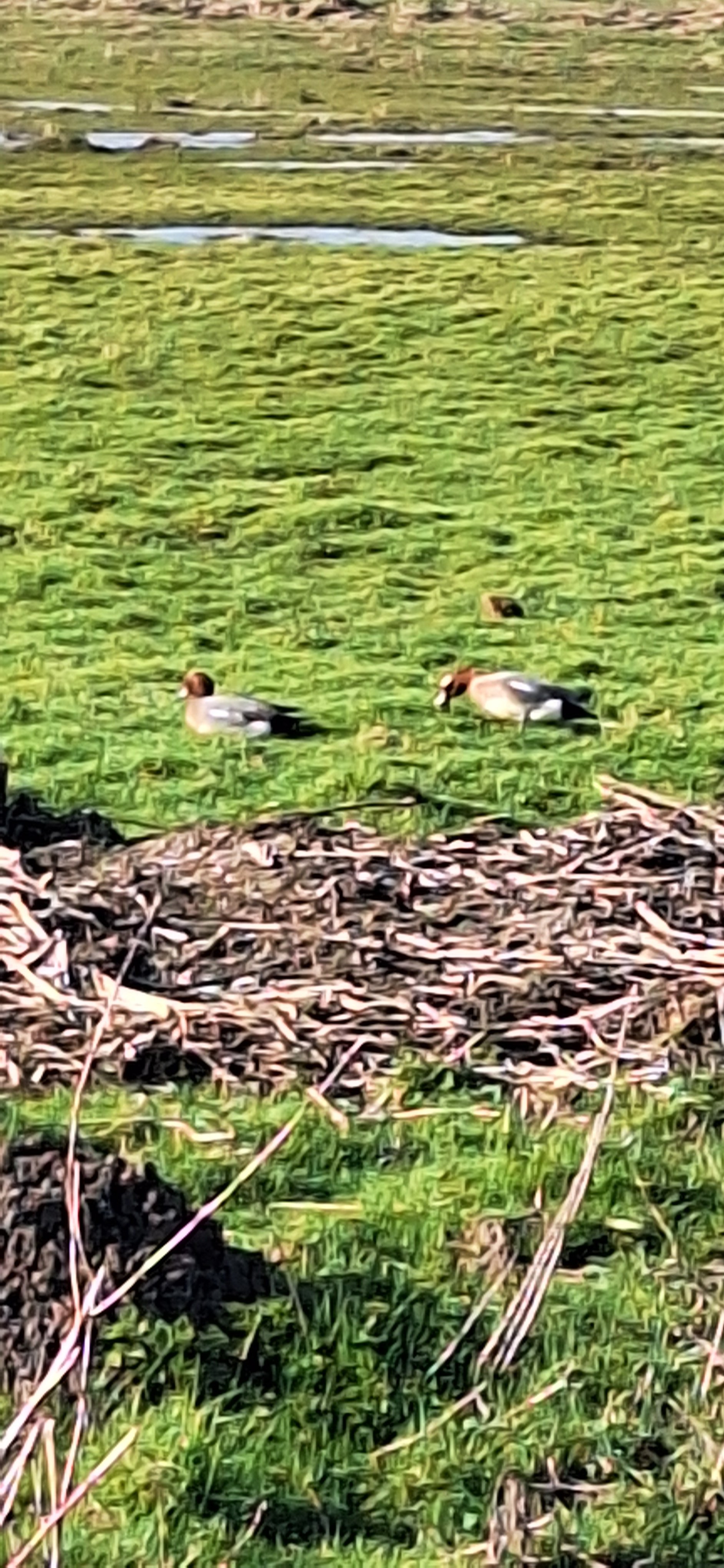
Two wigeons I saw at Strumpshaw fen
Morphology and Range
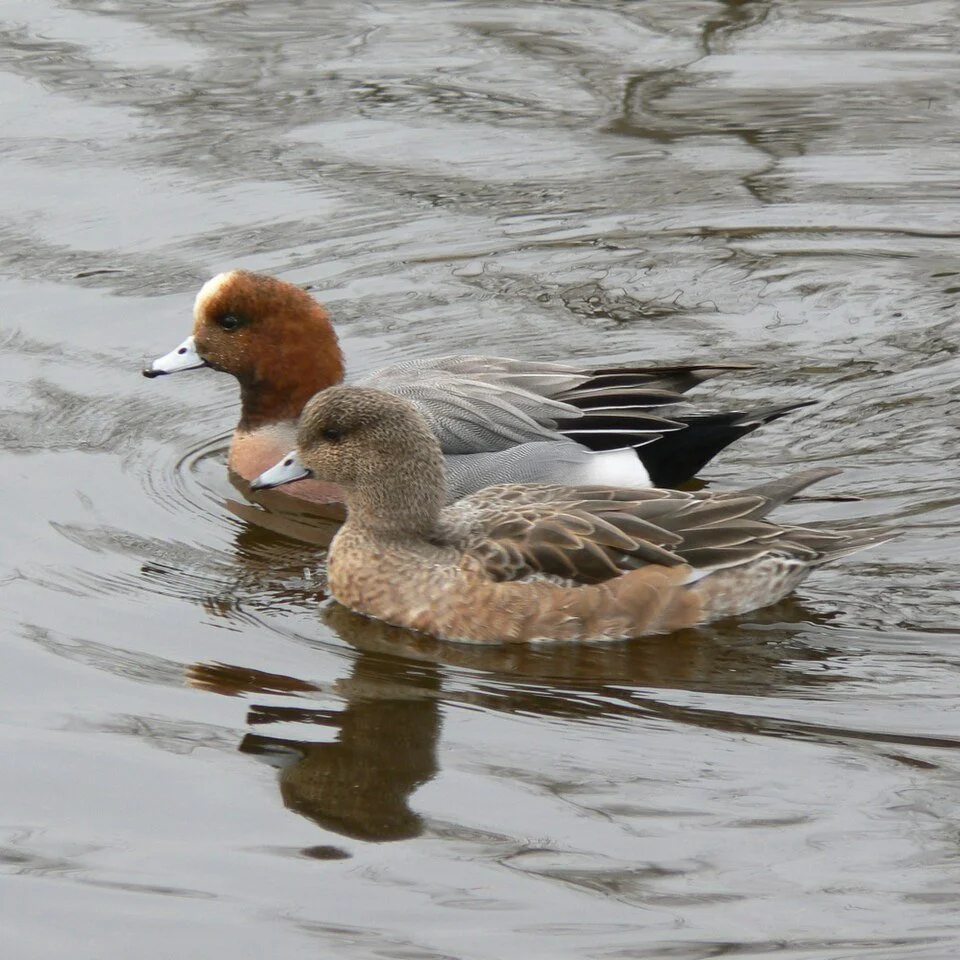
Male wigeon’s body is mostly covered in light grey feathers with its head and breast having a chocolate brown colour; whereas females tend to just be a speckled brown colour all over. Wigeon’s have an average length of 45-51cm, weight of 748.5g and wingspan of 80cm.
Wigeons tend to live around marine and wetland habitats, since these habitats are fairly common wigeons can be found all over the world. They can be found over most Eurasia, from Iceland to east of Russia. While only native to Eurasia, breeding populations can also be found in north and east Africa as well as North America. Wigeons aren’t seen in most of Asia south of Kazakhstan, however there are populations in India, Japan and south east China.
A male and female wigeon
Credit: Kuribo
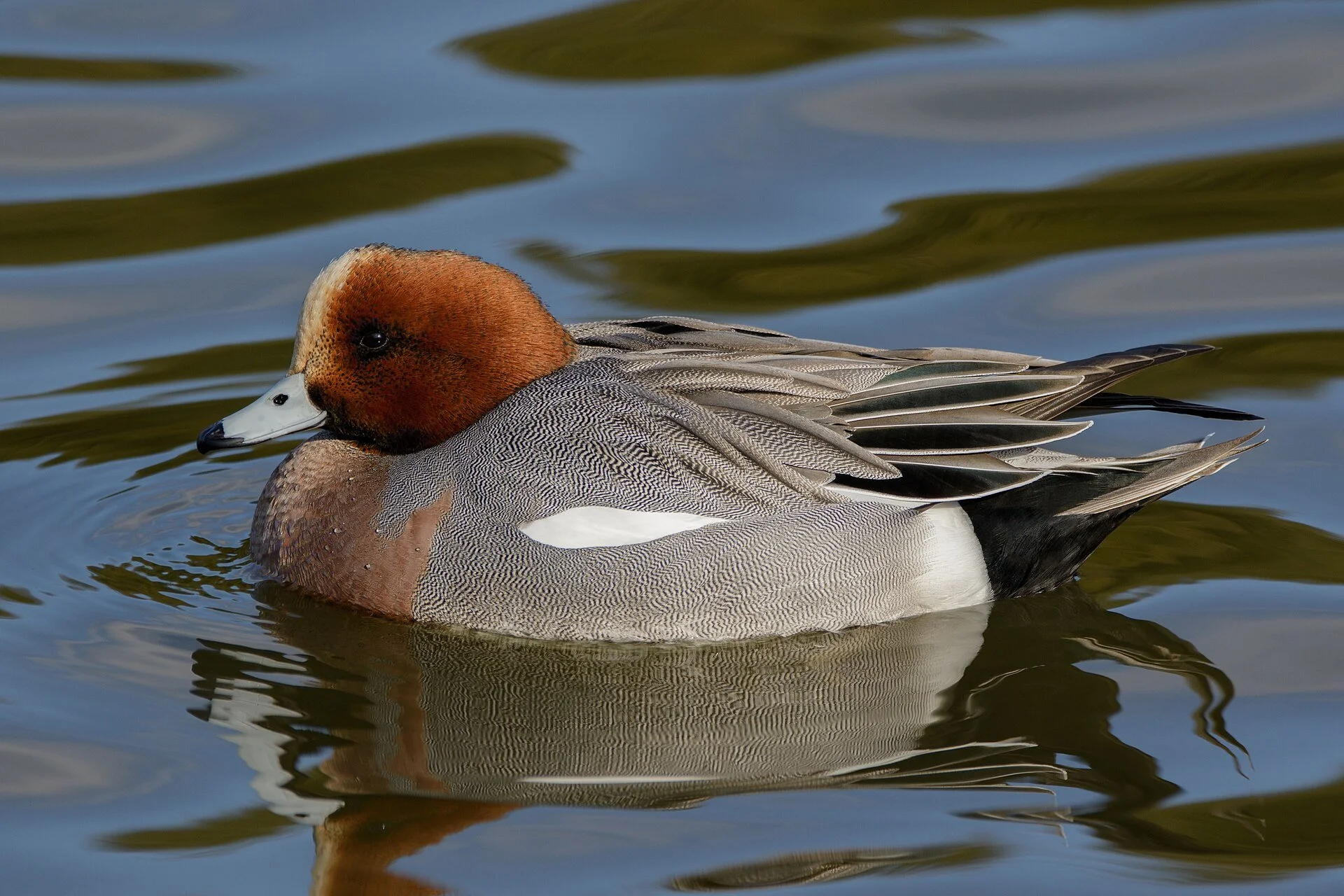
A male wigeon
Credit: Laitche
Diet and Reproduction
They are a herbivorous species, as such their diet consists of seeds, shoots, leaves, grasses, grains and roots.
Wigeons don’t breed much in England and tend to migrate to Scotland and the very north of England to breed in April and May. Wigeons form breeding pairs that only stay to together for a single breeding season. Females tend to lay around 8 or 9 eggs that hatch after approximately 24 days. The duckling’s parents take care of them for 40-45 days until the ducklings fledge. It then takes the newly fledged ducks two years to become sexually mature.
Wigeons are a species of duck (as you could probably guess from their chicks being called ducklings) and are able to hybridise with some closely related species such as mallards, northern shovelers and the American wigeon.
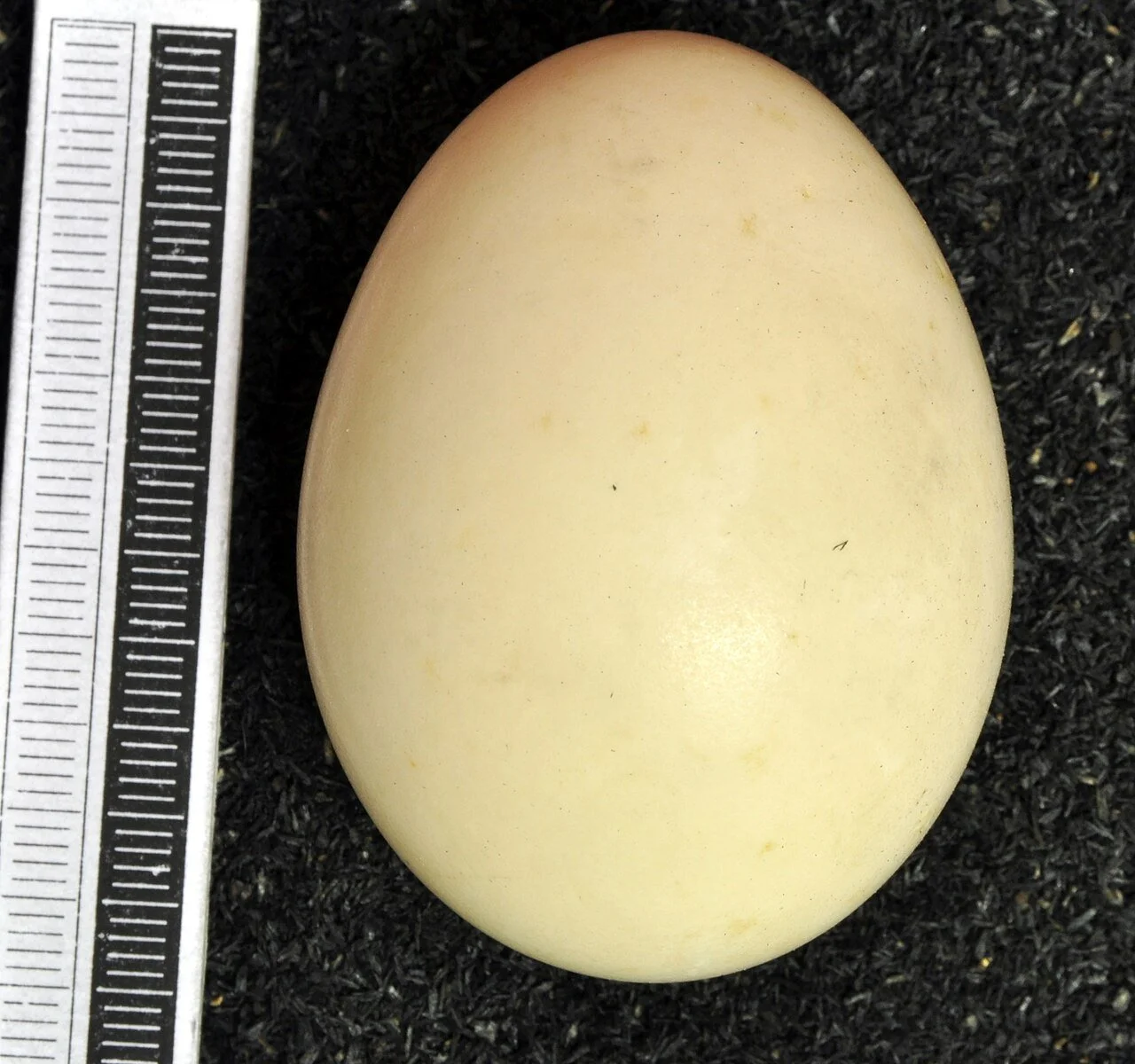
A wigeon egg
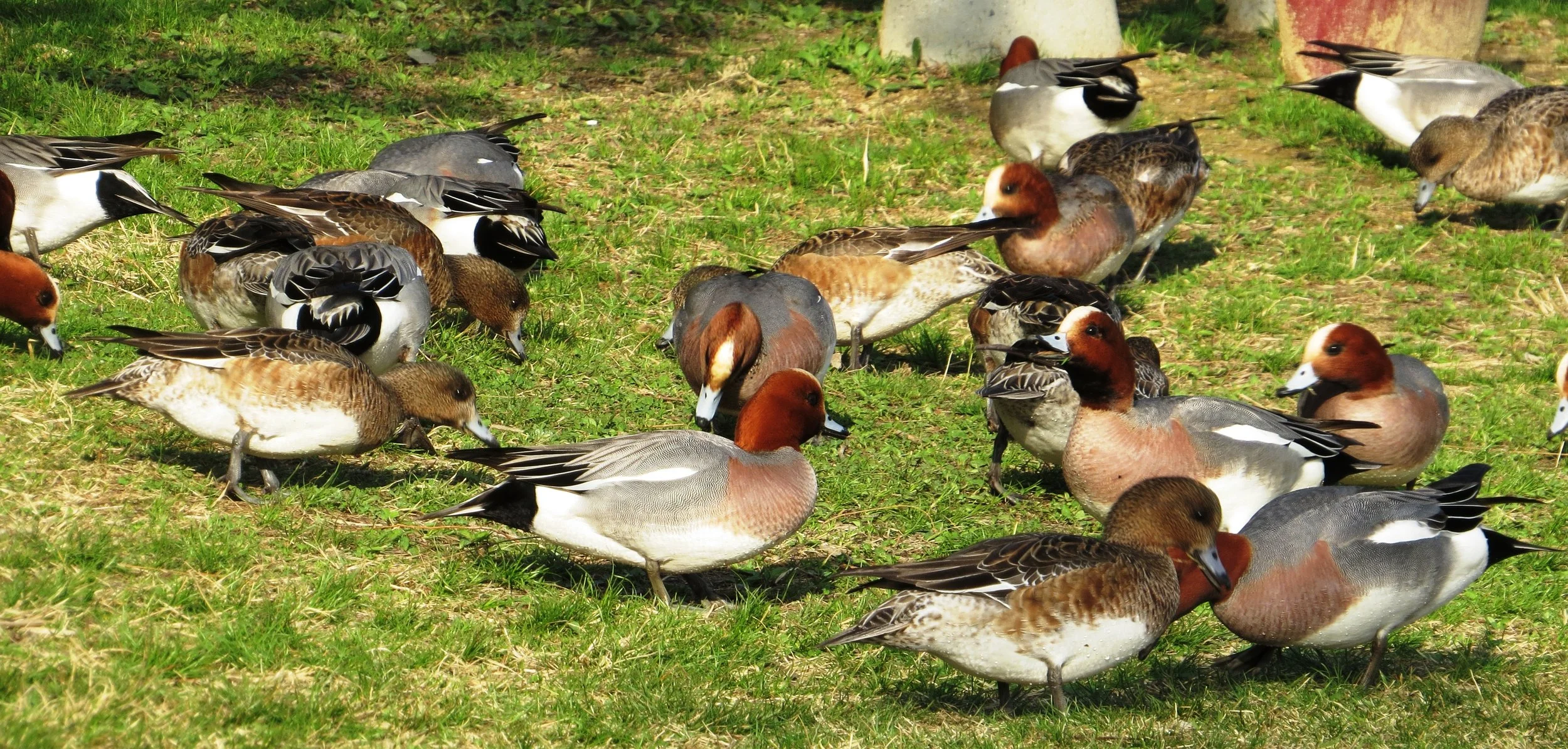
A flock of wigeon
Credit: Alpsdake

Mythology and Misinformation
The Eurasian wigeon’s binomial name comes from mythology. More specifically ancient greek mythology, they’re named after Penelope the wife of the hero Odysseus. The supposed reason why the wigeon was named after Penelope is becuase of a myth where Penelope was thrown into the ocean as a child and then was saved by family of ducks. After around three hours of inconclusive research on whether or not this myth actually exists. It was only as I finished writing an email to a professor of Greek mytholgy that I found a book called “The Penelopiad” which was published in 2005 and seems to be where this myth originates from. People assumed that the myth was from Homer’s Oddesy and so pretty much every website that mentions peneople and/or wigeons recounts this “myth”. The binomial name was for the Eurasian wigeon was Llinnaeus himself, long before this urban legend of a greek myth was ever created. So why are wigeons named after Penelope? From what my research suggests, he just liked naming animals after mythological figures.
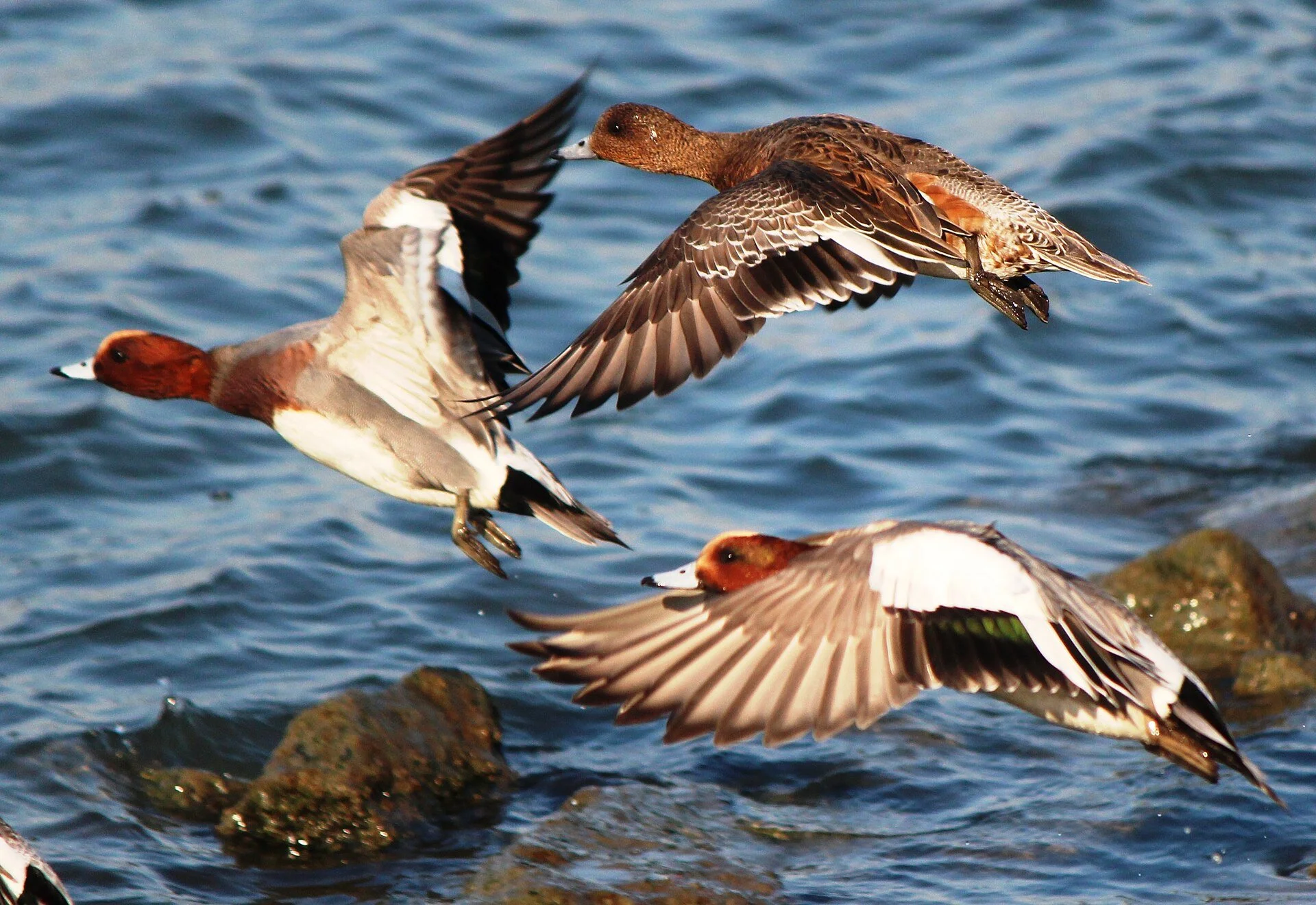
Three flying wigeons
Credit: Alpsdake