Posted on the 13th of April 2026
Green Alkanet
Scientific Name: Pentaglottis sempervirens
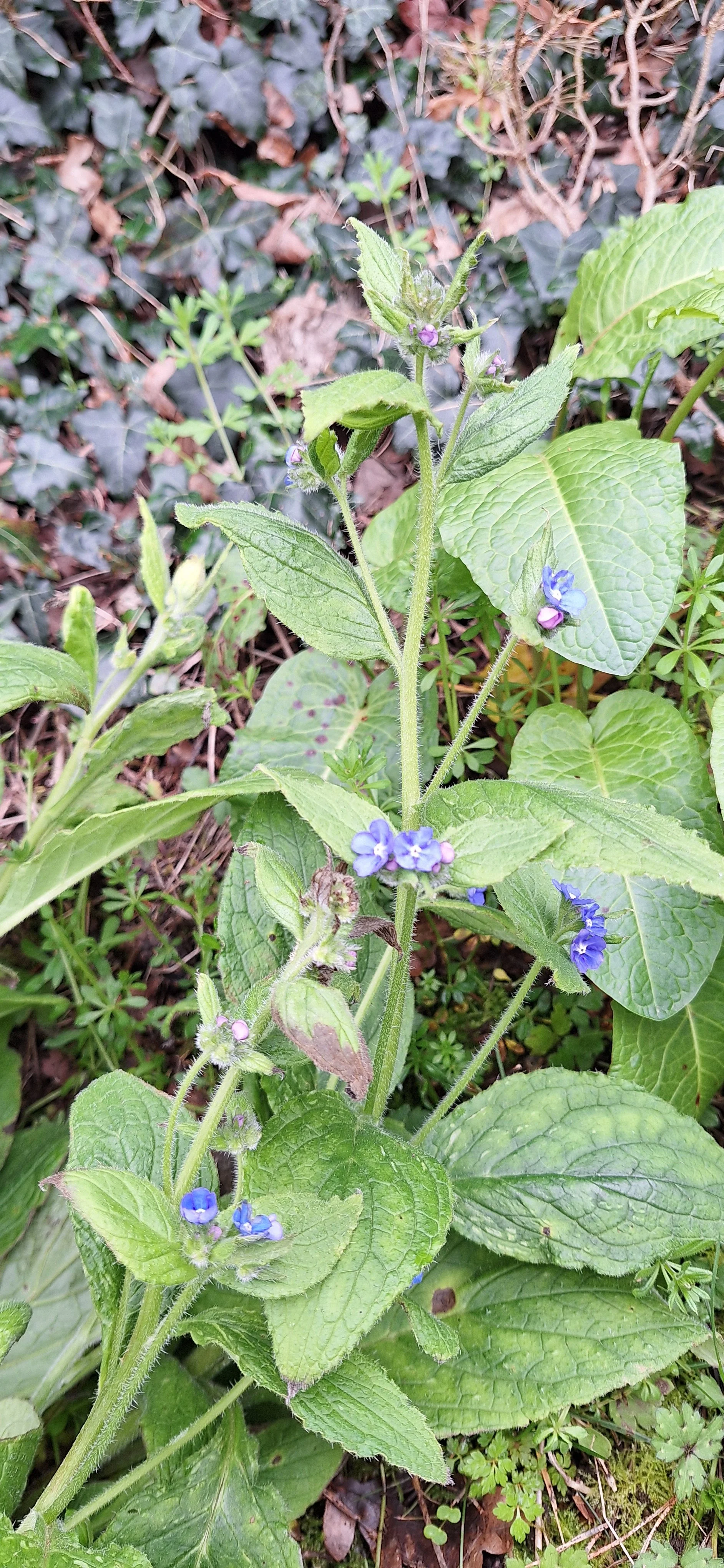
A green alkanet plant
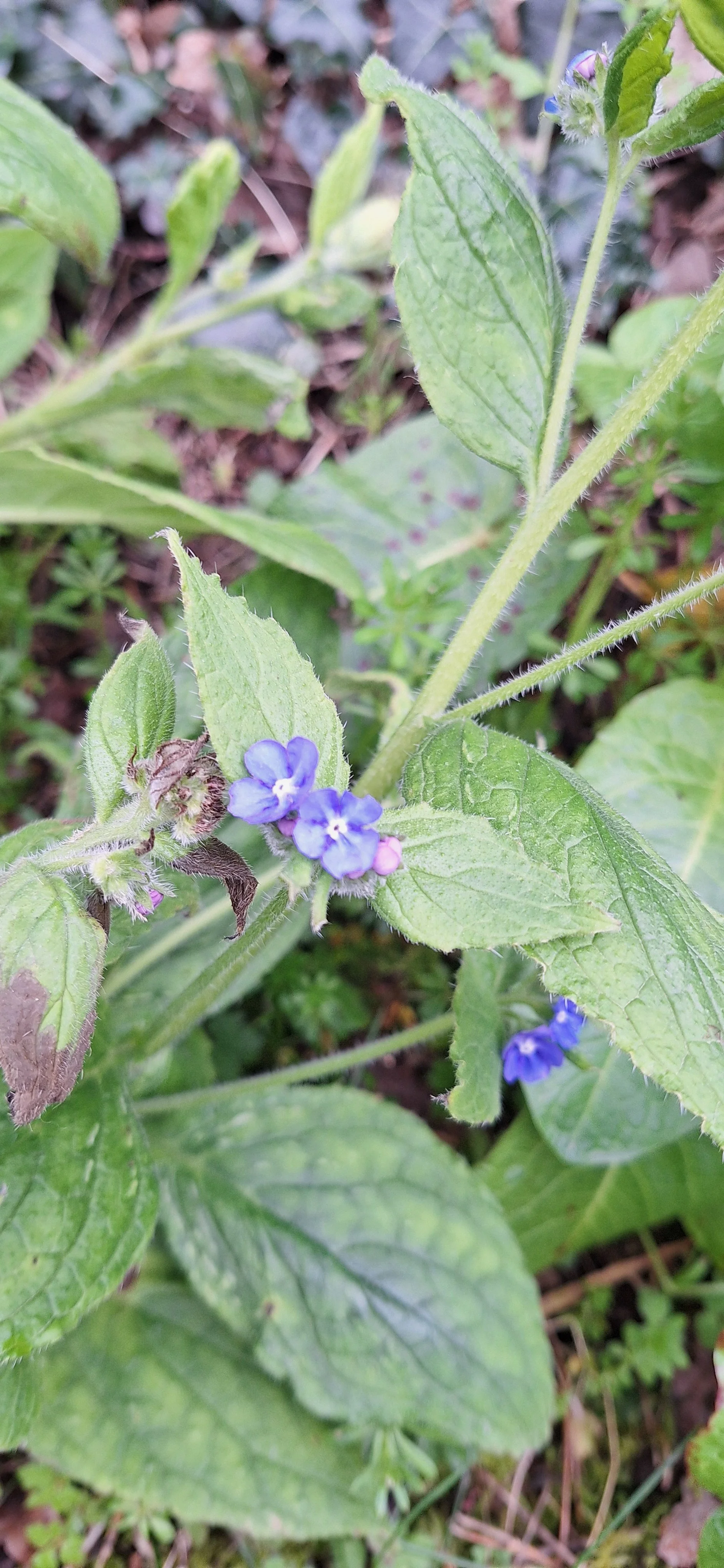
The flower of a green alkanet plant
Morphology and Range
Green alkanet is a perennial plant that, like white comfrey, is a member of the Boraginaceae family. The erect plant grows up to 1 meter tall and has pubescent (covered in hairs) stems and leaves. Despite being called green alkanet, its flowers are a vibrant blue and star-shaped with five petals. Bees love green alkanet flowers, so they are a great addition to any garden looking to attract the little pollinators. The leaves are roughly 30cm long, ovate with a light green colour and, as previously stated, covered in hairs. Green alkanet has a very deep tap root system that can extend up to 90cm. If you were to try to remove a green alkanet plant, you have to make sure you remove the entire tap root. If any of the tap root remains, the plant can regrow.
Green alkanet likes to grow in slightly shaded areas, so it often grows around woodland and by hedgerows. The species isn’t native to the UK but was introduced and grown for medicine around 1700. Probably best not to intentionally grow it in the UK anymore, as it is now considered invasive. Green alkanet is native to west Europe, more specifically France and the Iberian Peninsula. Some naturalized populations of the plant can be found in New Zealand and North America.
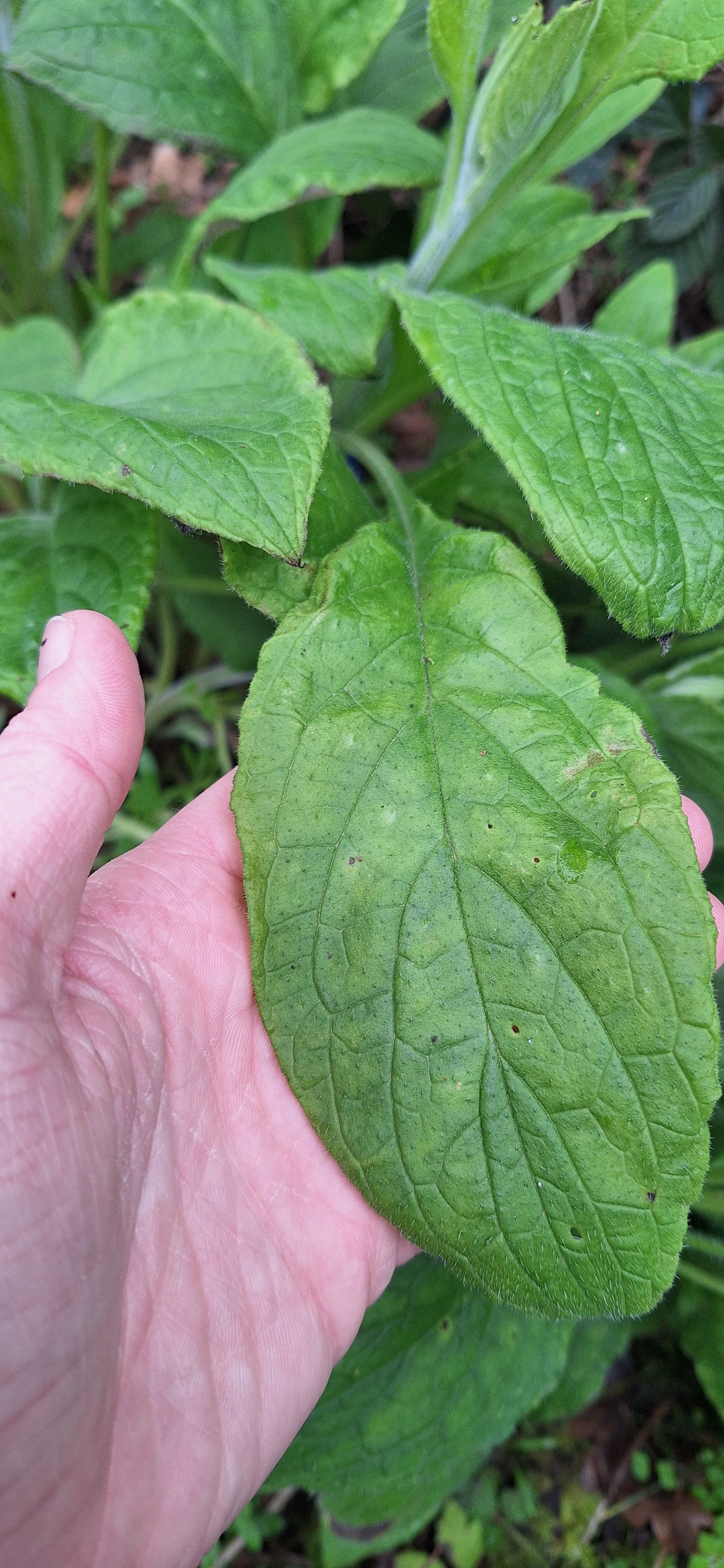
The leaf and stem of a green alkanet plant
Uses
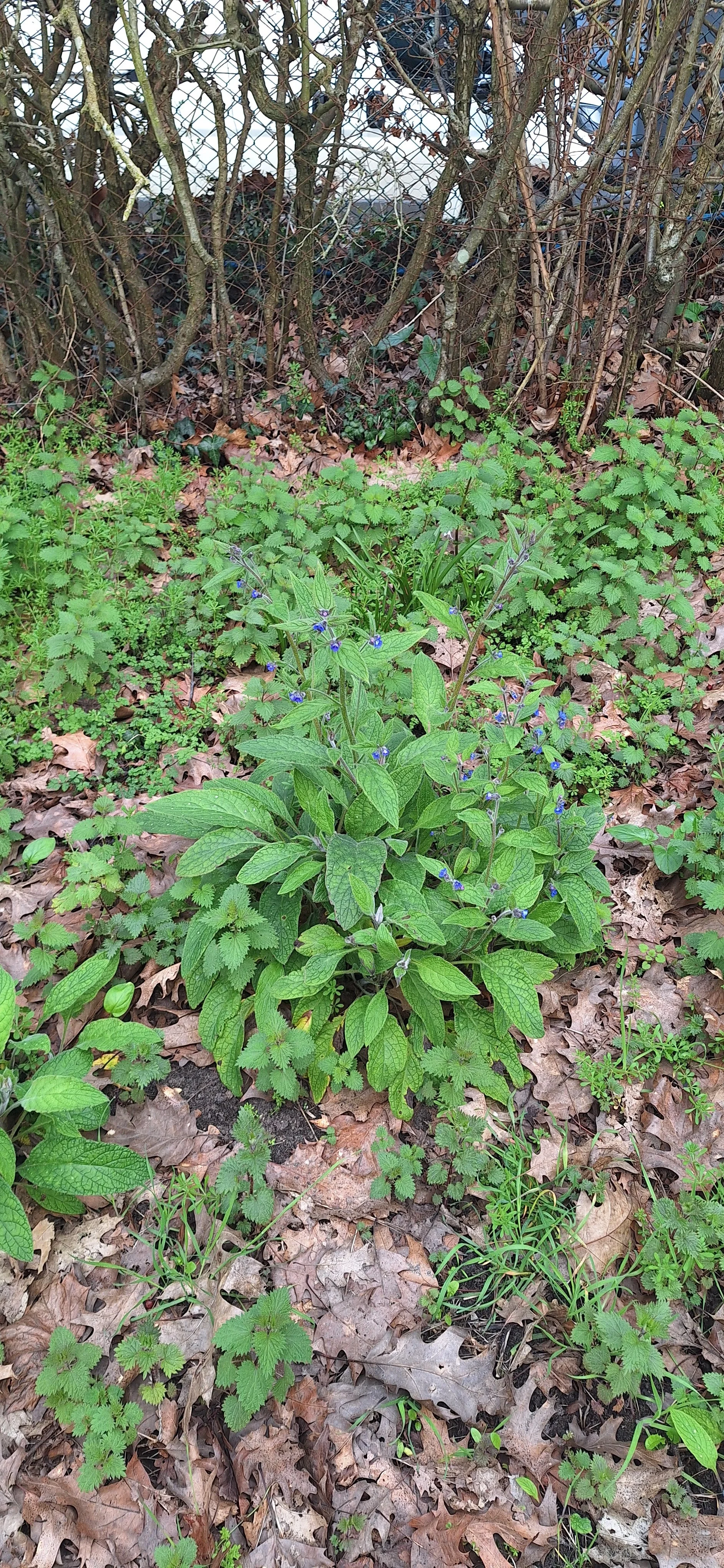
A green alkanet plant
Green alkanet is a plant with many uses. I think my favorite use of the plant is that dye can be made from it. It makes red dye. The plant with green in its name that has blue flowers, makes red dye. It’s so silly, and I love it. I’ve already mentioned that the plant can be used in medicine. While it is toxic if ingested, it has tradionaly be used to treat respiratory issues, skin problems and, ironically, digestive issues. Traditionaly the plant was seen to have magical properties. This led to another ironic use of the plant as people used to carry the tap root of green alkanet as they thought it would protect them from poisoned food.
Green alkanet is no longer used as a herbal medicine due to its toxicity. However, since the flowers don’t contain any toxins (at least not in harmful quantities), they can be eaten and used to make tea. Tea made using green alkanet flowers hasa subtle flavour of watermelon and cucumber.
I came across a few interesting modern uses of green alkanet in my research that I’m pretty sure are made up. My favorite being that green alkanet supposedly can prevent smallpox. While I’ve never known anyone who lives near alkanet to contract smallpox, I’m fairly certain that isn’t because of the plant. I decided to check the website’s source for this claim. This source happened to be another website that immediately gave me a pop-up that read “Cure coronavirus with homeopathy”.
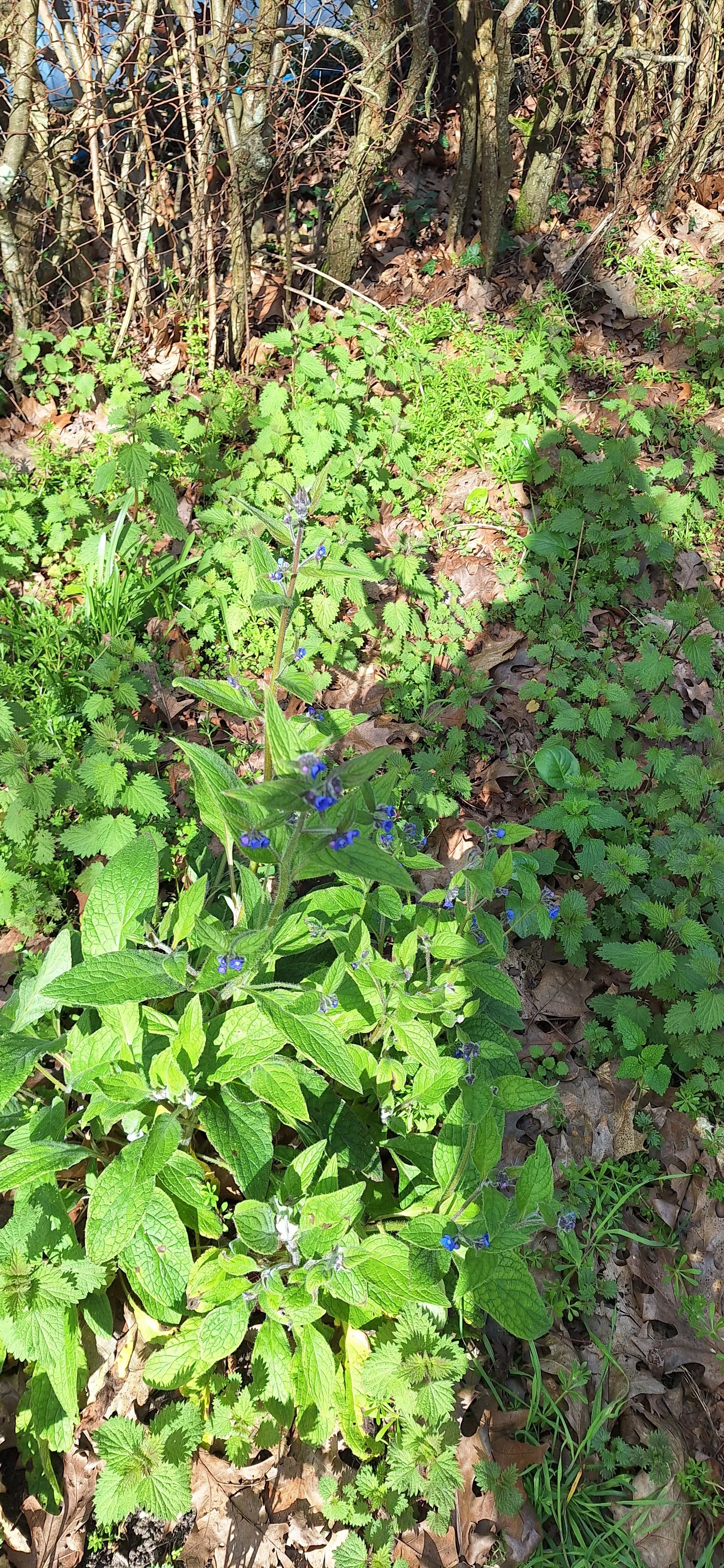
A green alkanet plant