Posted on the 17th of April 2026
Eurasian Jay
Scientific Name: Garrulus glandarius

A Eurasian jay I found
Morphology and Range
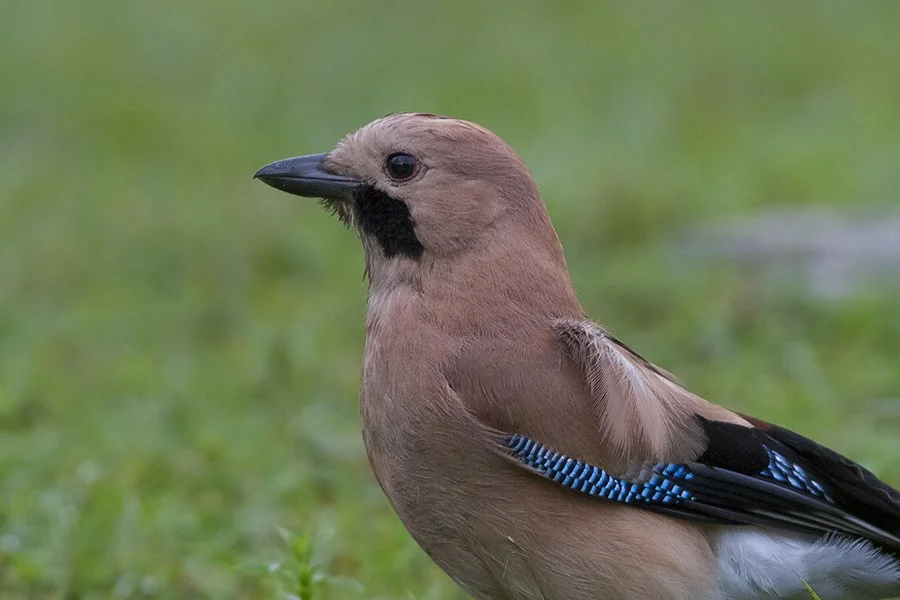
A close up picture of a Eurasian jay
Credit: Dibyendu Ash
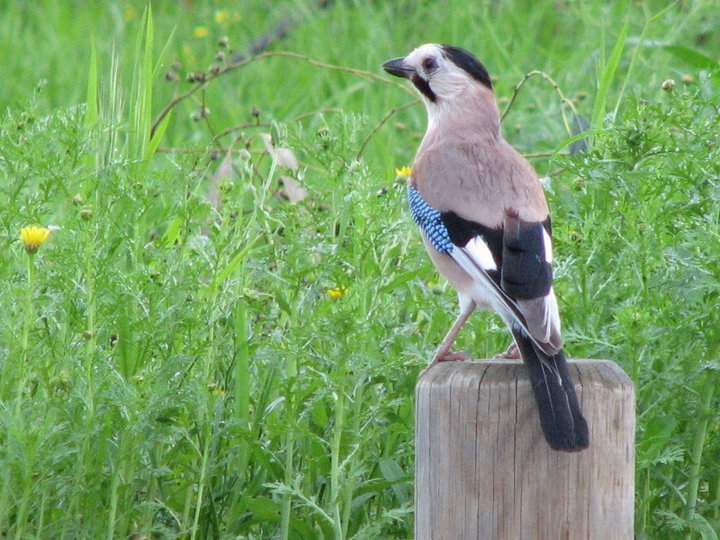
Jay’s are primarily light brown but have black speckles on top of their head and have some light blue along their black and white wings. They have a wingspan of 55cm, length of about 34cm and an average weight of 170g.
The species likes to live in woodlands, preferring broadleaf woodland over coniferous, but it can be found in both. Jay’s can also be found in parks and people’s gardens. Eurasian jays can be found all over the UK and the Republic of Ireland. They can also be found through almost the entirety of mainland Europe, the few exceptions being the mountainous regions of Scandinavia and the south-east of the continent. In Asia, the species can be found throughout southern Russia, the east coast of China, Taiwan, Japan, as well as much of south-east Asia.
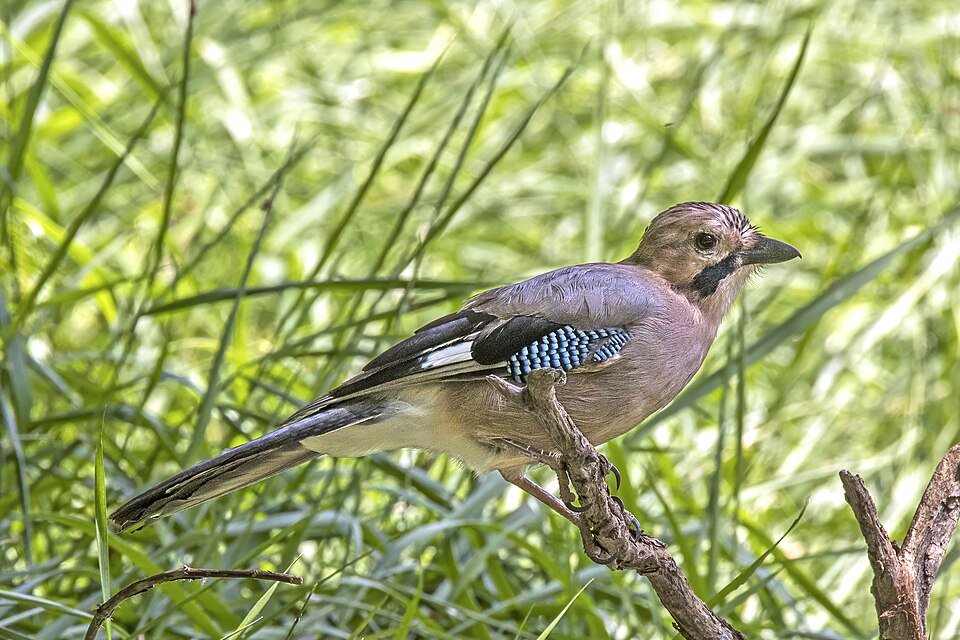
A Eurasian jay sitting on a branch
Credit: Charles J. Sharp
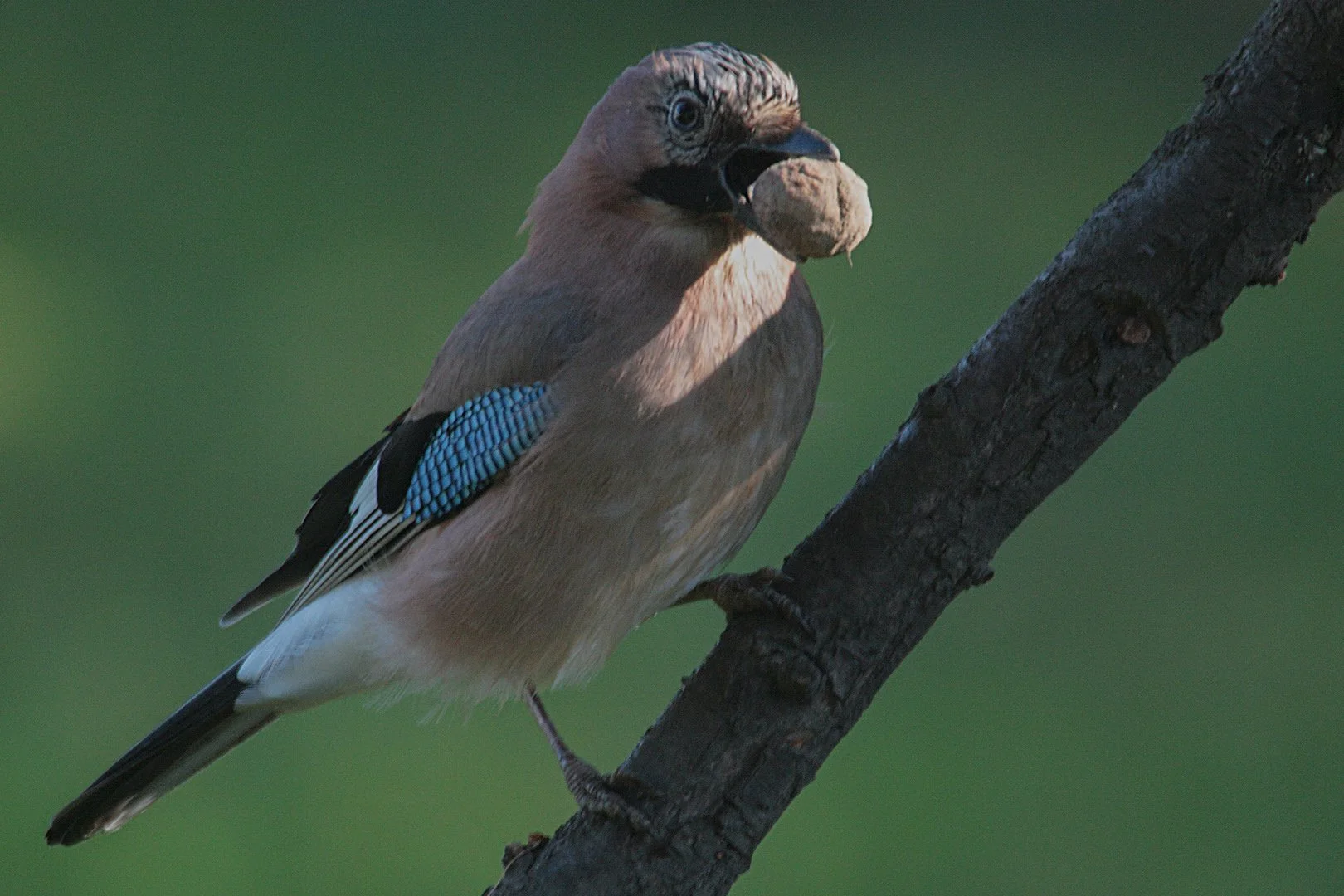
A Eurasian jay eating a nut
Credit: Jerzystrzelecki
Diet and Reproduction
Jay’s are omnivores and as such exploit a wide variety of food resources. In the autumn, they mostly eat fruits and nuts like acorns. During the spring and summer, they eat a lot more invertebrates, such as beetles and caterpillars, since they are much more plentiful during that time of year. They also eat small mammals and the eggs of other bird species. Jay’s aren’t just predators of various smaller creatures, they are prey themselves for much larger carnivorous bird species.
Eurasian jays breed during spring, more specifically, they breed in March and April. They are a monogamous species, forming lifelong bonds with their mate. Together, both the male and female work together to build their nest on a tree branch, close to the tree’s main trunk. The female then lays on average 4-5 eggs, which both parents incubate for around 18 days. After the chicks hatch, they spend about 20-23 days in the nest being taken care of by their parents. After this, they are capable of taking care of themselves and fledge. Two years later, the birds will reach sexual maturity and start breeding.
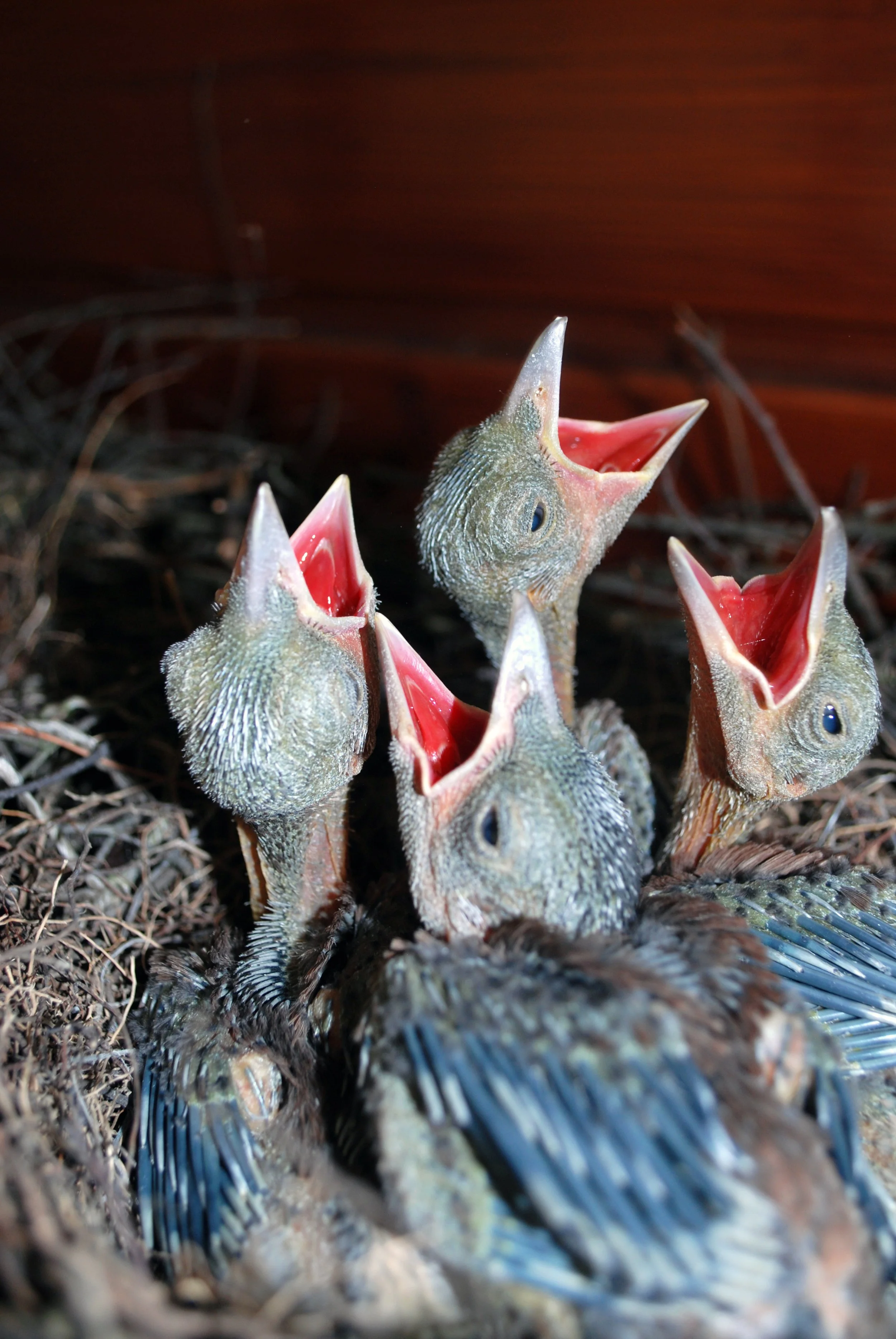
Four juvenile Eurasian jays
Credit: Polimerek
Jays and other Jays
Bionomial names are so helpfull because the common names of animals can be so misinformative. Long-tailed tits aren’t a species of tit, sea cucumbers are, in fact, not a vegetable and eel catfish rarely use fake pictures on tinder. Are Eurasian jays a species of jay? Yes. But I always assumed they’d be a close relative of other birds called jays, like blue jays. They’re in the same family, Corvidae however, they’re in different subfamilies. Eurasian jays are in the subfamily Corvinae, while other jays, the new world jays, are in the subfamily Cyanocoracinae. This means that the Eurasian jay is more closely related to crows than the new world jays. I find this so interesting as every new world jay has such a vibrant blue colouration and Eurasian jays have such a similar shade on their wings despite their closer relatives not having this trait. Magpies, the Eurasian jay’s closest living relatives that aren’t in their genus, do have some blue on them, however their blue is more irredecent while the new world jay’s and Eurasian jay’s blue is far brighter and more saturated.
A Eurasian jay sitting on a post
Credit: Shay golan
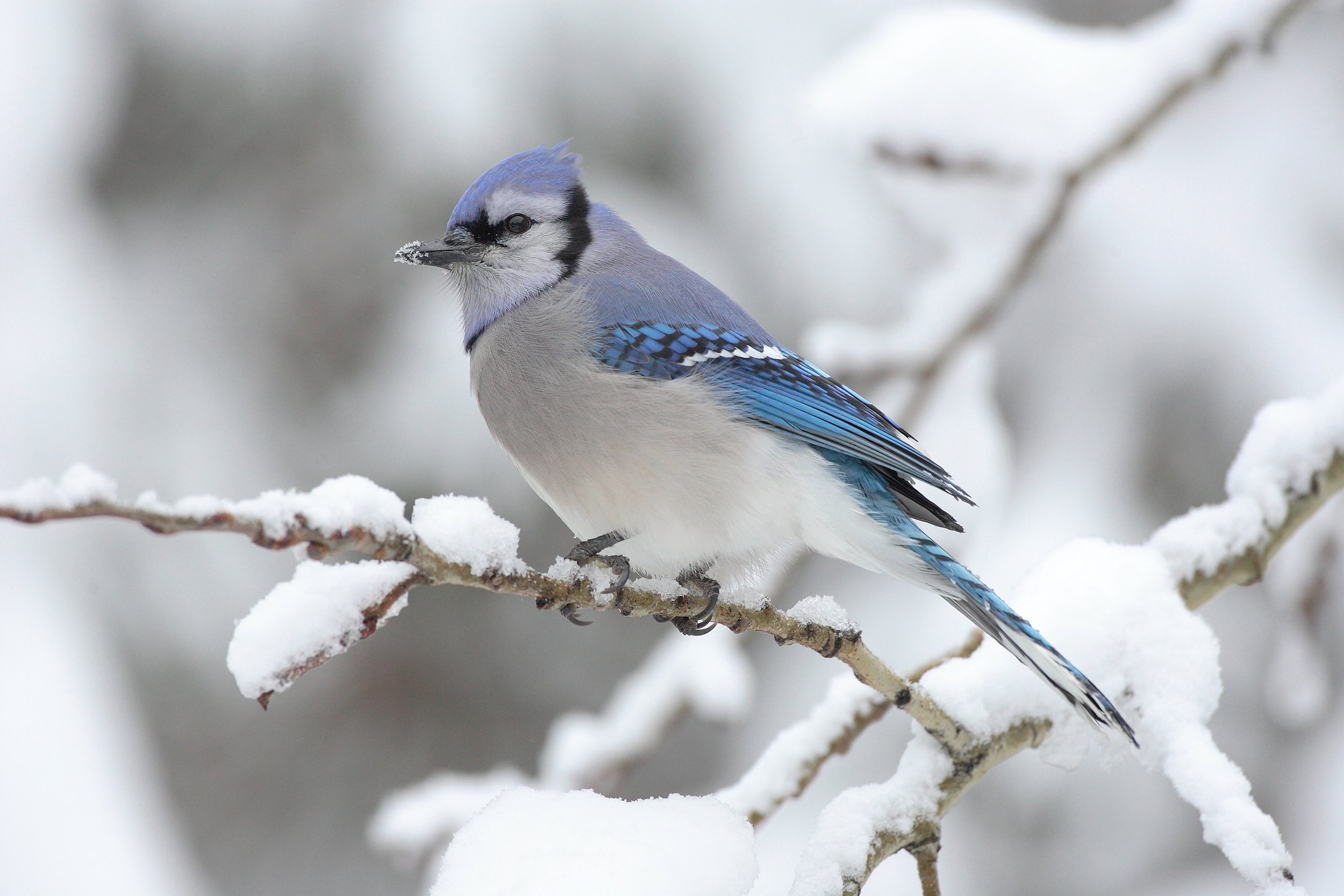
A blue jay sitting on a snowy branch
Credit: Mdf