Posted on the 16th of April 2026
Long-Tailed Tit
Scientific Name: Aegithalos caudatus
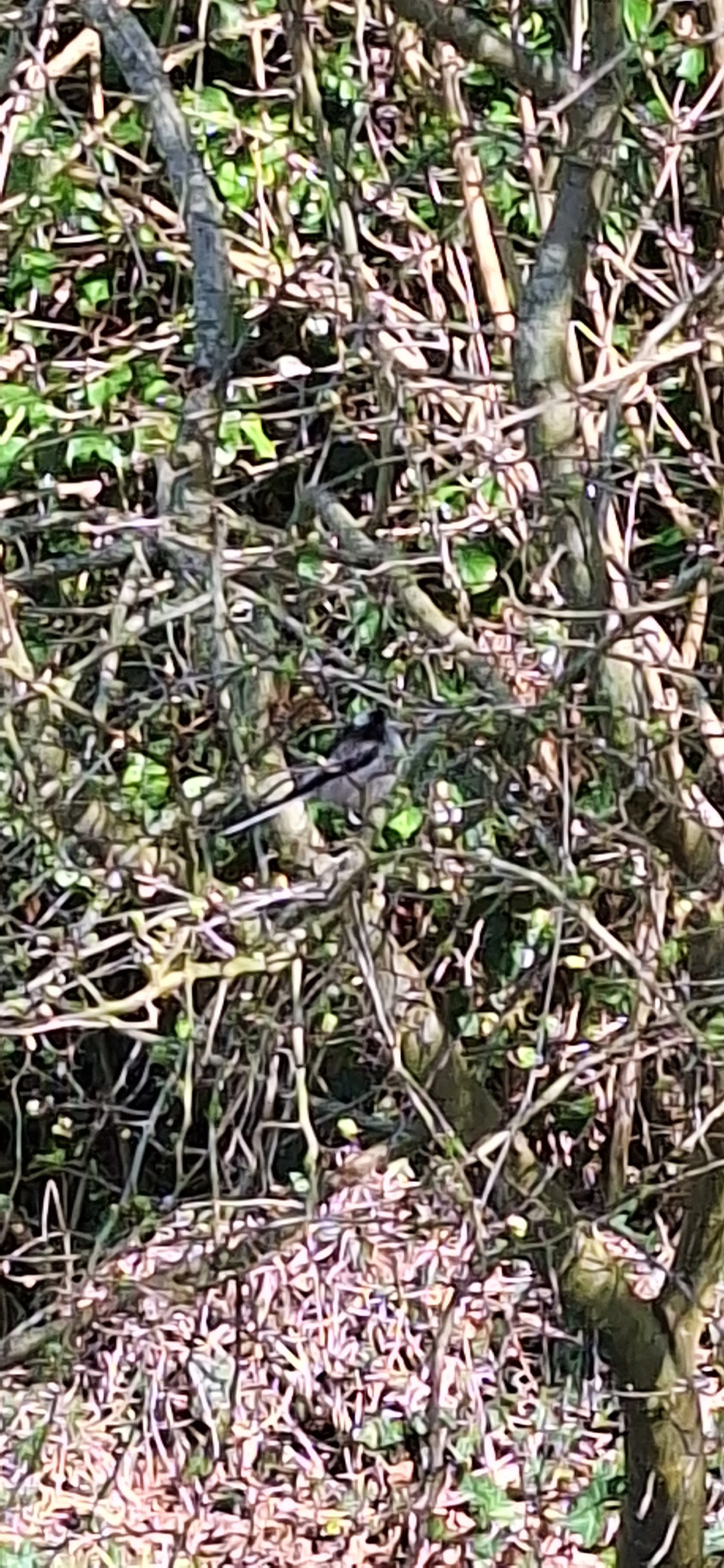
A long-tailed tit I found
Morphology and Range
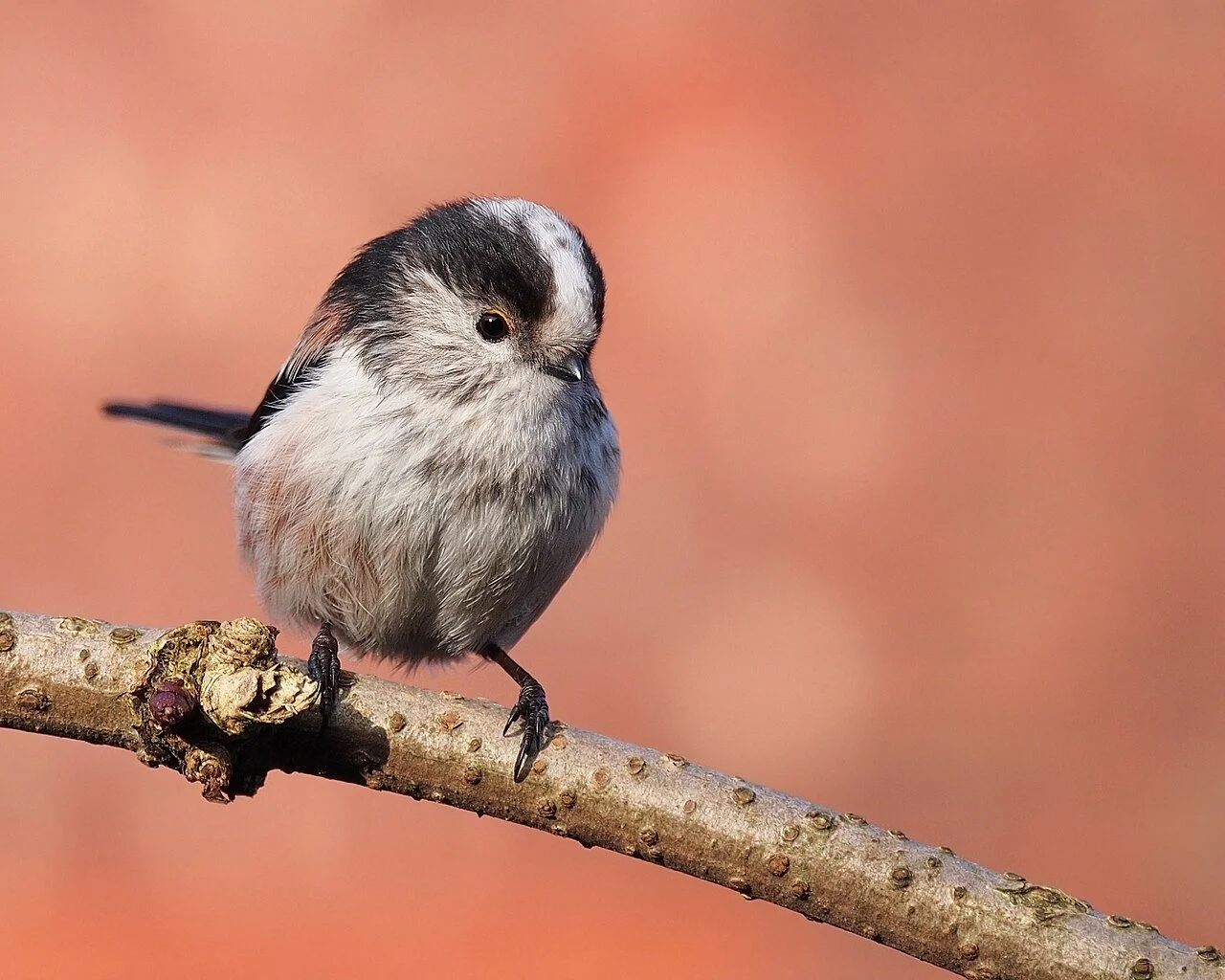
A long-tailed tit sitting on a branch
Credit: Francis C. Franklin
Long-tailed tits are small white birds with black on the sides and around the back of their heads, along their wing and on their tails. They are so small that the average long-tailed tit weighs about 9g, has a wingspan of 18cm and a length of 14cm. Roughly 8cm of their length is their tail, so their body is only about 6cm. While mostly white and black, long-tailed tits can have some pink colouration. Long-tailed tits have a colourful eye ring that is yellow in adults and red in juveniles.
The species can be found throughout the entirety of Europe with the exception of mountainous regions. Long-tailed tits also live in Asia, being found in southern Russia as well as north-east China and all of Japan. A subspecies of long-tailed tit that lives in Japan has the most adorable name of “snow fairy”. Long-tailed tits prefer living in deciduous woodland but also live in hedgerows and anywhere else with trees and shrubs.
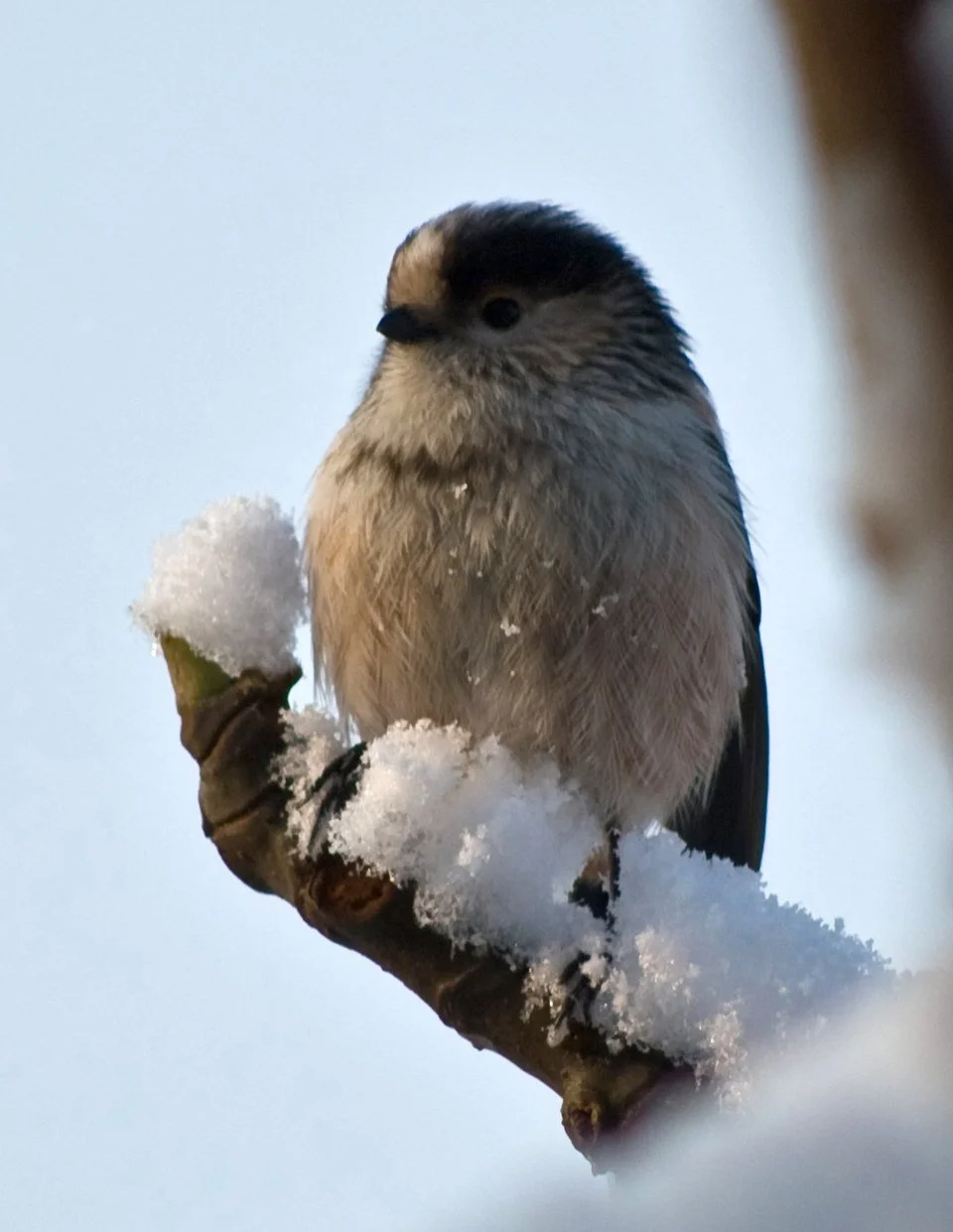
A “snow fairy” sitting in the snow
Credit: unhappy by design
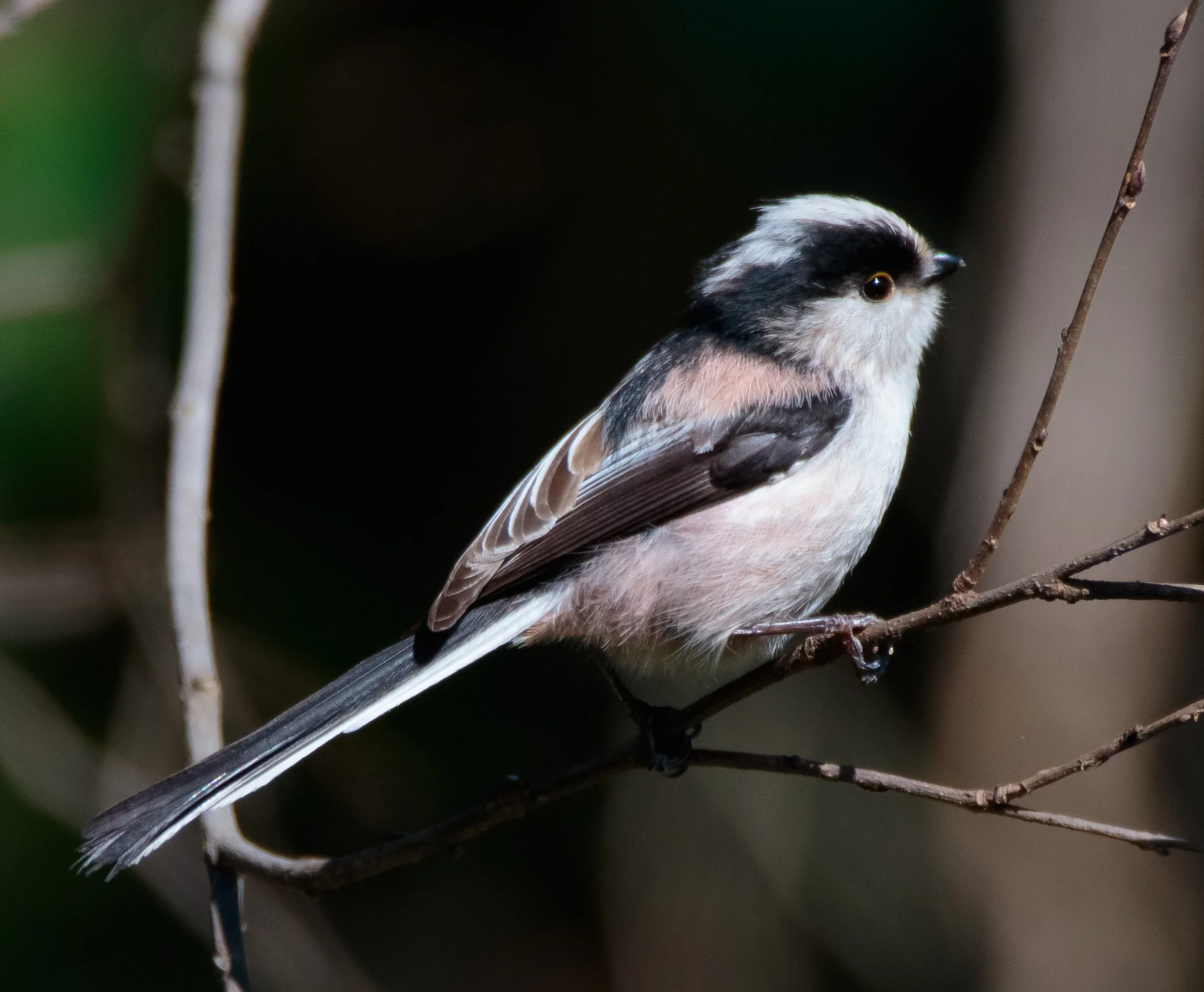
The side profile of a long-tailed tit
Credit: Laitche
Diet and Reproduction
The long-tailed tit’s diet consists of invertebrates such as insects. They quite like eating spiders, caterpillars and the eggs of butterflies and moths. While they prefer to eat invertabrates the species also eats fruits and seeds. This is more common when their usual food sources are scarce, such as during the winter.
Personally, I think long-tailed tit’s nests are absolutely adorable. Instead of using almost exclusively sticks like most birds, long-tailed tits use a larger variety of materials. When building their nests, they use feathers, lichen, spider silk and moss to create a large, soft nest that’s shaped like a cocoon with a hole near the top to go in and out through. These nests are assembled in trees where a branch forks, but can also be hidden low down in a bramble or gorse bush. Long-tailed tits breed around March and April, since their nests are so complex, nest building usually begins as early as February. Long-tailed tits are a monogamous species with breeding pairs forming lifelong bonds. Each pair works as a team to create their nest over the course of three weeks. Males find most of the materials for the nest and do a lot of the building, while the female shapes the nest and lines the interior. Females lay an average of 6-8 eggs and incubate them for around 16 days. Once hatched, the parents take care of their offspring for a further 16 days, at which point they fledge.
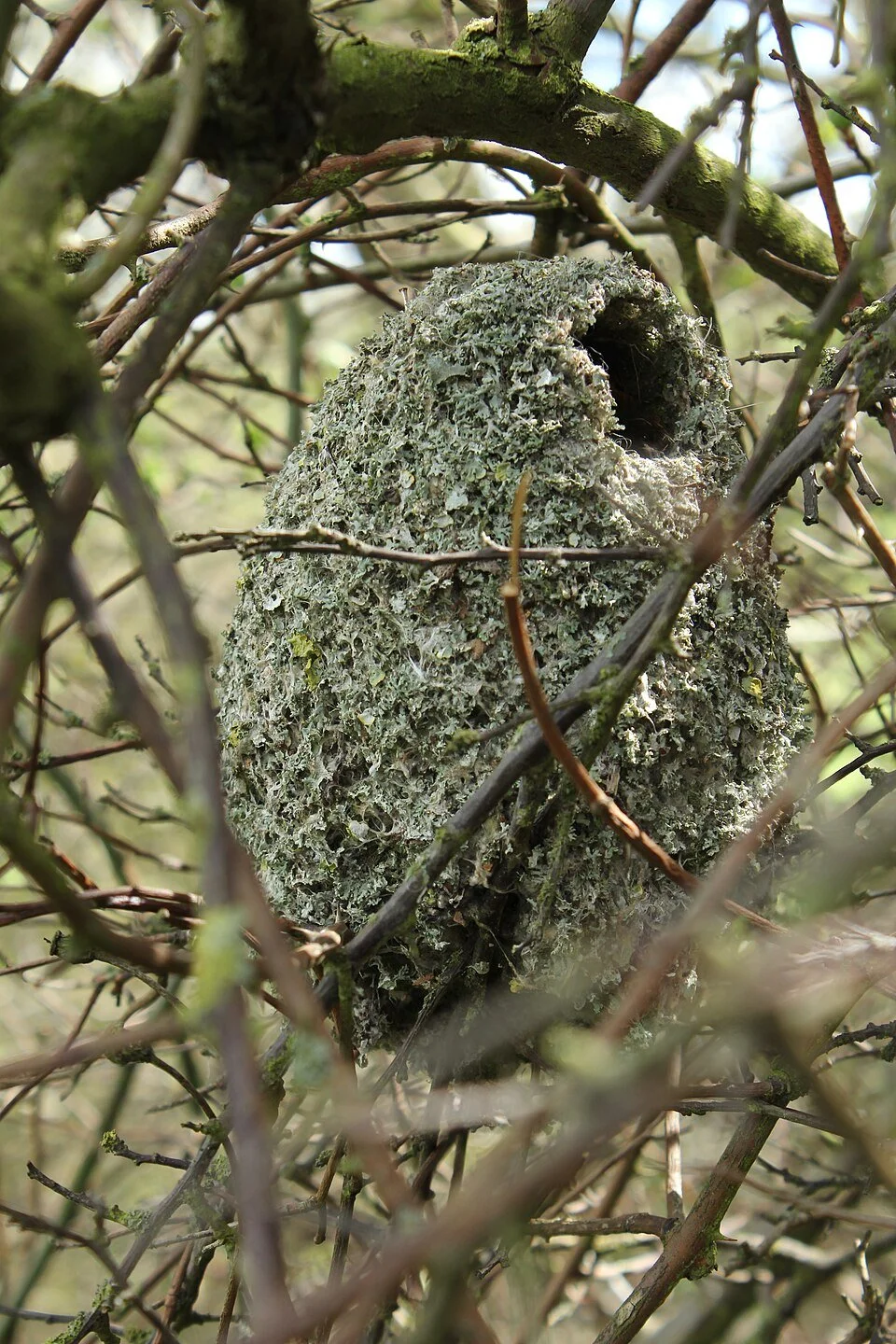
A long-tailed tit nest
Credit: Fæ
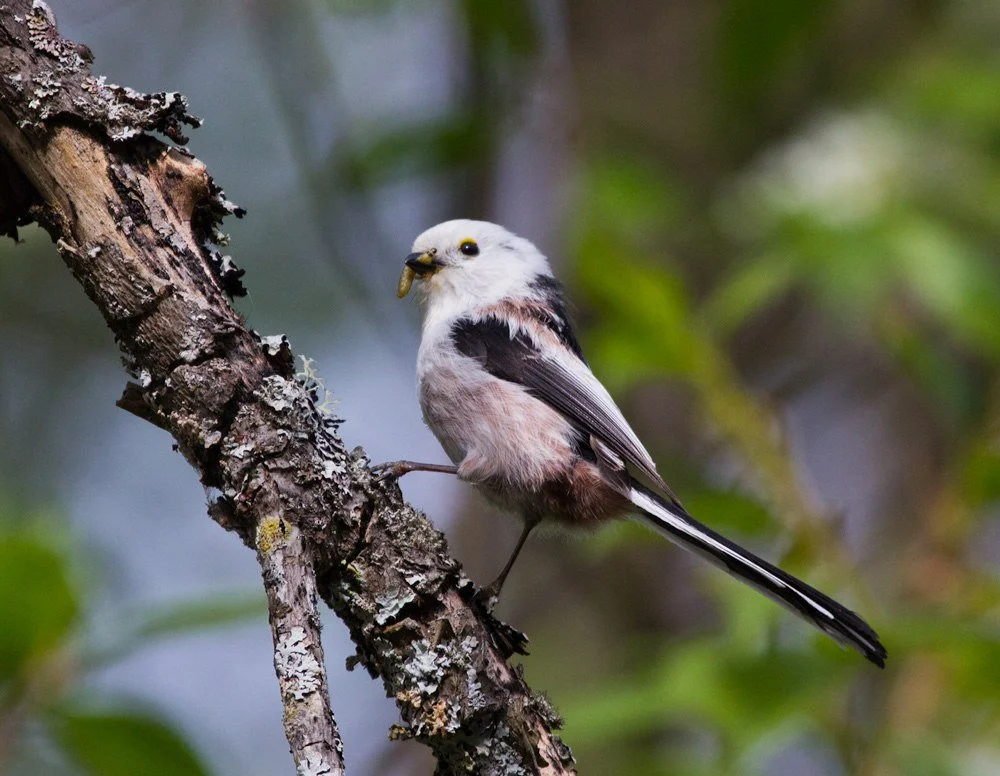
A long-tailed tit that’s caught a caterpillar
Credit: Levashkin
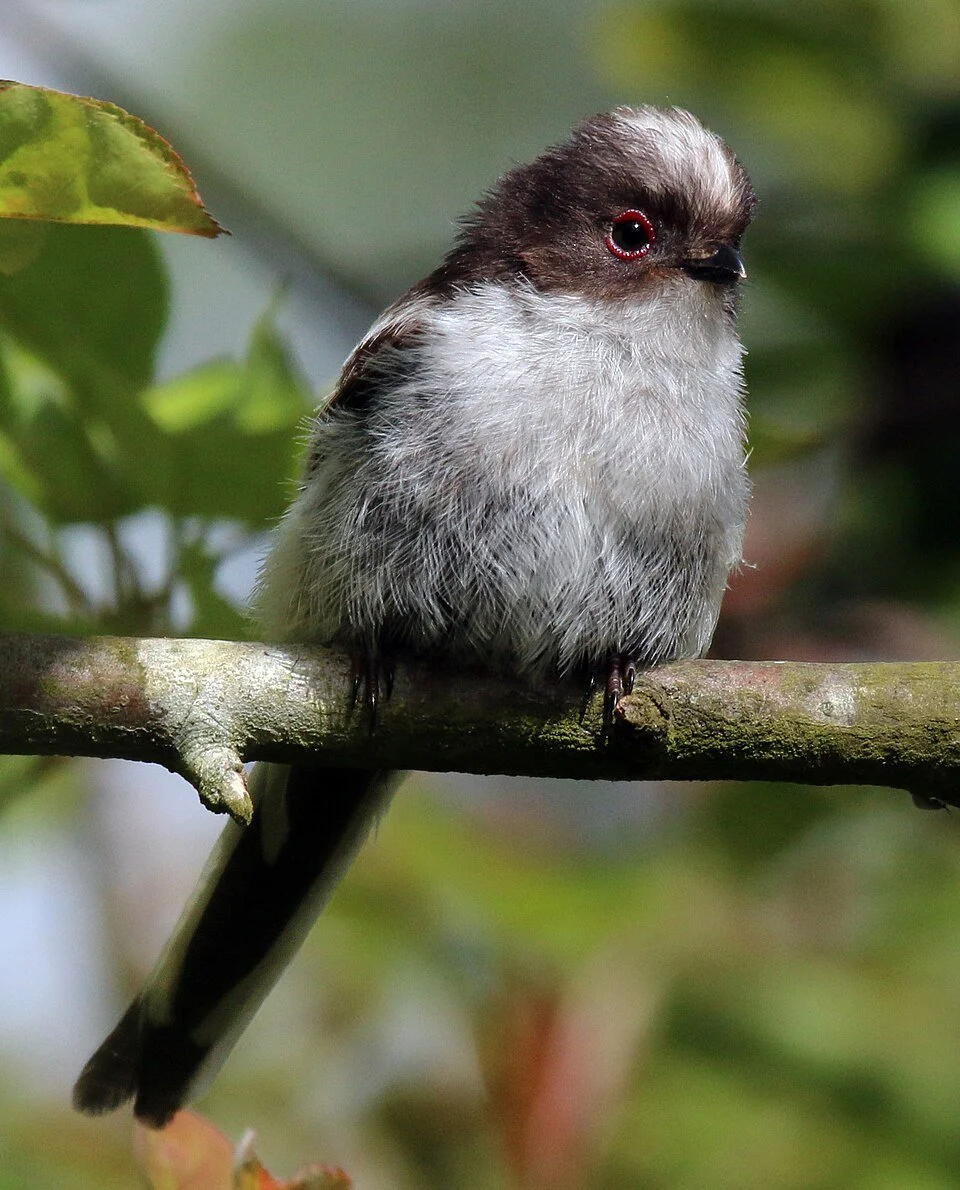
A juvenile long-tailed tit
Credit: Charles J. Sharp
Social Creatures and Taxonomy
Long-tailed tits are a very social species, supposedly rarely being seen on their own. I say supposedly as somehow I’ve never seen more than one at a time. They form flocks of around twenty individuals. Due to their small size and large surface area, they quickly lose heat in the winter, so during cold weather, flocks huddle together to keep each other warm. This is not the only way long-tailed tits help each other. During the breeding season, if an individual’s nest fails, that bird may go and seek out the nest of a relative to help raise its offspring. Roughly half of all long-tailed tit nests have at least one helper.
Long-tailed tits aren’t part of the true tit family Paridae. Instead their part of the bushtit family Aegithalidae. As such, long-tailed tits are very distantly related to many species you would assume they were closely related to like blue tits and coal tits. The actual closet living relatives of long-tailed tits are the white-throated bushtit and the black-browed bushtit.
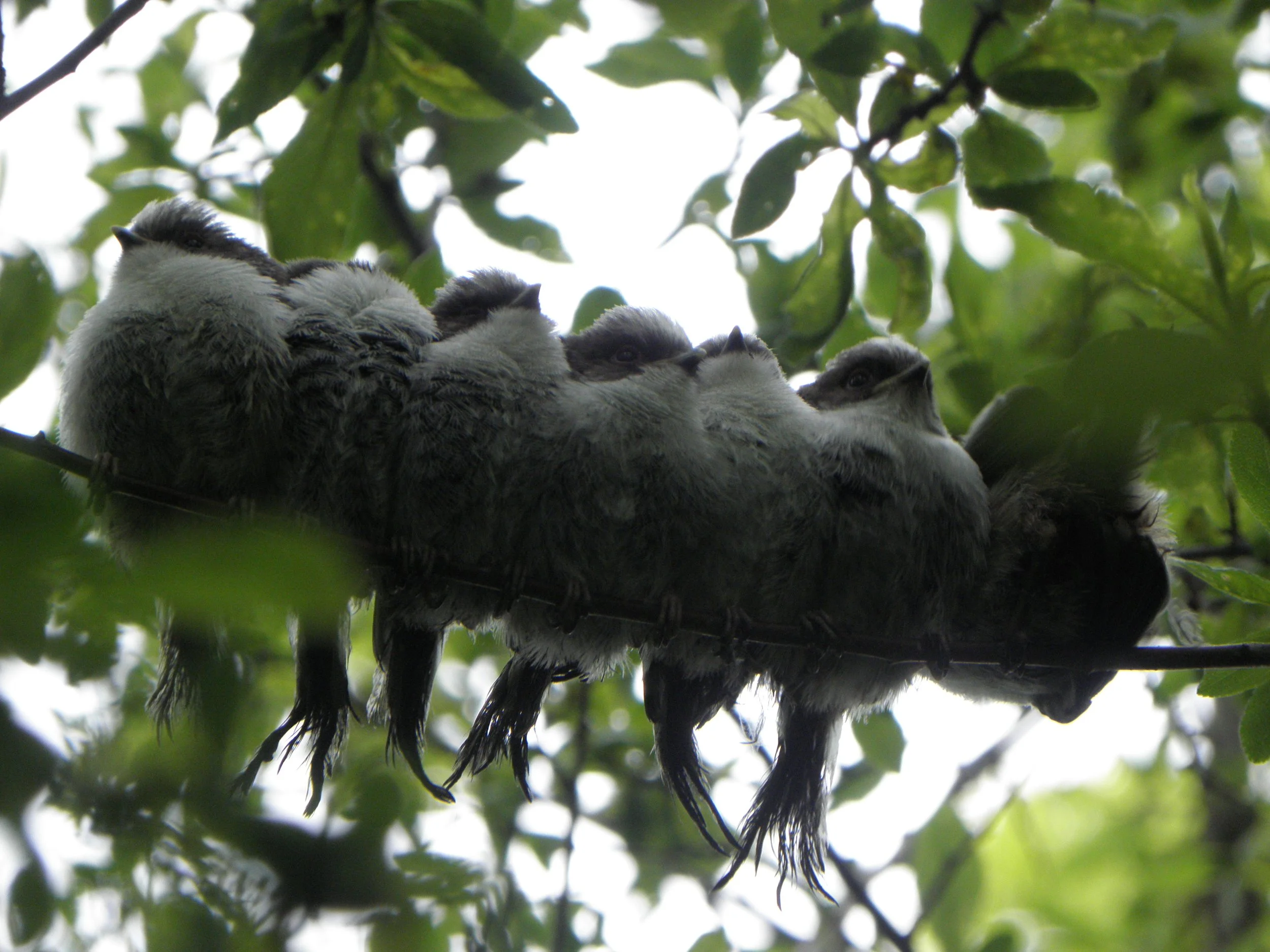
Seven long-tailed tits huddling together
Credit: Rob Hille